

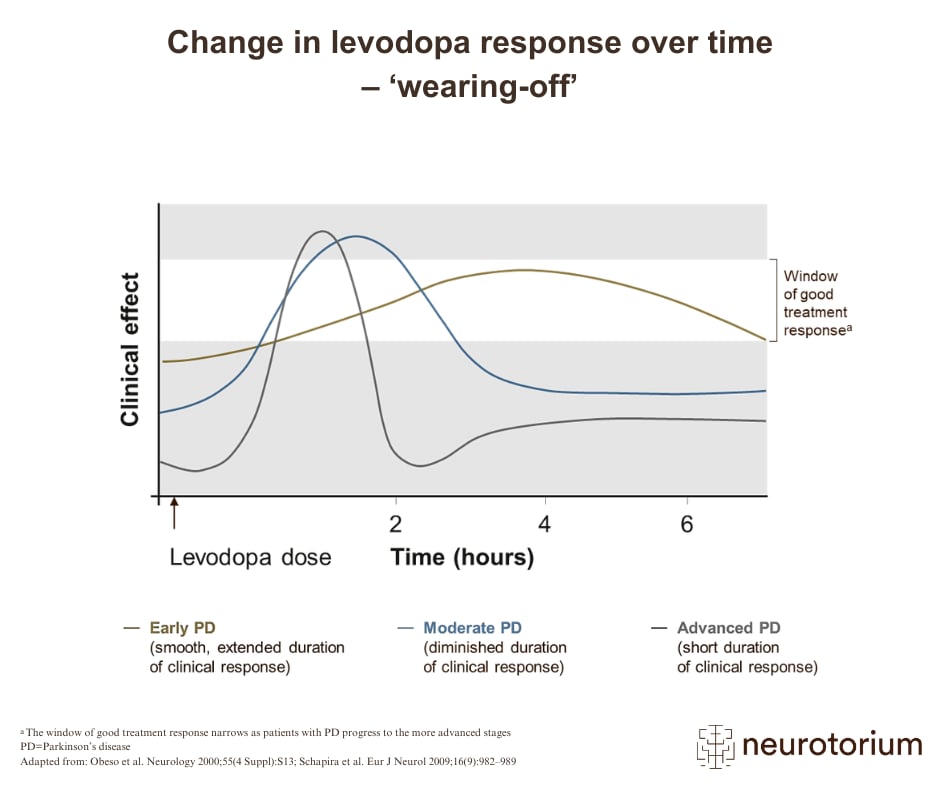
After years of treatment, levodopa therapy can be complicated by the development of motor complications, which include dyskinesias and motor fluctuations. The initial long-duration response to a dose of levodopa (gold line on graph) becomes progressively shorter, and periods in which the patient responds to the drug become complicated by involuntary dyskinetic movements.
Levodopa is the major symptomatic therapy for Parkinson’s Disease and is the most common first-line therapy because it provides benefit to virtually all patients.1,3 In the short term, the effects of levodopa tend to be long-lasting, and side effects are tolerable.1 In the longer term, however, patients may struggle to maintain good symptom control as the duration of response to levodopa therapy becomes progressively shorter.1 This problem is known as ‘wearing-off’.
‘Wearing-off’ is a predictable recurrence of PD symptoms that precedes a scheduled dose of levodopa and usually improves with medication.4 By contrast, the less predictable fluctuations – sometimes called ‘yo‑yoing’ – are associated with more advanced stages of PD.5
Related content
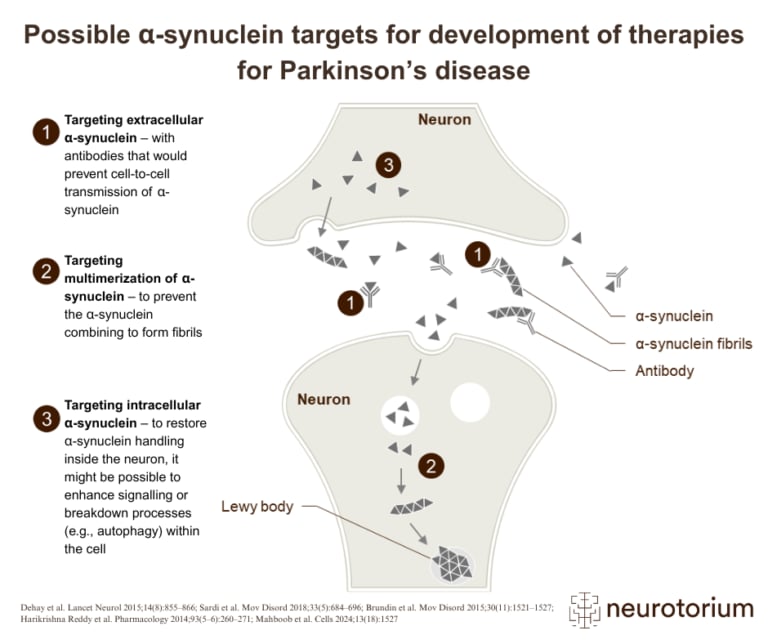
Overview of three therapeutic strategies targeting alpha-synuclein in the development of disease-modifying treatments for Parkinson’s disease
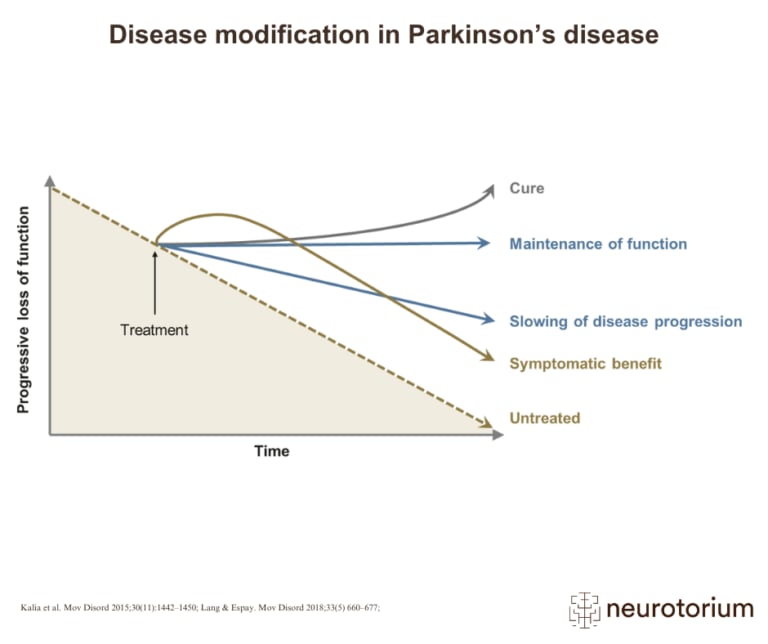
Graphical representation of how various treatment strategies can impact disease progression in Parkinson’s disease, from symptom relief to potential cure
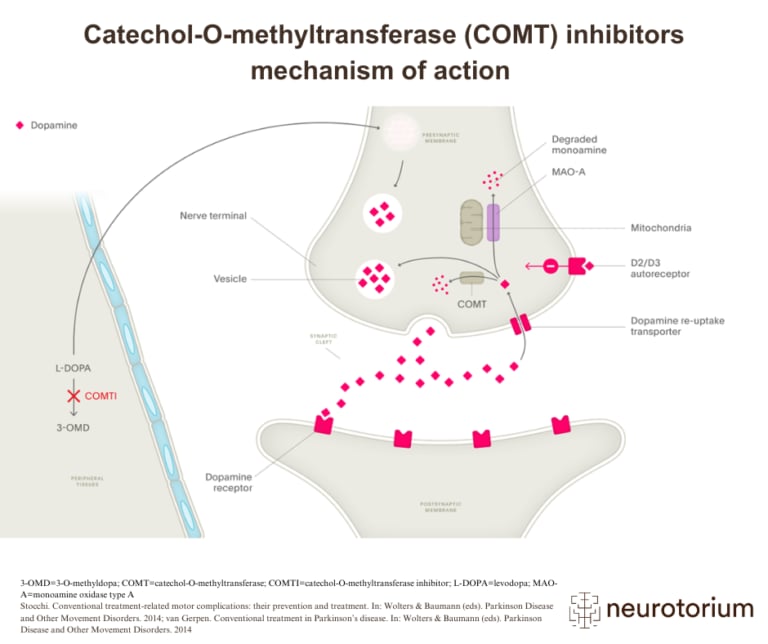
Illustration of how COMT inhibitors increase dopamine availability in Parkinson’s disease by preventing the breakdown of L-DOPA