

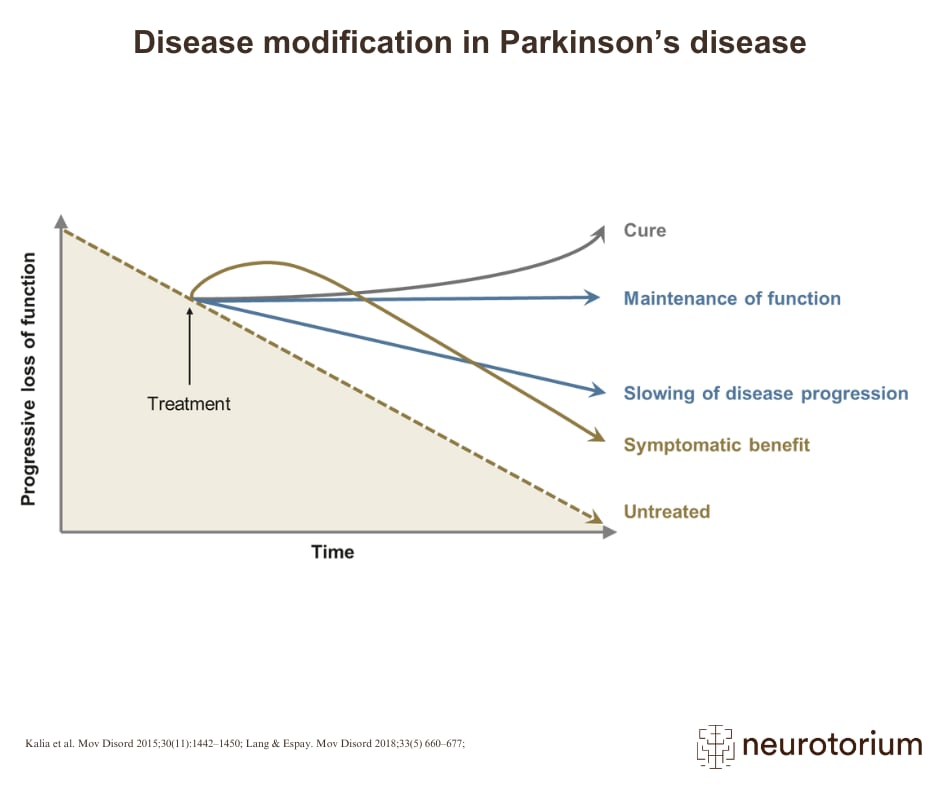
Despite decades of research dedicated to researching disease-modifying therapies for parkinson’s disease (PD), most drug candidates have failed and none has been consistently shown to alter the trajectory of disease progression.1 Many early attempts at translating preclinical findings to positive outcomes in clinical trials were based on animal models, which are not able to fully reflect the full range of complexities of ‘real-life’ PD.1-3
Ideally, disease-modifying therapies would intervene early to preserve motor function for as long as possible, and delay or even prevent the onset of overt disease in patients at high risk or people in the prodromal PD phase.1,4 It is unlikely that any single intervention will be sufficient to achieve this, however, and so several therapies may need to be discovered and developed before the underlying disease process of PD can be effectively delayed.1
Related content
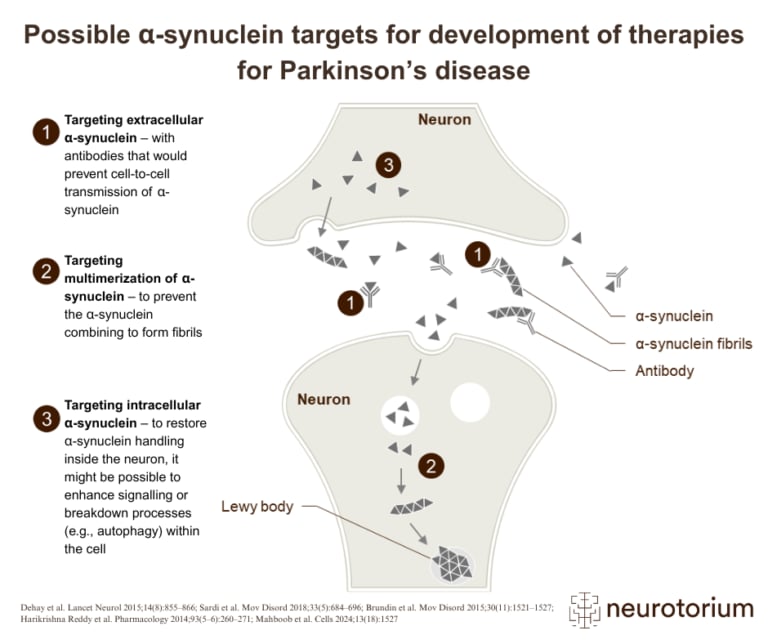
Overview of three therapeutic strategies targeting alpha-synuclein in the development of disease-modifying treatments for Parkinson’s disease
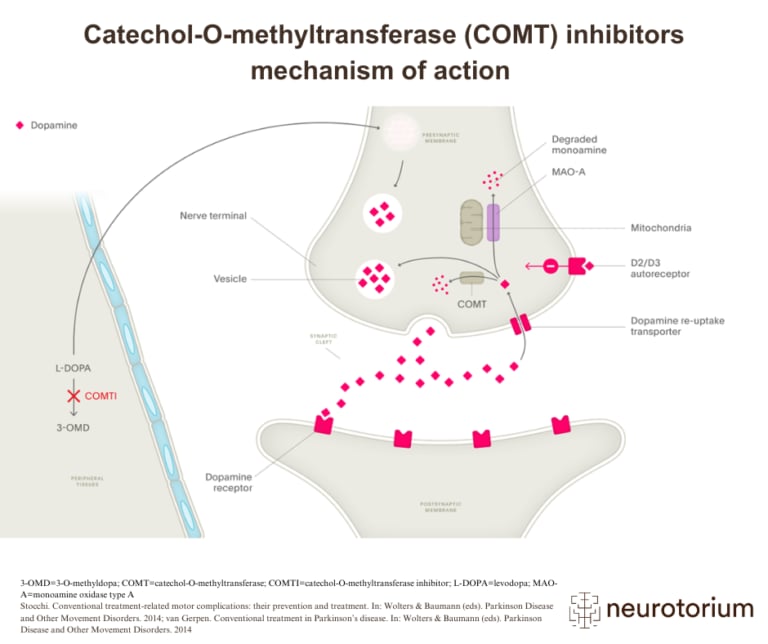
Illustration of how COMT inhibitors increase dopamine availability in Parkinson’s disease by preventing the breakdown of L-DOPA
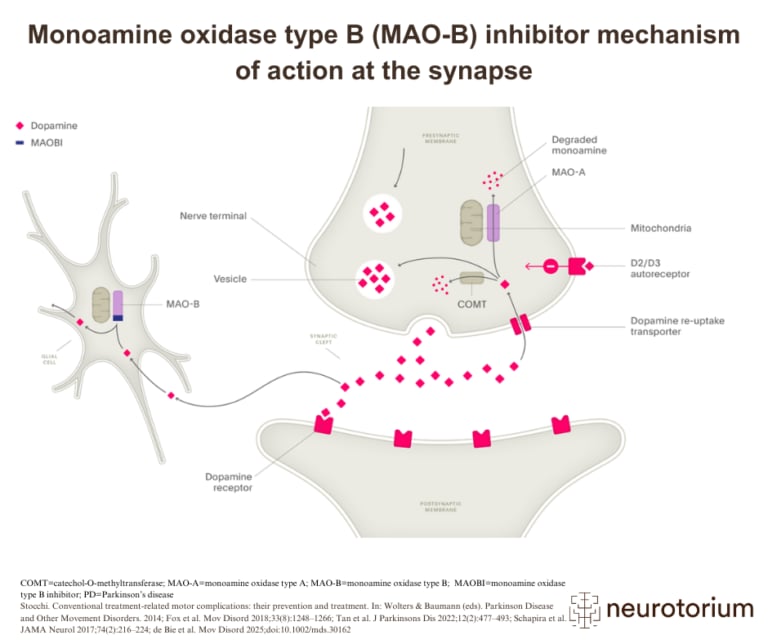
Visual explanation of how MAO-B inhibitors help preserve dopamine levels in the synapse in Parkinson’s disease treatment