

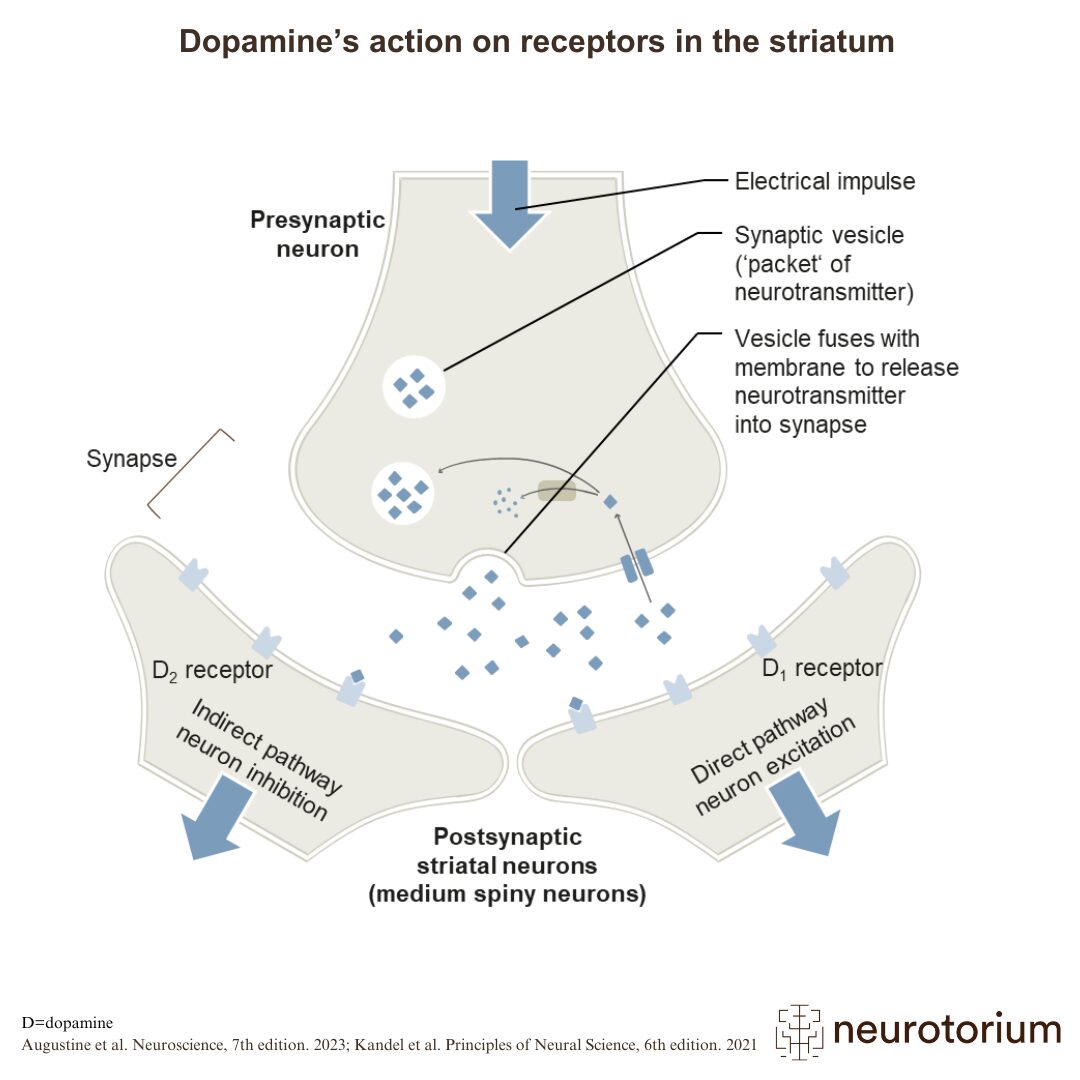
- Dopamine is a neurotransmitter that plays a critical role in the control of movement1,2
- It acts as an excitatory neurotransmitter at some receptors, and is inhibitory at others1,2
- Neurons containing dopamine are clustered in the substantia nigra of the midbrain – the region most prominently damaged by Parkinson’s Disease1,2
- The pars compacta region of the SNc modulates the activity of the striatum via the neurotransmitter dopamine – this modulation is critical in the control of body movement1,2
PD=Parkinson’s disease; SNc=substantia nigra
Related content
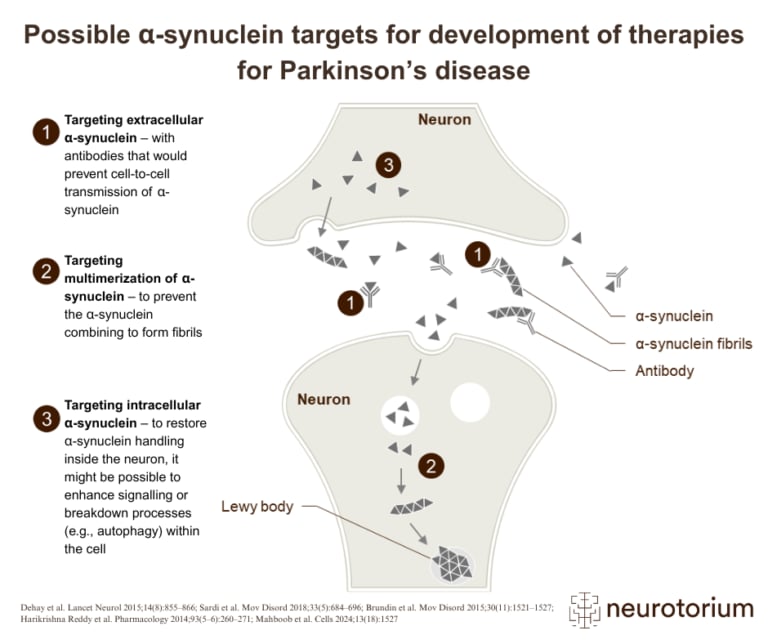
Possible α-synuclein targets for development of therapies for Parkinson’s disease
Overview of three therapeutic strategies targeting alpha-synuclein in the development of disease-modifying treatments for Parkinson’s disease
26.06.2025
Parkinson’s Disease
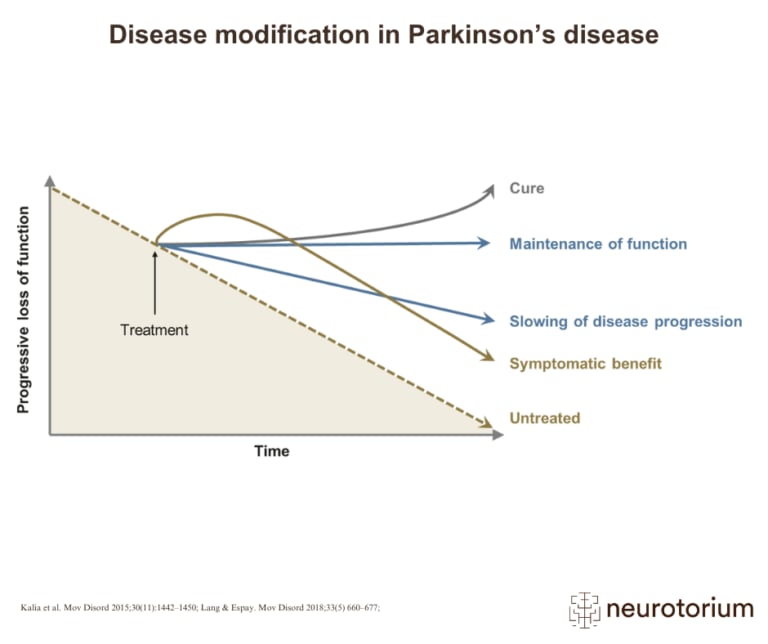
Disease modification in Parkinson’s disease
Graphical representation of how various treatment strategies can impact disease progression in Parkinson’s disease, from symptom relief to potential cure
26.06.2025
Parkinson’s Disease
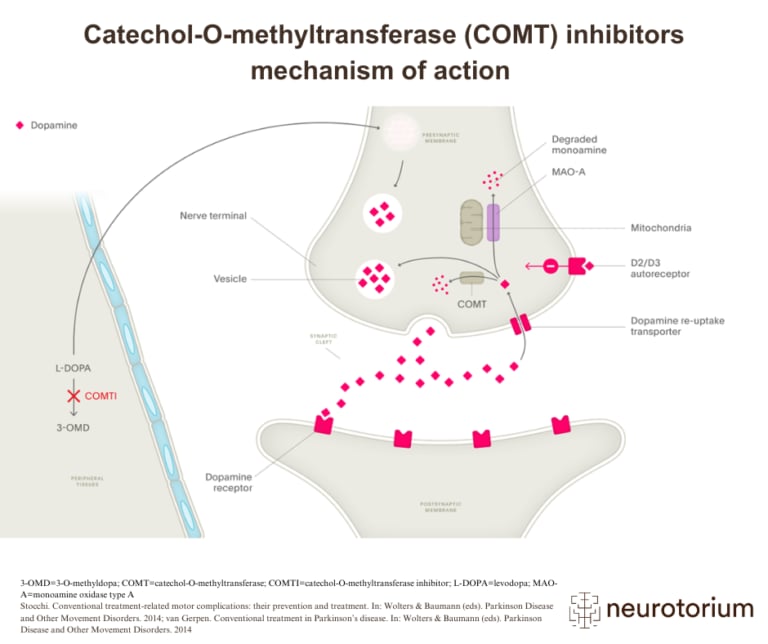
Catechol-O-methyltransferase (COMT) inhibitors: mechanism of action
Illustration of how COMT inhibitors increase dopamine availability in Parkinson’s disease by preventing the breakdown of L-DOPA
26.06.2025
Parkinson’s Disease