

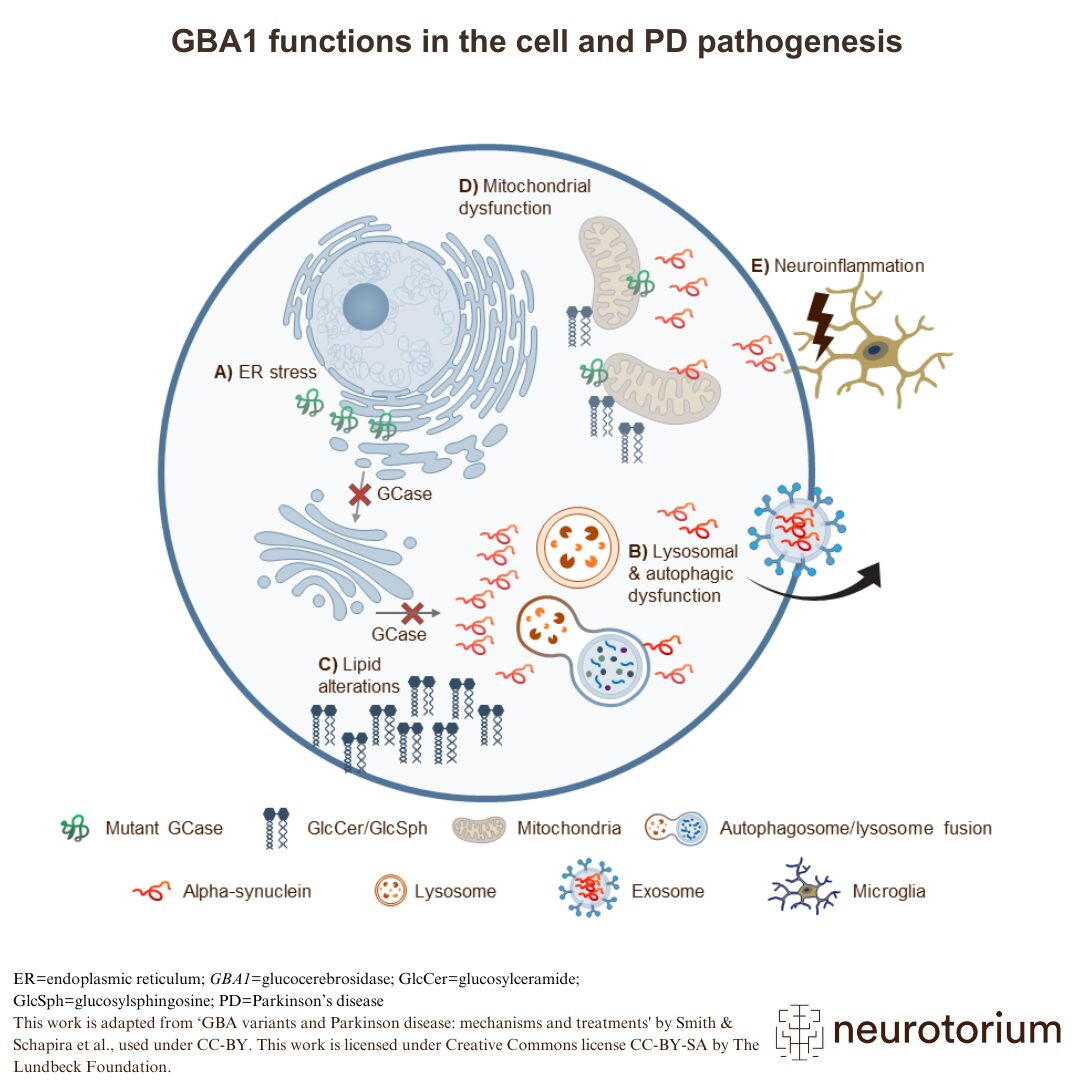
Gaucher disease is a rare, autosomal recessive disease caused by mutations in the GBA1 gene, which encodes the enzyme glucocerebrosidase.4,5 This enzyme is required for the normal function of lysosomes – a component of the cell that degrades unwanted materials.1,3,5
It was in the treatment of Gaucher disease that researchers noted that there were higher proportions of patients with Parkinson’s disease than would otherwise be expected, highlighting GBA1 as a shared risk factor for both Gaucher disease and PD.4
The increasing understanding of GBA1-driven PD pathology has led to some promising avenues of treatment research, including the idea of using virus vectors to deliver wild-type glucocerebrosidase to neurons, and the use of small molecule chaperone proteins to increase the levels of properly folded glucocerebrosidase within cells.2
Related content
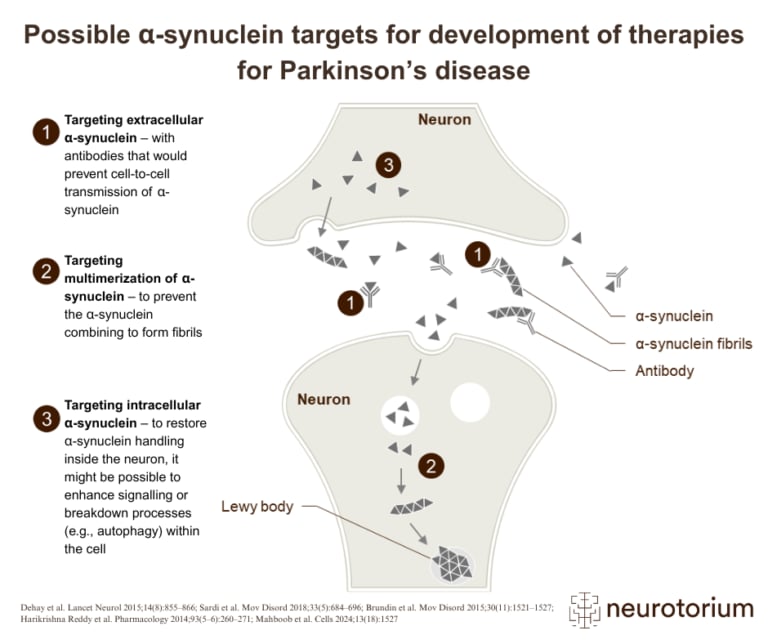
Overview of three therapeutic strategies targeting alpha-synuclein in the development of disease-modifying treatments for Parkinson’s disease
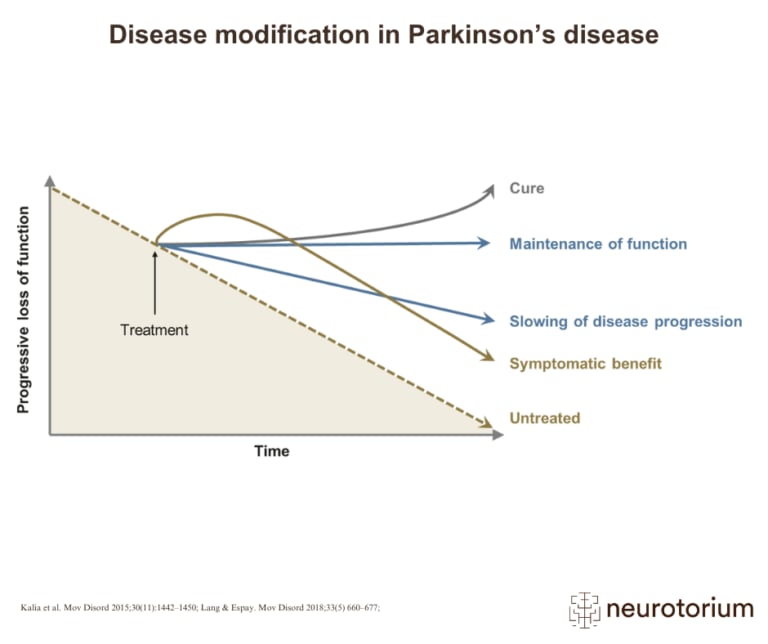
Graphical representation of how various treatment strategies can impact disease progression in Parkinson’s disease, from symptom relief to potential cure
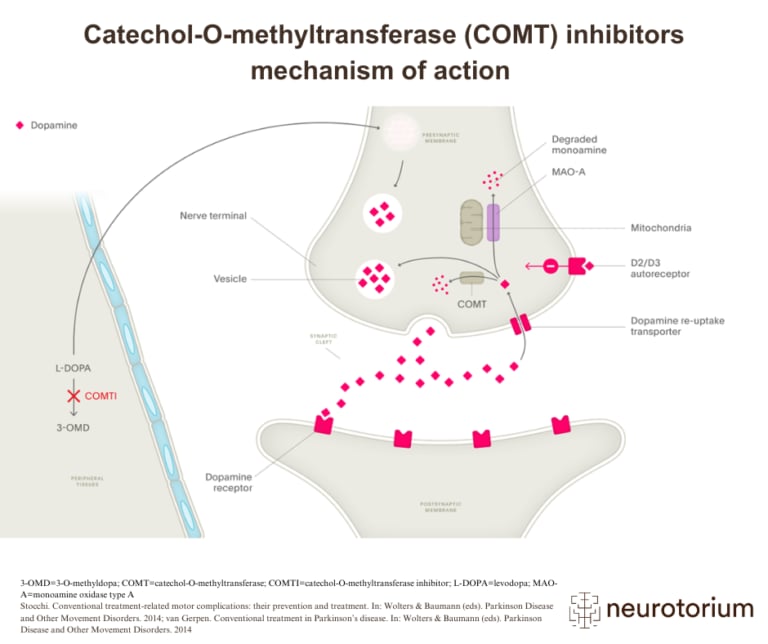
Illustration of how COMT inhibitors increase dopamine availability in Parkinson’s disease by preventing the breakdown of L-DOPA