

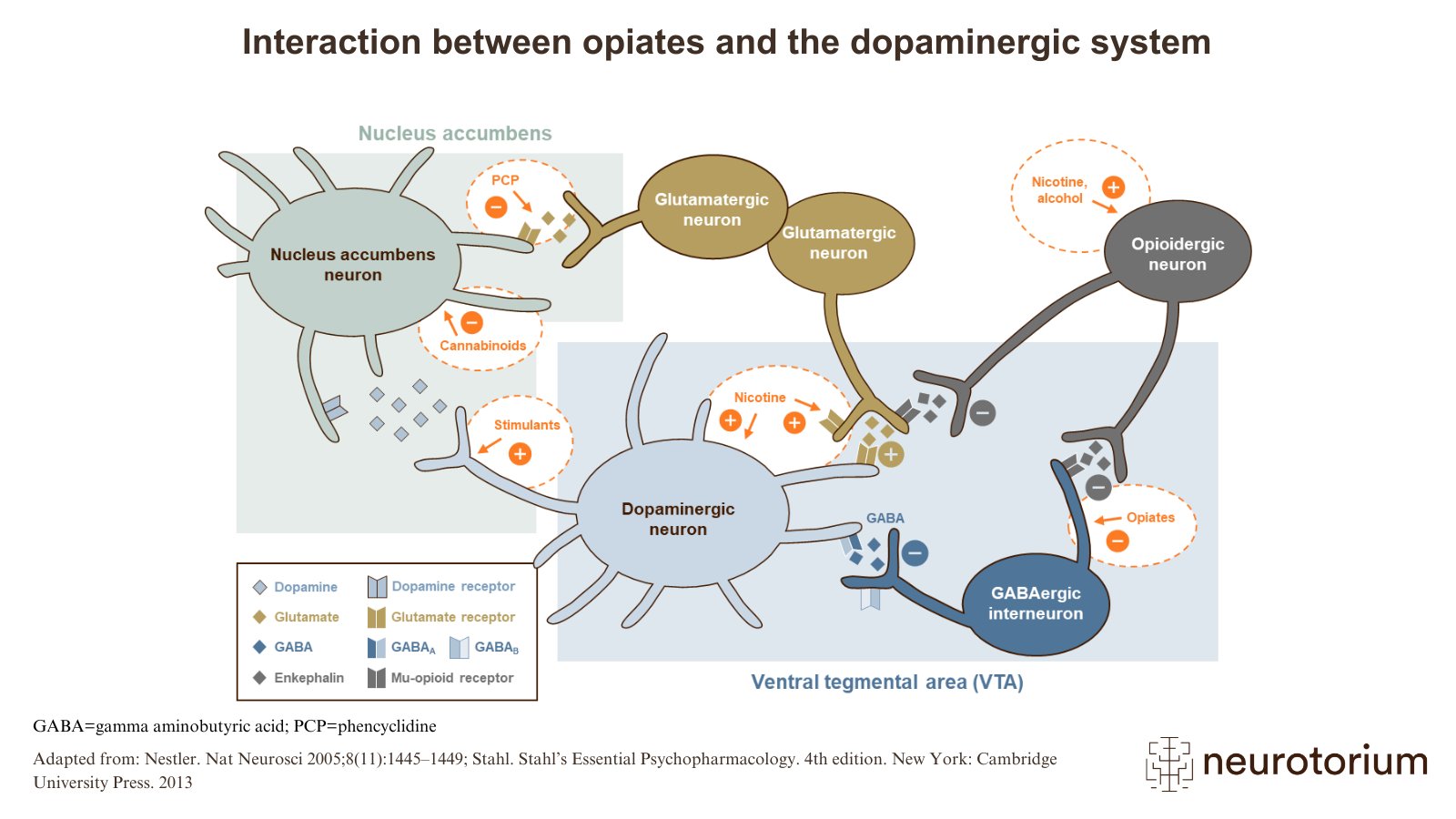
Opioid substances mimic the effects of endogenous opioids within the brain, binding to opioid receptors.1
Stimulants directly increase dopamine transmission in the nucleus accumbens. Opiates indirectly increase dopamine transmission by inhibiting GABAergic interneurons in the ventral tegmental area, which disinhibits the dopaminergic neurons and allows dopamine signalling to occur.
Both routes converge on the dopaminergic reward pathway implicated in substance use disorders.
Related content
Current evidence on the neurobiology of addictive behaviour highlights the transition from reward-driven to habitual drug use through alterations in mesolimbic dopamine, glutamatergic signalling, frontostriatal circuitry, and stress-related systems.
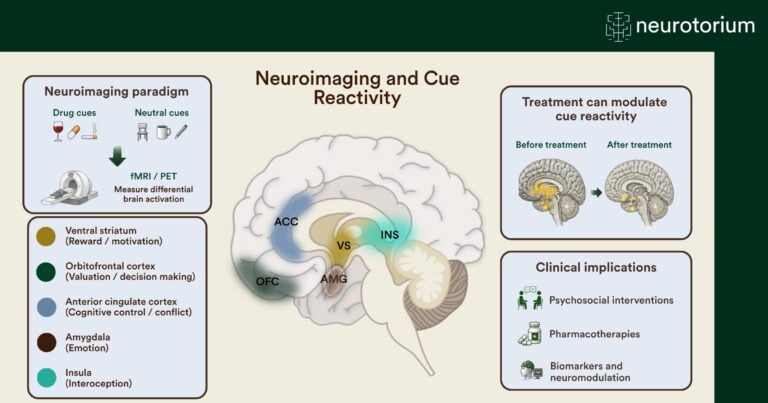
Functional neuroimaging studies commonly compare brain responses to substance-related cues versus neutral cues during fMRI or PET scanning and measure differential brain activation.
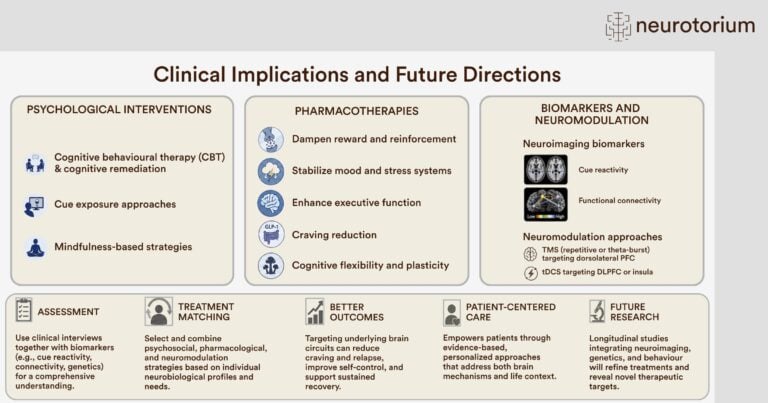
Recognition of addiction as a disorder of distributed brain circuits provides a framework for personalized assessment and treatment of addiction.