

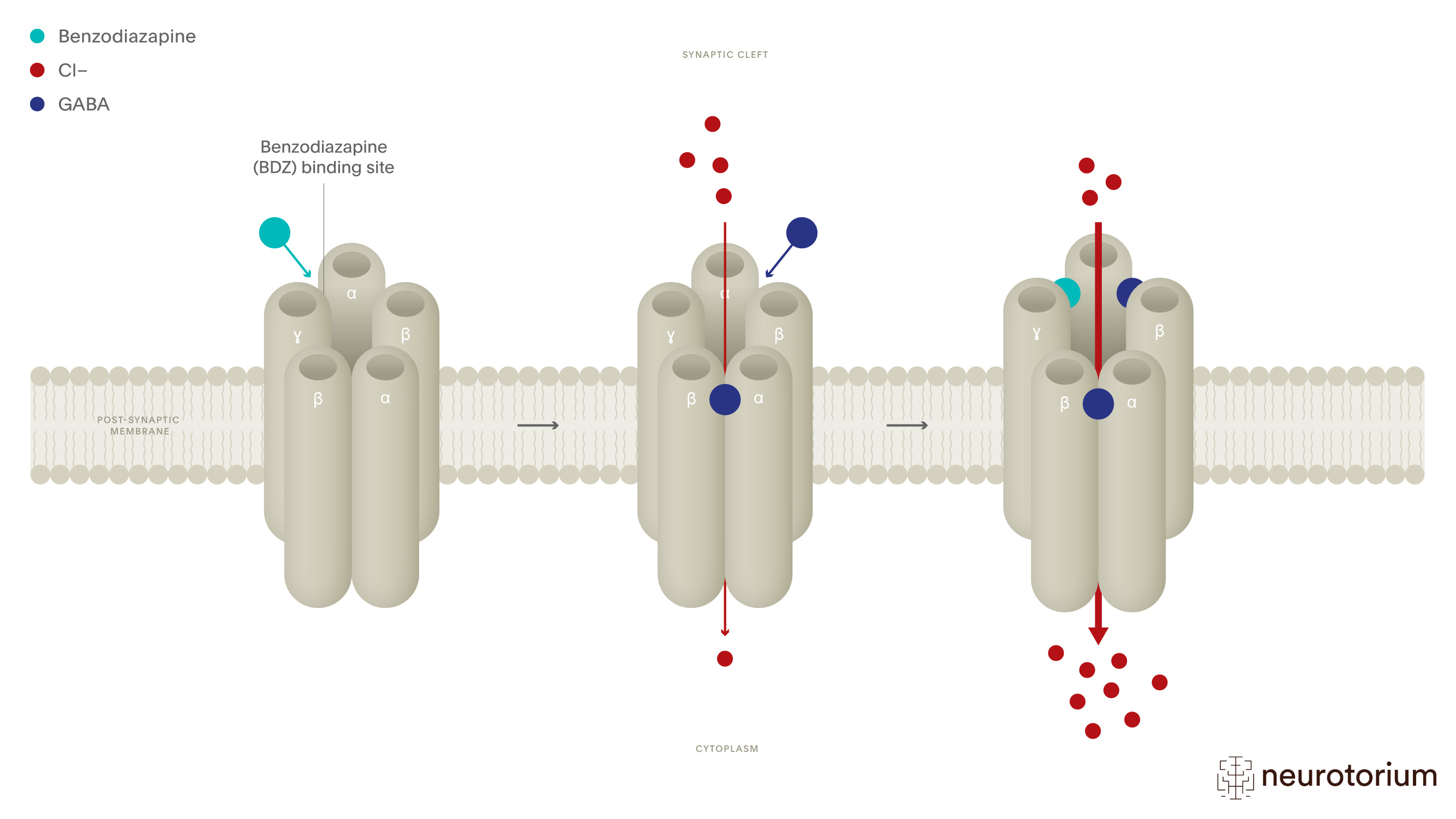
Benzodiazepines (BDZs) bind to the gamma sub-unit of the GABA-A receptor. Their binding causes an allosteric (structural) modification of the receptor that results in an increase in GABA A receptor activity. BDZs do not substitute for GABA, which bind at the alpha sub-unit, but increase the frequency of channel opening events which leads to an increase in chloride ion conductance and inhibition of the action potential.1
Related content

In this video, Professor Dr. Nathalie Jetté reviews depression as a common yet often under-recognized comorbidity in epilepsy.

In this video, Professor Dr. Gretchen Birbeck examines epilepsy-associated stigma as a global public-health challenge

In this video, Professor Dr. Jacqueline French reviews practical, first-line decision-making for anti-seizure medication selection