

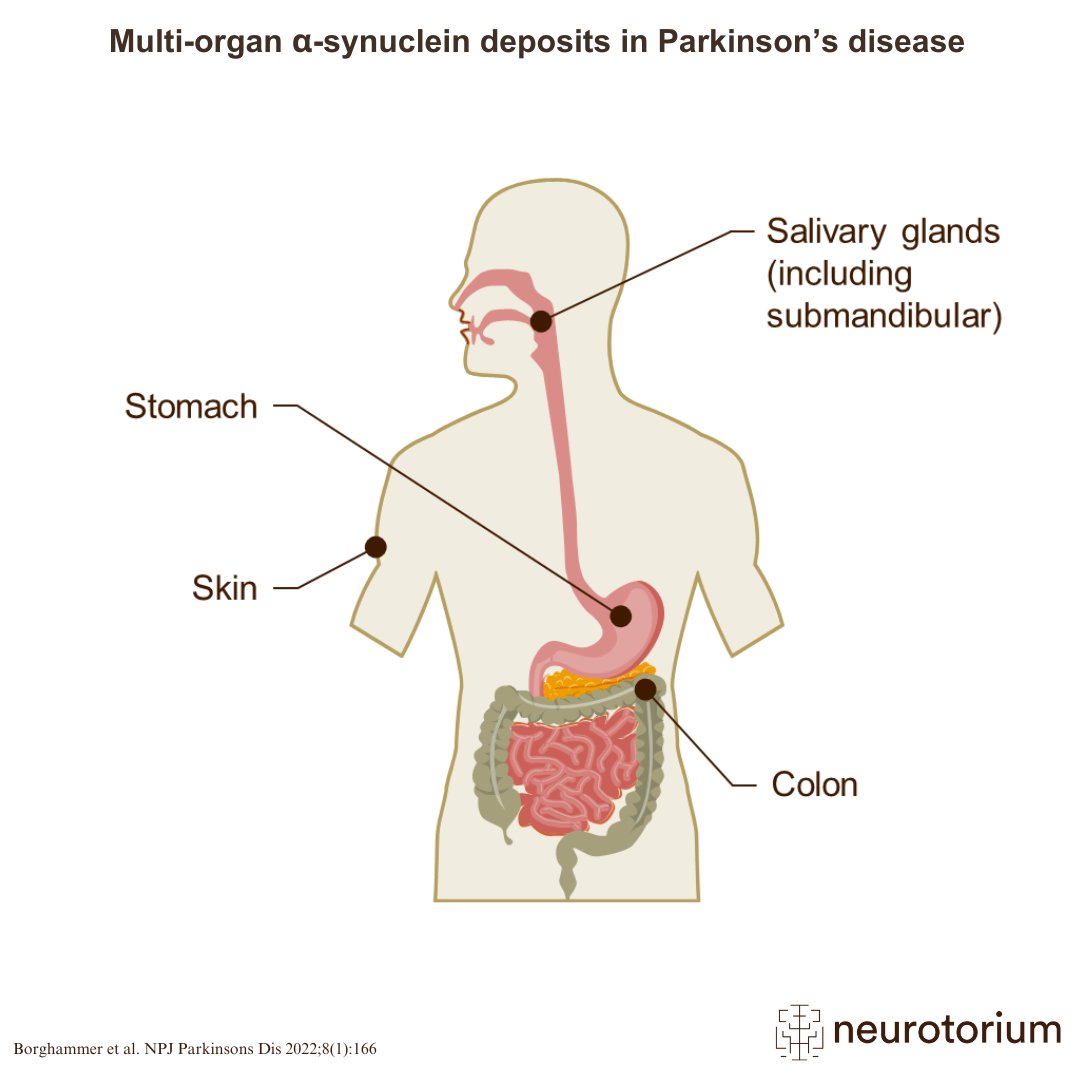
The Lewy pathology and aggregated α-synuclein proteins associated with Parkinson’s Disease are not confined to the central nervous system (CNS); they can also be found in the peripheral nervous system at various sites around the body, such as the skin, gastrointestinal tract, and salivary glands.1
The cause of these α-synuclein deposits is still unknown, as is the extent to which they reflect damage or loss of function in these areas.1,2 Peripheral α-synuclein pathology represents an additionally promising arena in which to explore the development of a useful biomarker of PD.2 Peripheral α-synuclein (i.e., that found outside the CNS) is easier to sample (in a skin or gut biopsy) than brain tissue.1
Related content
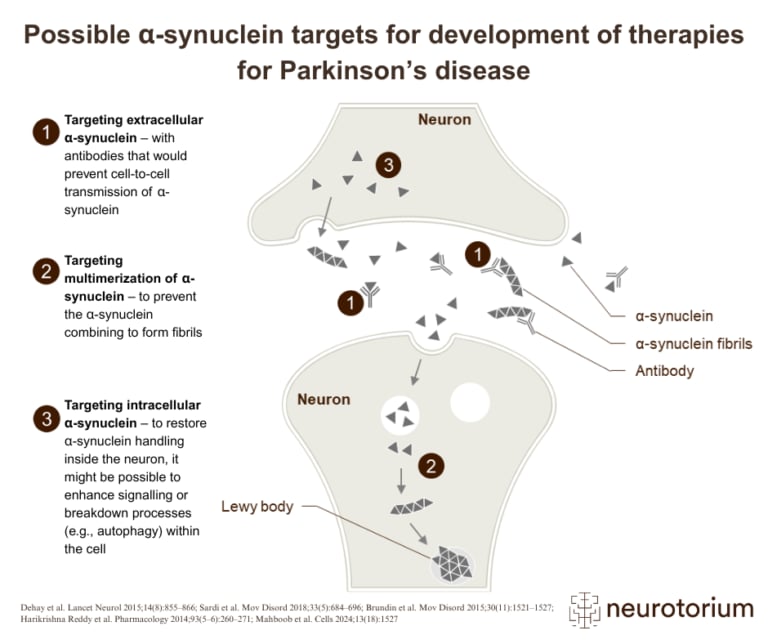
Overview of three therapeutic strategies targeting alpha-synuclein in the development of disease-modifying treatments for Parkinson’s disease
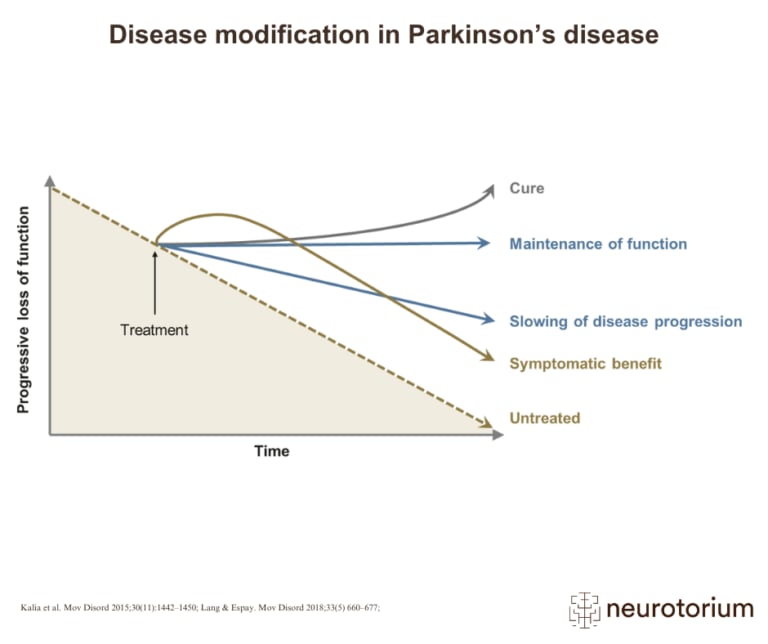
Graphical representation of how various treatment strategies can impact disease progression in Parkinson’s disease, from symptom relief to potential cure
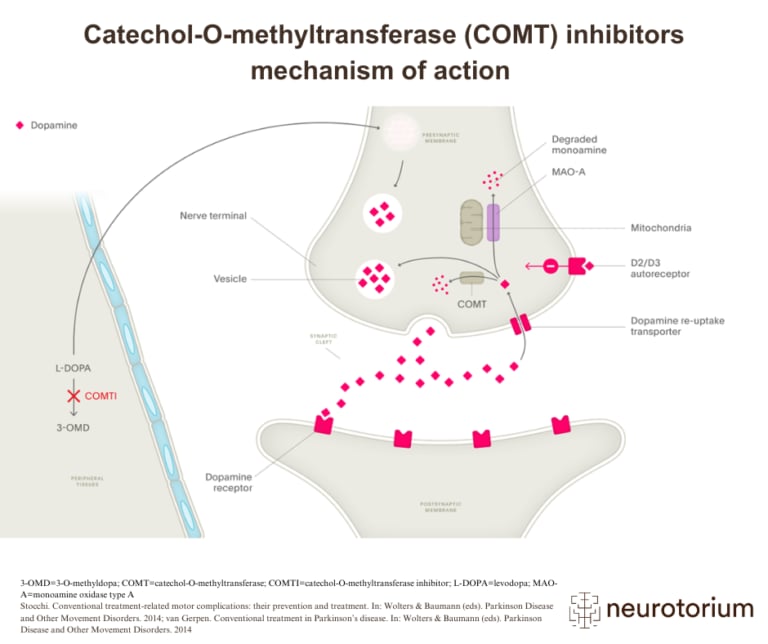
Illustration of how COMT inhibitors increase dopamine availability in Parkinson’s disease by preventing the breakdown of L-DOPA