

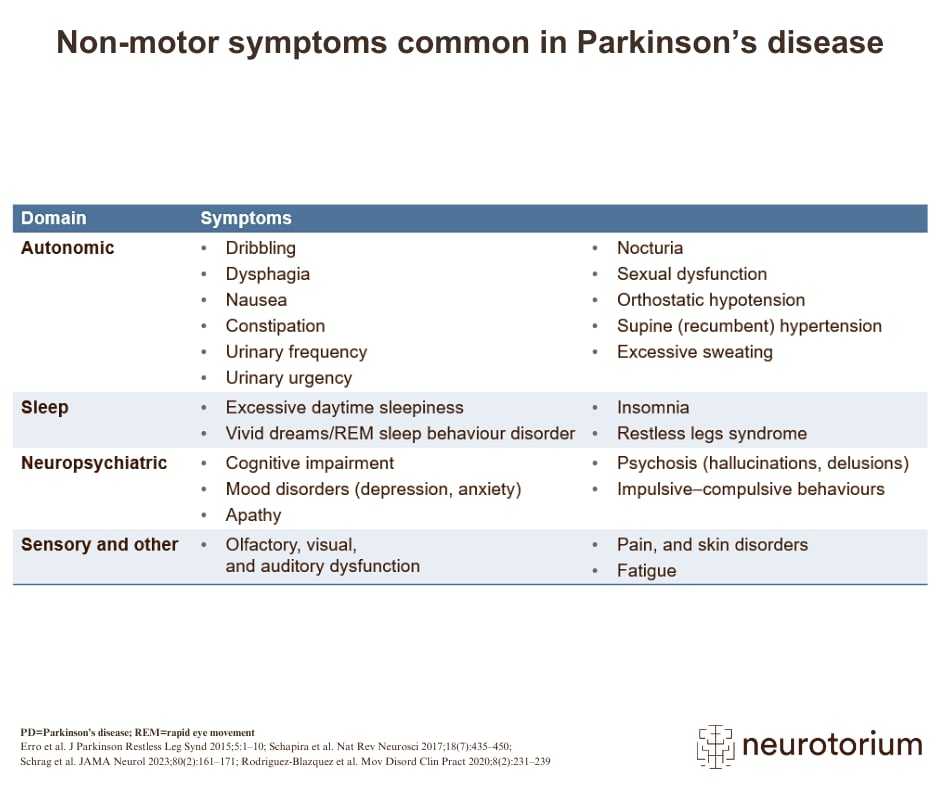
The non-motor symptoms of Parkinson’s Disease can be grouped into four domains: autonomic (including gastrointestinal, genitourinary, and cardiovascular symptoms), sleep disorders, neuropsychiatric disorders, and sensory and other symptoms (including pain and fatigue).1-4
Many of these symptoms are treatable, mostly with drug therapy, but sometimes with non-pharmacological approaches.1,2 Routine screening of patients with validated questionnaires may help to identify and treat symptoms effectively, as they arise.56
Related content
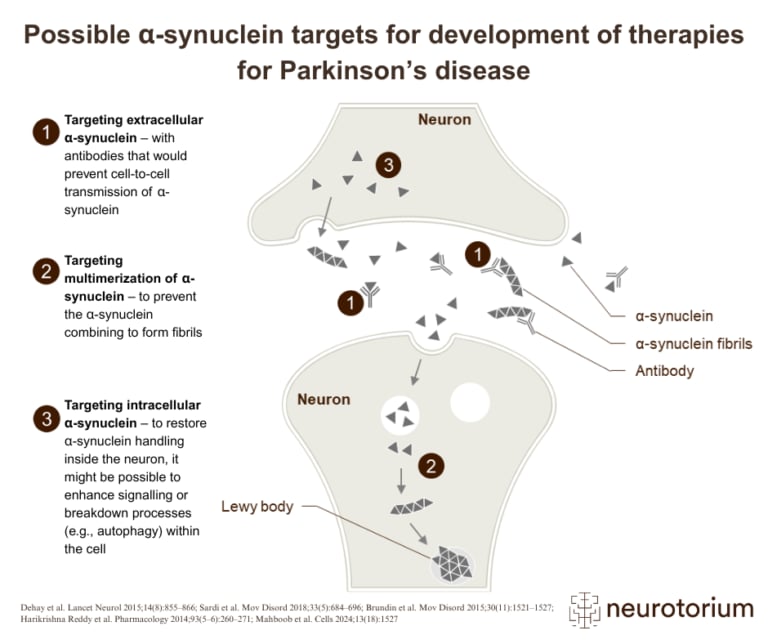
Overview of three therapeutic strategies targeting alpha-synuclein in the development of disease-modifying treatments for Parkinson’s disease
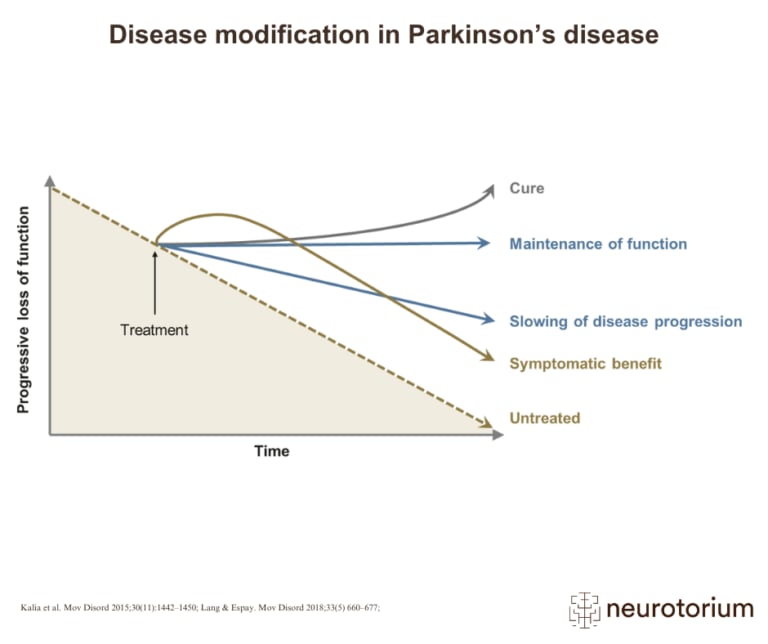
Graphical representation of how various treatment strategies can impact disease progression in Parkinson’s disease, from symptom relief to potential cure
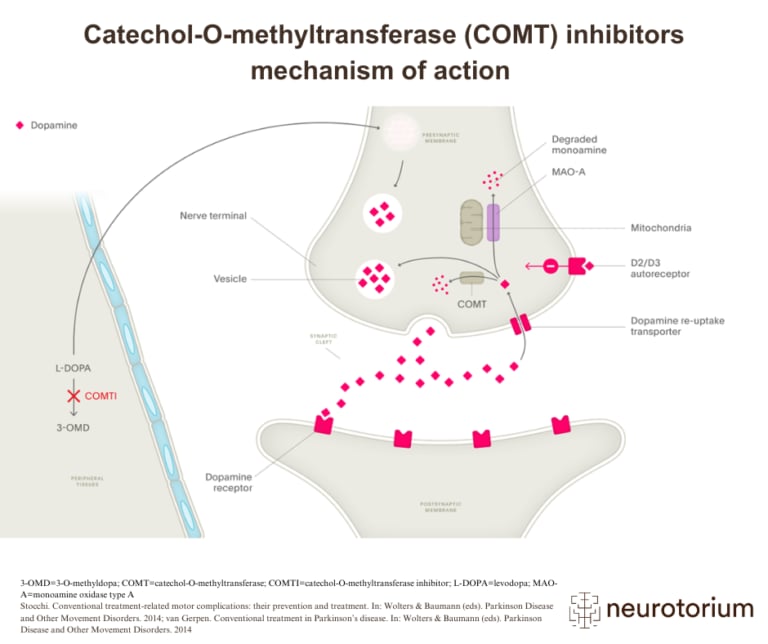
Illustration of how COMT inhibitors increase dopamine availability in Parkinson’s disease by preventing the breakdown of L-DOPA