

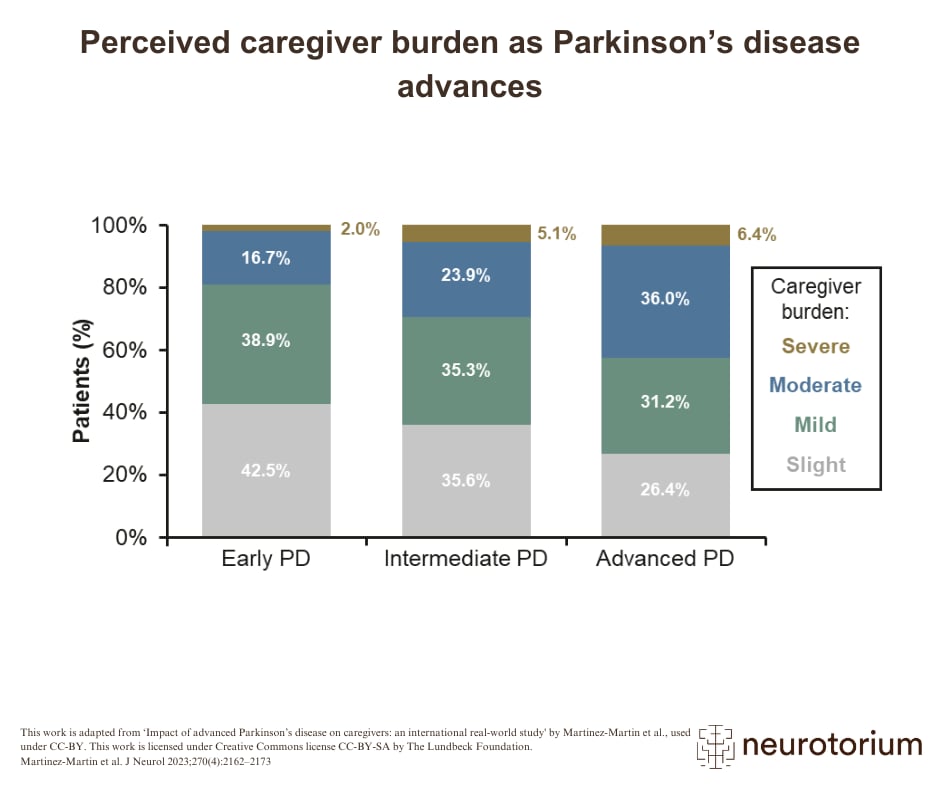
There are many aspects of Parkinson’s disease (PD) that can intensify the caregiver burden (e.g., impaired movement, sleep disorders, pain, cognitive impairment, etc.).1-4
Attentional deficits may have a negative impact on the ability of people with PD to perform basic everyday tasks, including physical and social activities.1 Consequently, caregivers may take on these responsibilities, further increasing the burden of care and reducing quality of life (which may already be considerably affected).1
The increasing burden of advancing PD reinforces the importance of patient- as well as caregiver-centred treatments, such as support groups and palliative care, that can help alleviate some of this caregiver burden.3
Related content
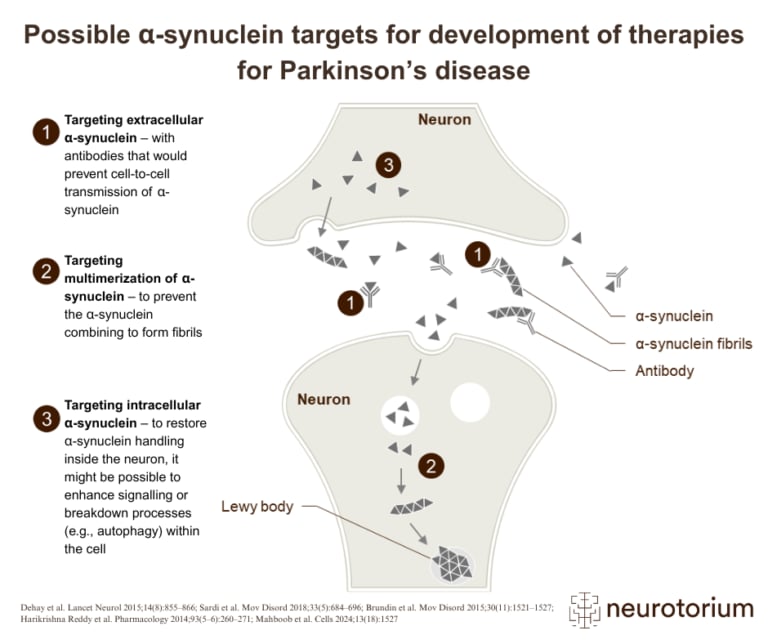
Overview of three therapeutic strategies targeting alpha-synuclein in the development of disease-modifying treatments for Parkinson’s disease
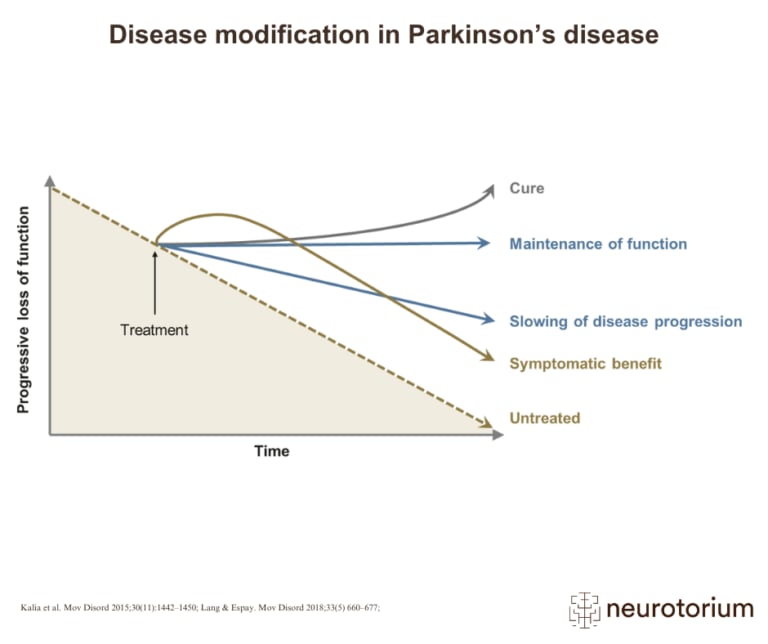
Graphical representation of how various treatment strategies can impact disease progression in Parkinson’s disease, from symptom relief to potential cure
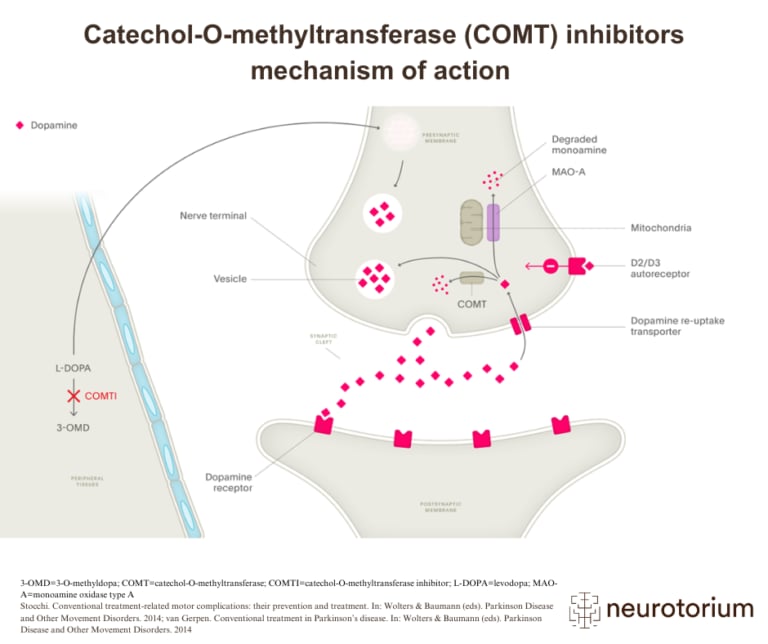
Illustration of how COMT inhibitors increase dopamine availability in Parkinson’s disease by preventing the breakdown of L-DOPA