

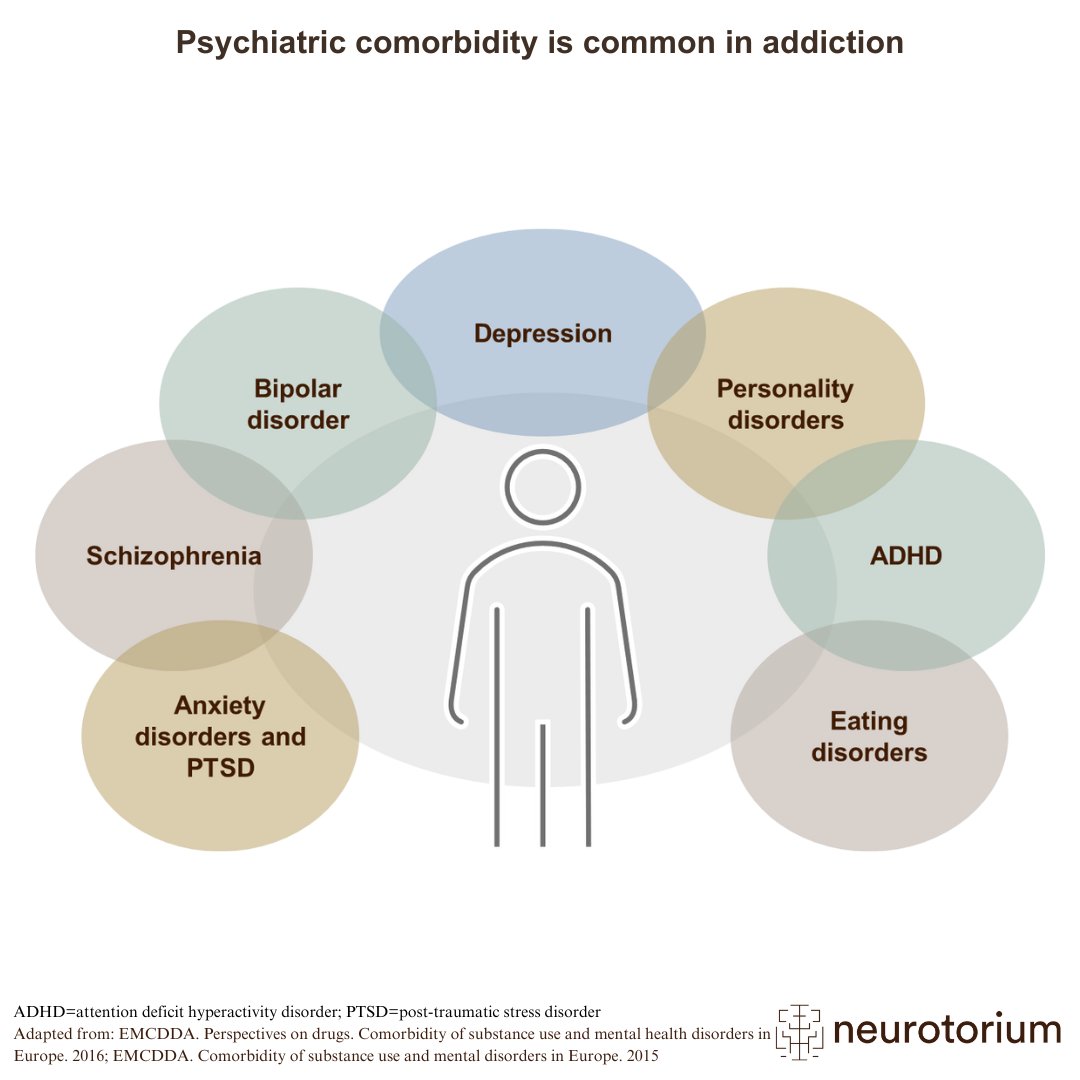
The phenomenon of comorbidity is common in psychiatry – defined as the presence of two or more psychological/psychiatric conditions in one individual.1,2 Psychiatric comorbidity is common in addiction, with many different psychiatric conditions seen at greater frequency than in the general population, as outlined on the slide.2,3 The presence of comorbidity complicates a diagnosis.2 Clinically, the approach to treating a patient with a comorbidity should involve considering both diagnoses and forming a management approach for that individual that considers efficacy, and interactions and adverse effects of pharmacotherapy.2
Related content
Current evidence on the neurobiology of addictive behaviour highlights the transition from reward-driven to habitual drug use through alterations in mesolimbic dopamine, glutamatergic signalling, frontostriatal circuitry, and stress-related systems.
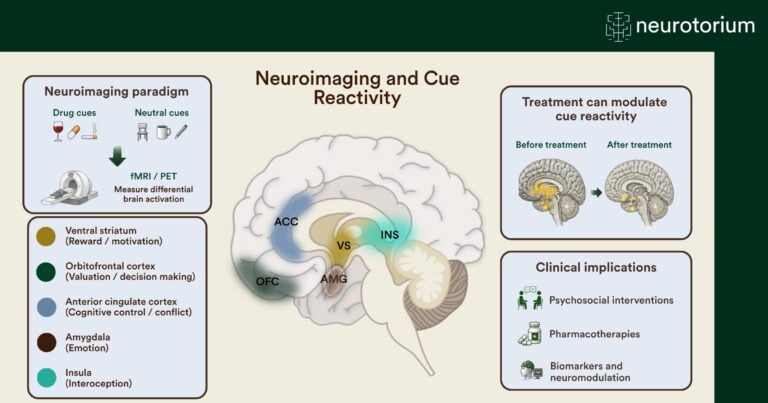
Functional neuroimaging studies commonly compare brain responses to substance-related cues versus neutral cues during fMRI or PET scanning and measure differential brain activation.
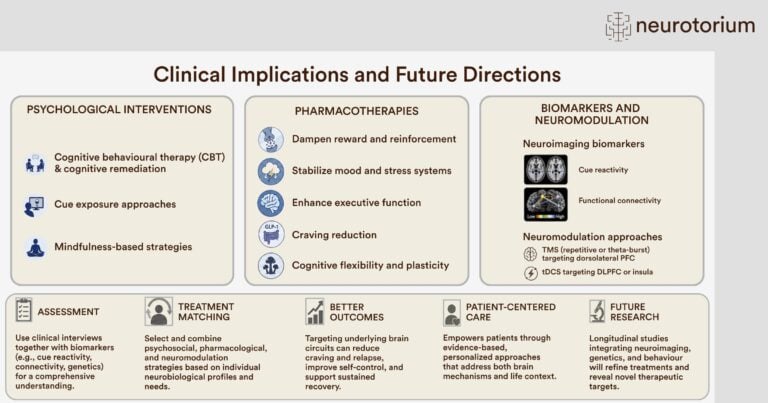
Recognition of addiction as a disorder of distributed brain circuits provides a framework for personalized assessment and treatment of addiction.