

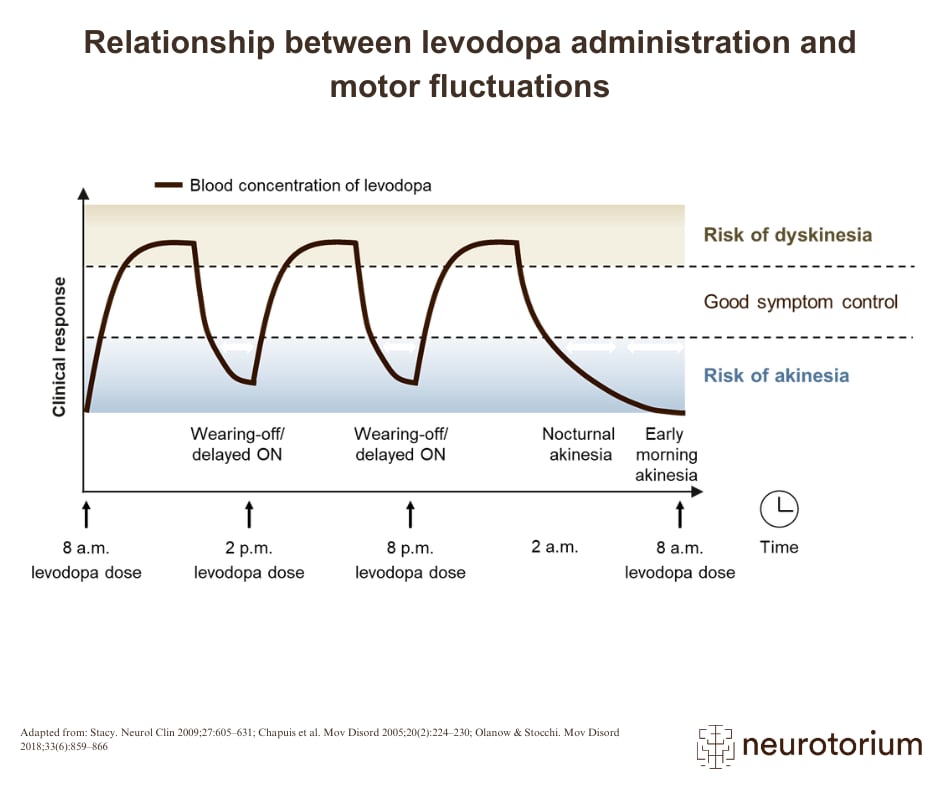
As the extent of neurodegeneration in the substantia nigra becomes greater, its capacity to produce dopamine diminishes to the point where patients require larger doses of levodopa to maintain normal function.4
Motor complications, such as dyskinesia and motor fluctuations, can greatly worsen the quality of life during mid to late Parkinson’s disease.2 A priority for the management of PD during this time is to optimise the administration of dopaminergic medication, minimising time spent in ‘OFF’ states (e.g., return of motor symptoms).5 Strategies to combat OFF periods include the use of longer-acting levodopa formulations and other medications (e.g., dopamine agonists or monoamine oxidase inhibitors) or, in selected situations, device-aided therapies (e.g., infusions of dopaminergic medications and deep brain stimulation).6
Related content
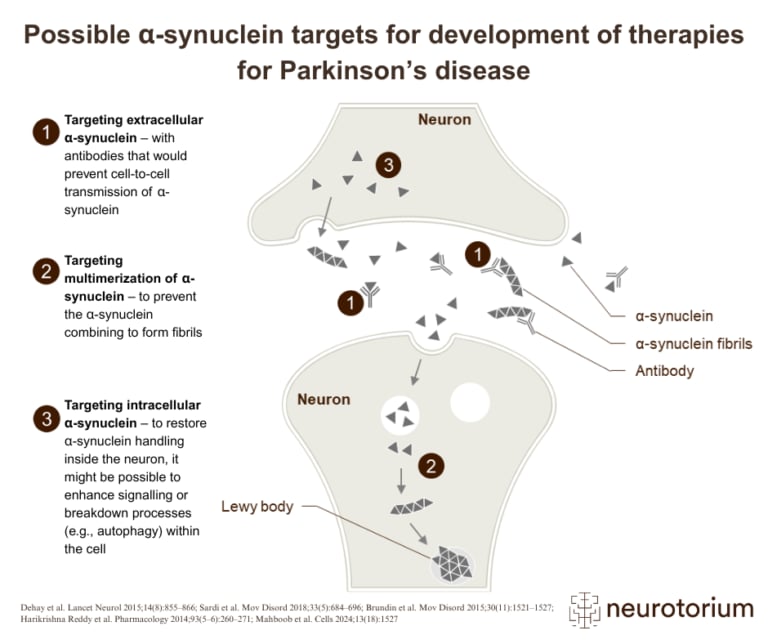
Overview of three therapeutic strategies targeting alpha-synuclein in the development of disease-modifying treatments for Parkinson’s disease
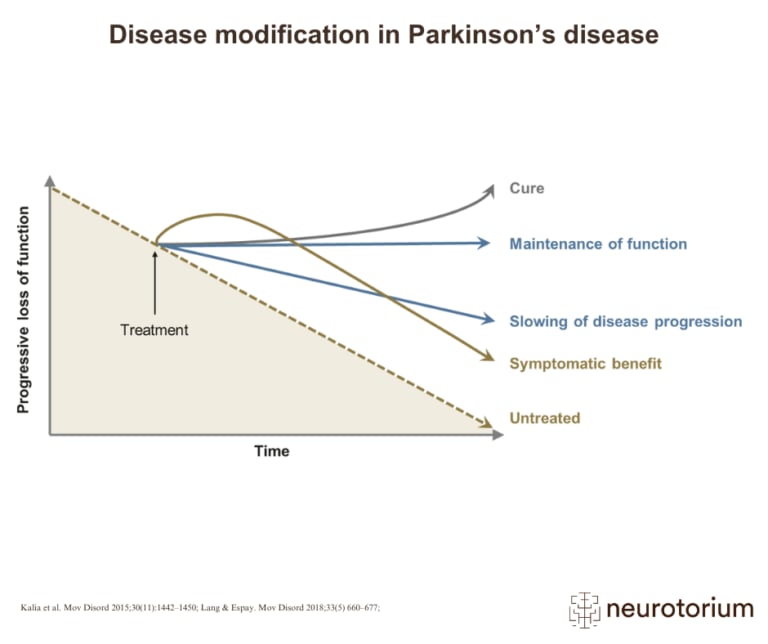
Graphical representation of how various treatment strategies can impact disease progression in Parkinson’s disease, from symptom relief to potential cure
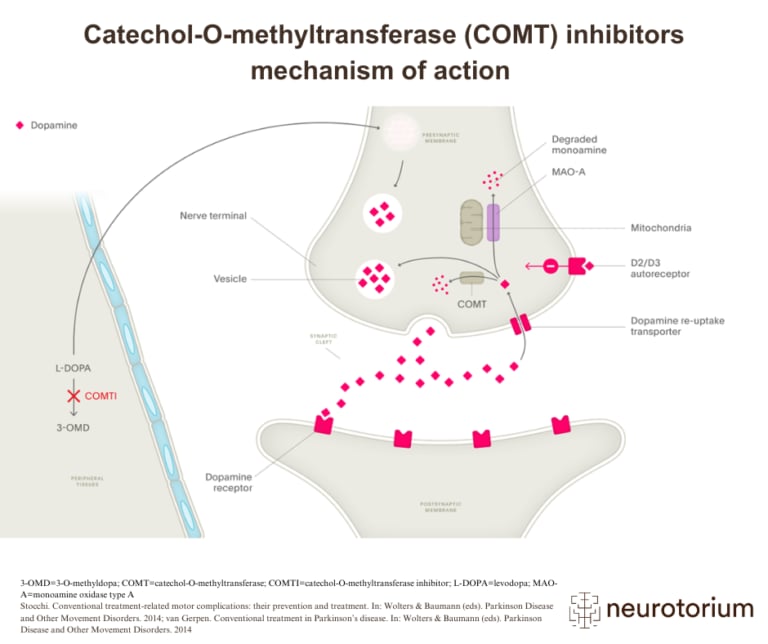
Illustration of how COMT inhibitors increase dopamine availability in Parkinson’s disease by preventing the breakdown of L-DOPA