

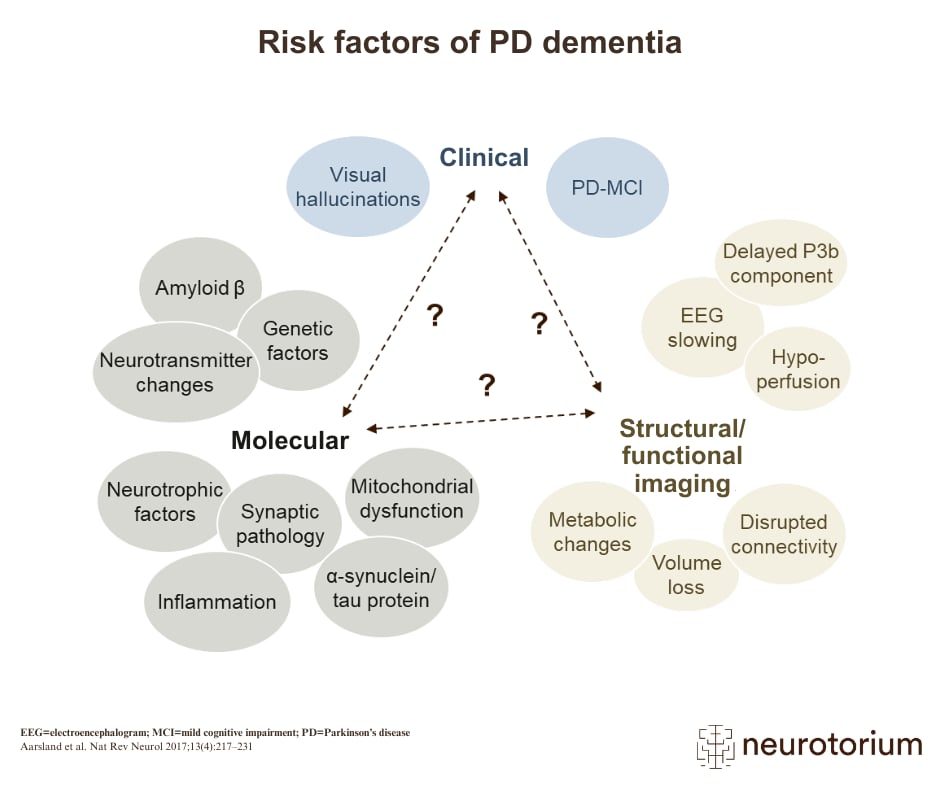
The risk factors for Parkinson’s Disease (PD) dementia can be grouped into clinical, molecular, and structural/functional imaging risk factors – as depicted on the slide.1
Several potential therapies and interventions have been proposed or researched to tackle the cognitive symptoms of PD, and whilst there is now some good evidence that certain pharmacotherapies are effective in patients with PD and cognitive symptoms, more good-quality placebo-controlled trials are needed.1-4 A disease-modifying therapy that can slow the progression of PD, and delay the onset of dementia, is an urgent unmet need.1,5
Pharmacological therapies
- There is some evidence to support the use of acetylcholinesterase-inhibitors, and some other antidementia drugs1-3
Non-pharmacological therapies
- Cognitive training routines have been investigated to improve cognition in PD1
- Some evidence suggests that physical exercise can improve non-motor symptoms, including cognition in patients with PD1
- Again, some studies have suggested deep brain stimulation could be effective in patients with PD and cognitive symptoms1
Related content
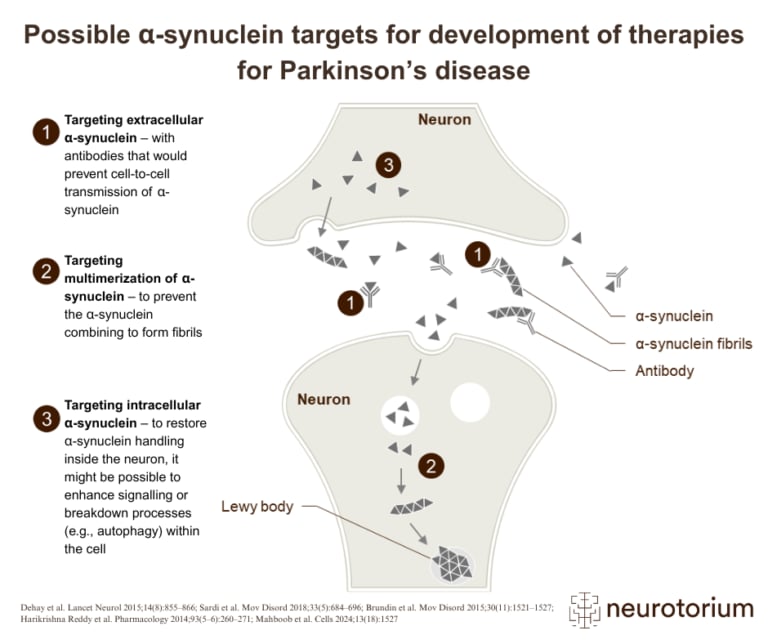
Overview of three therapeutic strategies targeting alpha-synuclein in the development of disease-modifying treatments for Parkinson’s disease
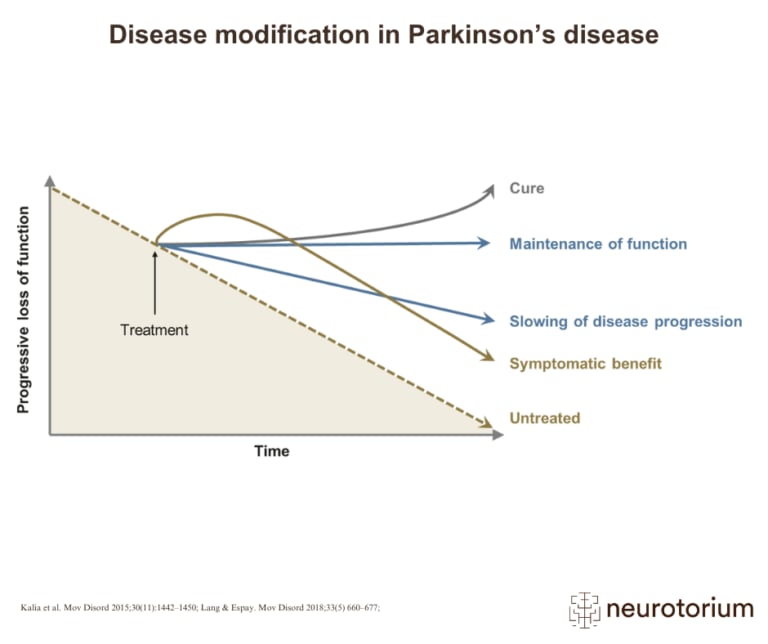
Graphical representation of how various treatment strategies can impact disease progression in Parkinson’s disease, from symptom relief to potential cure
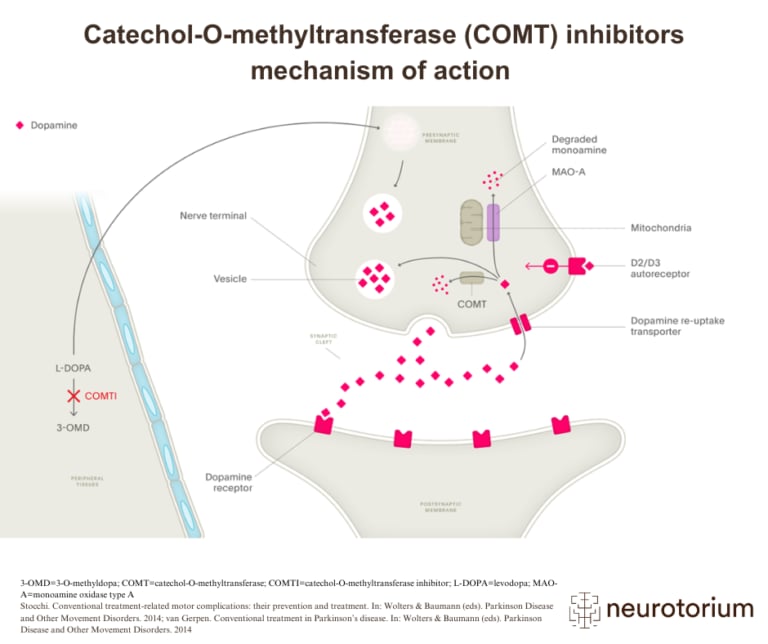
Illustration of how COMT inhibitors increase dopamine availability in Parkinson’s disease by preventing the breakdown of L-DOPA