

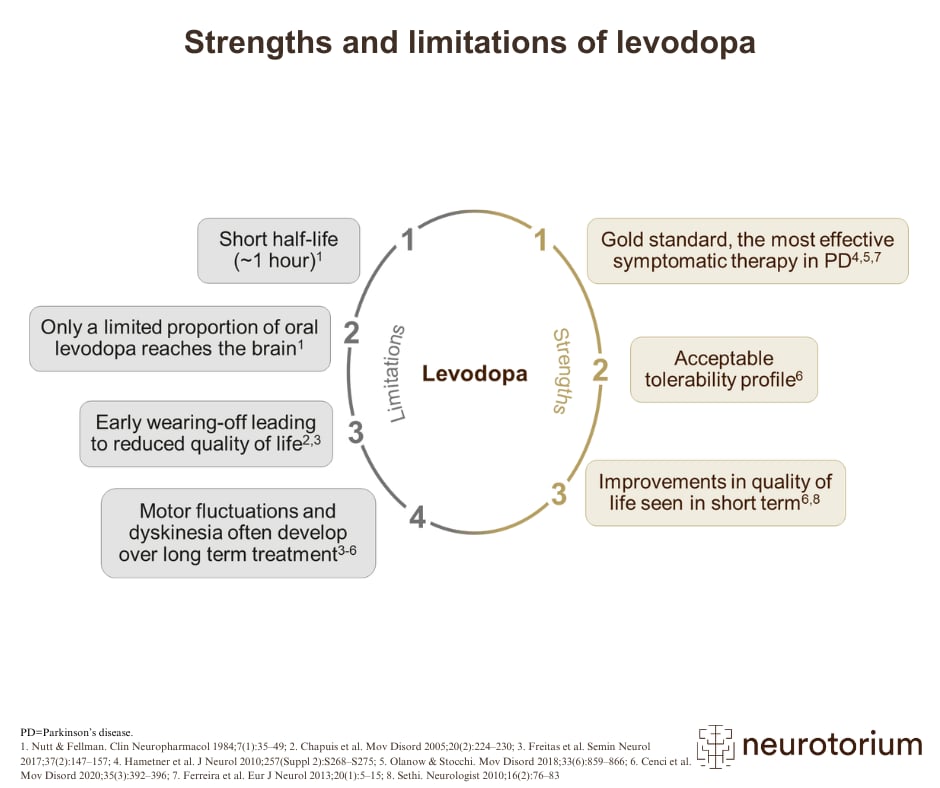
Although levodopa has been a major success story for the management of Parkinson’s disease (PD), it does have some limitations, such as the development of dopa-related response fluctuations (both motor and non-motor) and drug-induced dyskinesias.1
A single dose of levodopa/decarboxylase inhibitor relieves symptoms for several hours.1,2 Levodopa has a half-life of approximately 50 minutes once absorbed into the bloodstream, although the addition of a decarboxylase inhibitor extends the half-life to approximately 90 minutes.2,3 Therefore, patients typically need to take their levodopa several times during the day to control their symptoms.2
The duration of therapeutic effect of levodopa doses often decreases over time, as the patient begins to experience greater periods of motor fluctuations and/or drug-induced dyskinesias.4 From this point onwards, the patient experiences shorter periods of relief from motor symptoms, and greater periods of time with levodopa-induced complications, all of which can substantially impair the patient’s quality of life.1,4
Related content
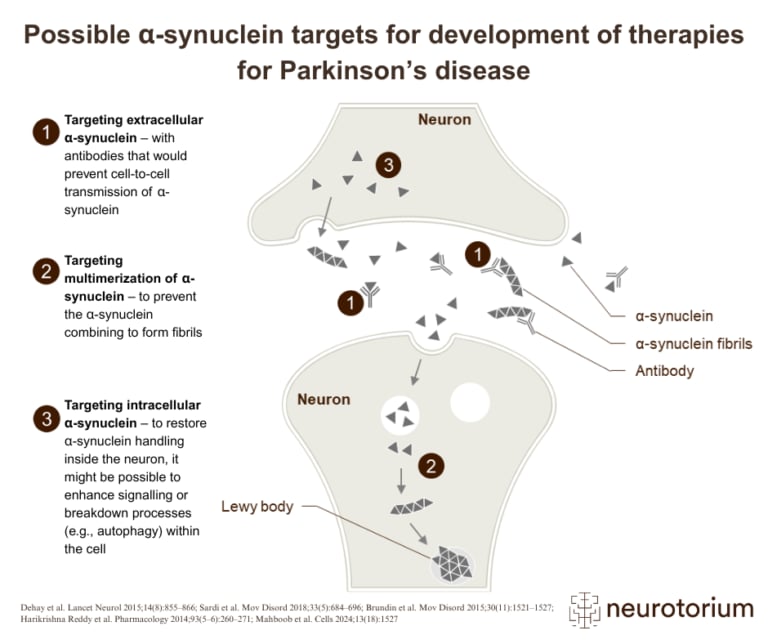
Overview of three therapeutic strategies targeting alpha-synuclein in the development of disease-modifying treatments for Parkinson’s disease
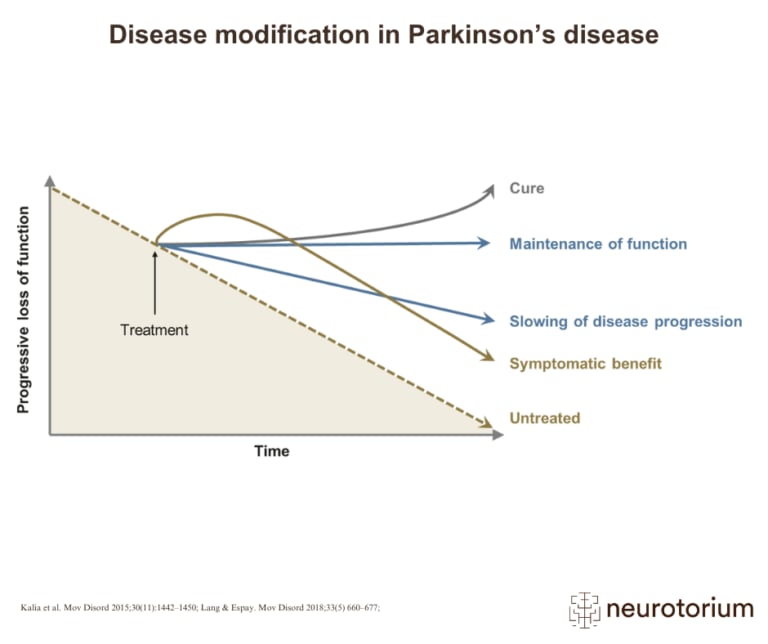
Graphical representation of how various treatment strategies can impact disease progression in Parkinson’s disease, from symptom relief to potential cure
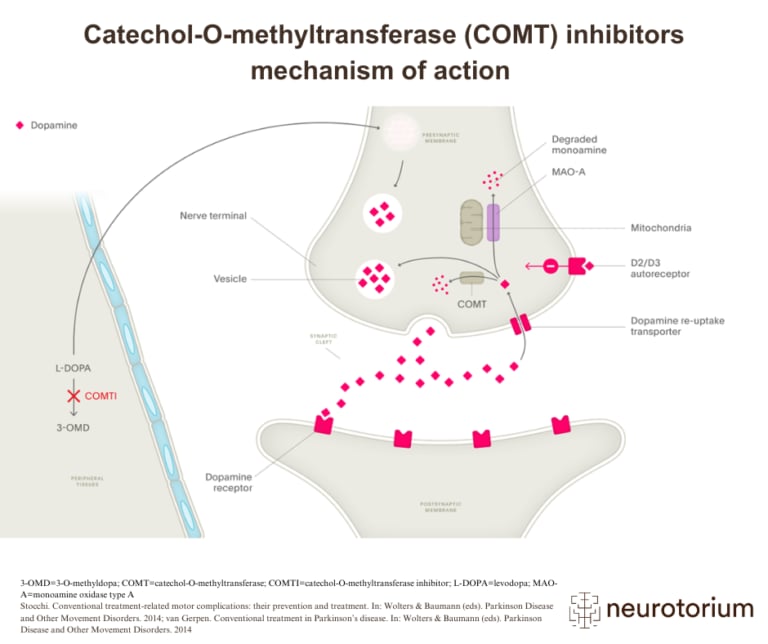
Illustration of how COMT inhibitors increase dopamine availability in Parkinson’s disease by preventing the breakdown of L-DOPA