

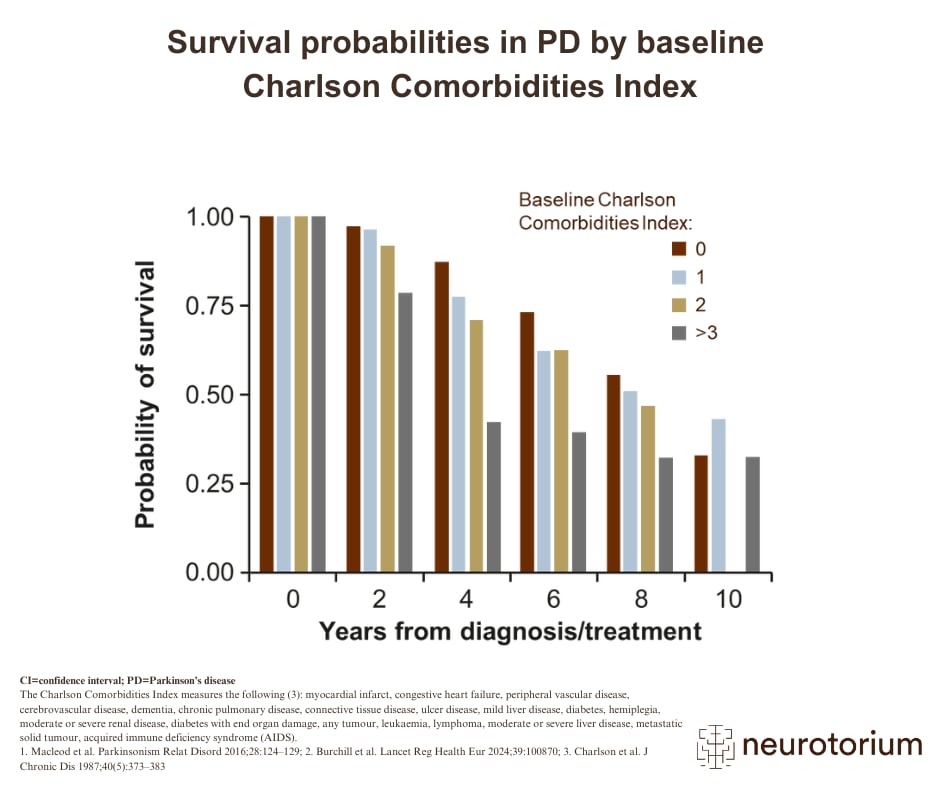
Parkinson’s Disease occurs predominantly in elderly people, who commonly have comorbidities.1,2,4
A study that followed patients with PD over a 12-year period, concluded that having a higher level of comorbidity during the earlier stages of PD (0–4 years from diagnosis/recruitment) increased the likelihood of early death.1 Beyond 4 years, however, the amount of comorbidity in the population appeared to make little difference.1 Deaths that occur during early-stage PD are most often caused by other factors (e.g., cardiovascular disease) rather than PD itself, since PD symptoms during this period tend to be mild, easily-controlled, and unlikely to have severe adverse effects on health.1
The study also recommended the Charlson Comorbidity Index (CCI)3 as the most appropriate tool for measuring comorbidity in patients with PD; it is quicker to use and produces more consistent results than other currently available assessment methods.1
Related content
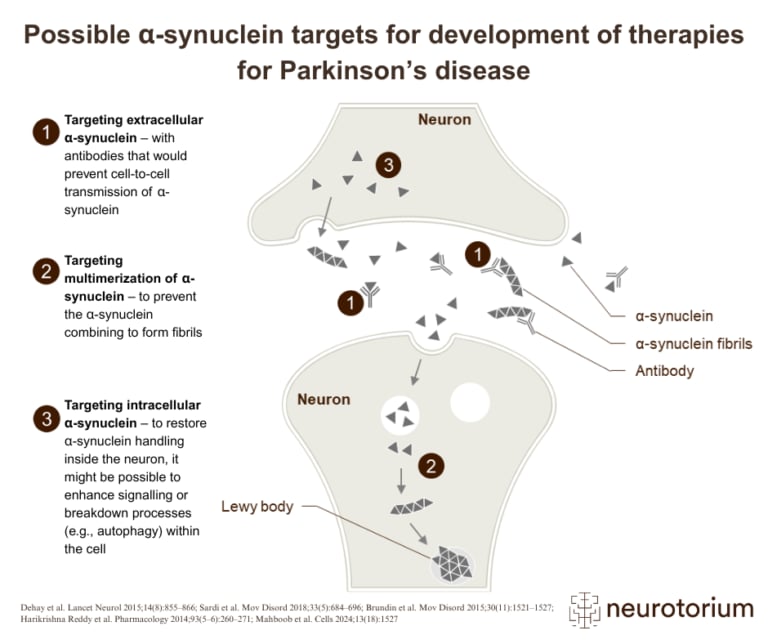
Overview of three therapeutic strategies targeting alpha-synuclein in the development of disease-modifying treatments for Parkinson’s disease
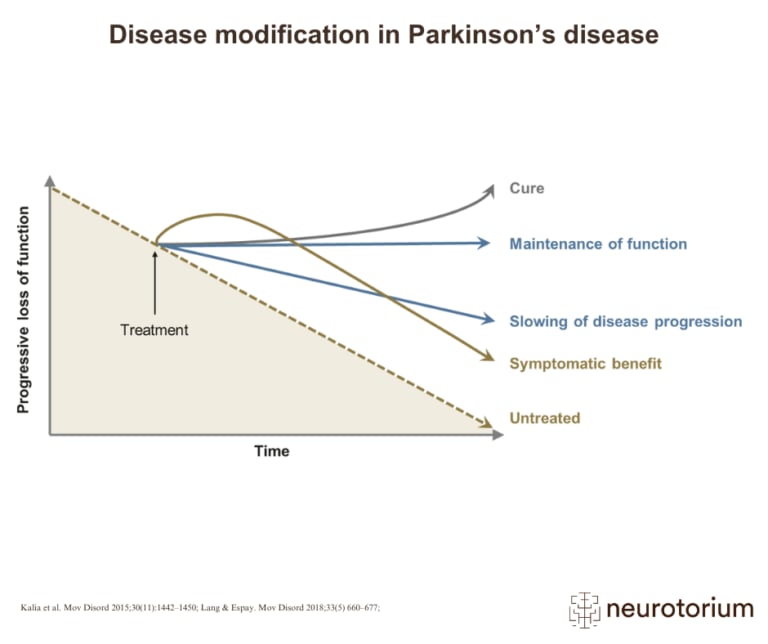
Graphical representation of how various treatment strategies can impact disease progression in Parkinson’s disease, from symptom relief to potential cure
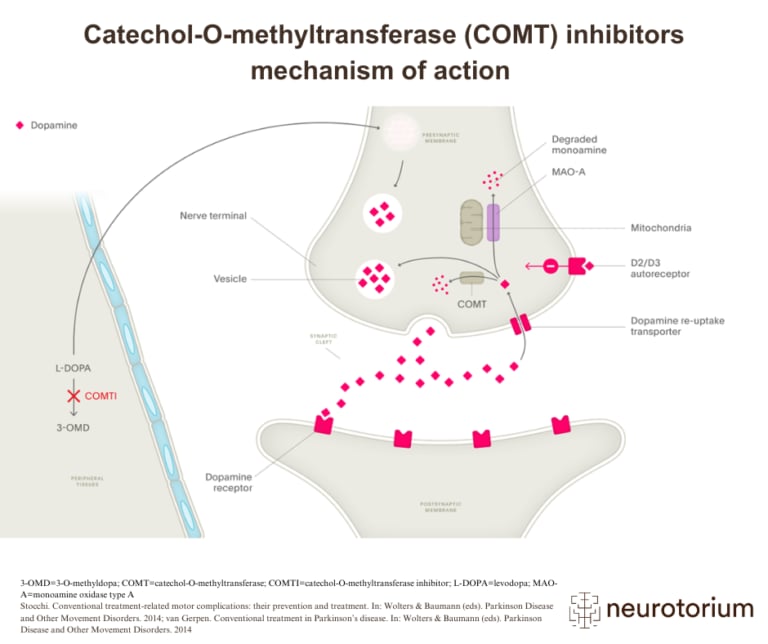
Illustration of how COMT inhibitors increase dopamine availability in Parkinson’s disease by preventing the breakdown of L-DOPA