

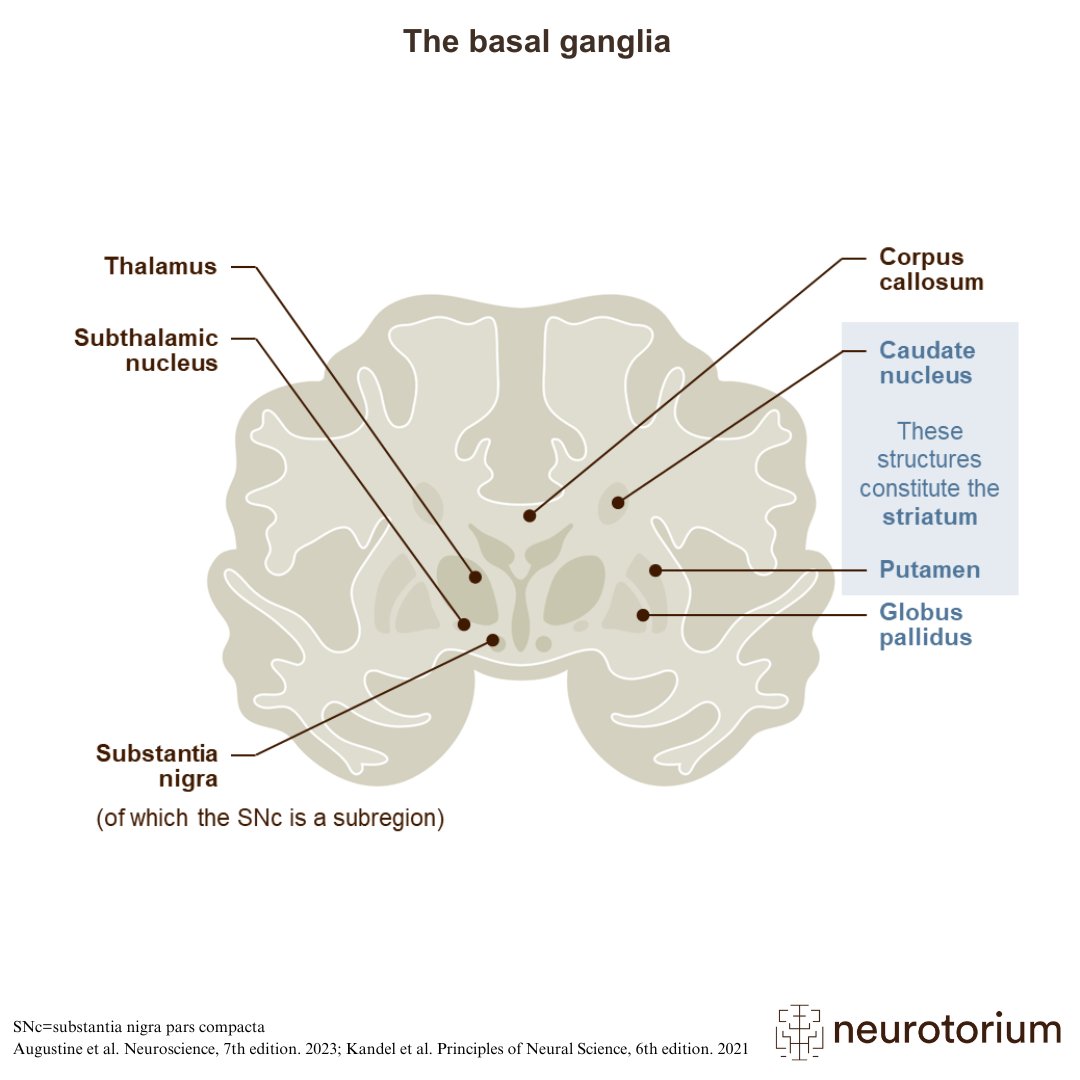
- The basal ganglia can either promote or inhibit movement, depending on the dopamine innervation of the striatum1,2
- Normal movement is dependent on appropriate dopamine production by SNc neurons innervating the striatum1,2. In Parkinson’s disease, the loss of these neurons disrupts this balance.
- To facilitate movement, the striatum receives dopaminergic motor input from the cortex
- The striatum sends this signal further, after modulation by the SNc (either excitatory as a result of dopamine D1 receptor activation, or inhibitory, as a result of dopamine D2 receptor activation)
- The signal is then sent through direct and indirect pathways to the GPi segment
GPi=globus pallidus internus; SNc=substantia nigra pars compacta
Related content
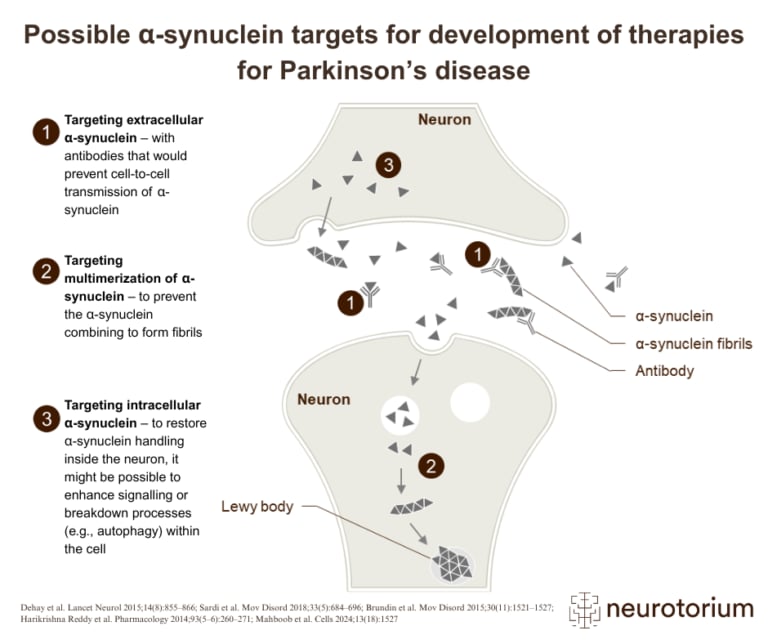
Possible α-synuclein targets for development of therapies for Parkinson’s disease
Overview of three therapeutic strategies targeting alpha-synuclein in the development of disease-modifying treatments for Parkinson’s disease
26.06.2025
Parkinson’s Disease
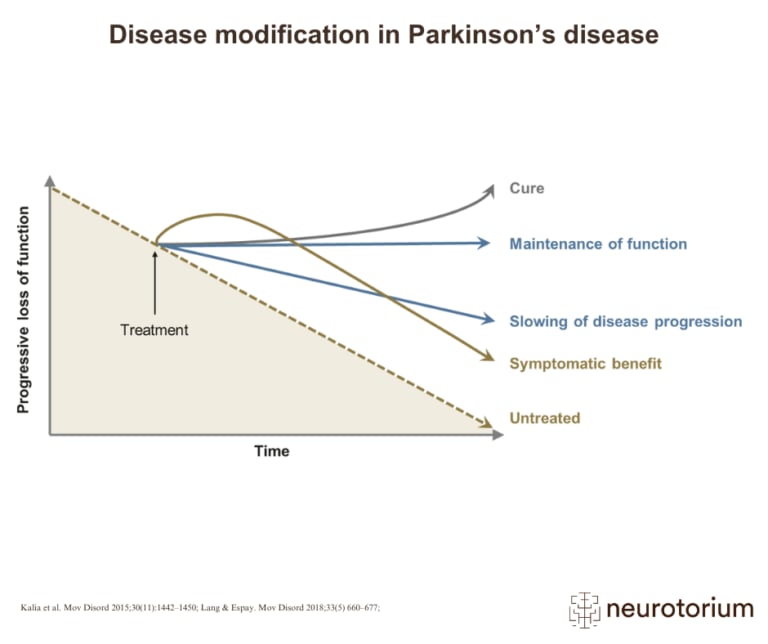
Disease modification in Parkinson’s disease
Graphical representation of how various treatment strategies can impact disease progression in Parkinson’s disease, from symptom relief to potential cure
26.06.2025
Parkinson’s Disease
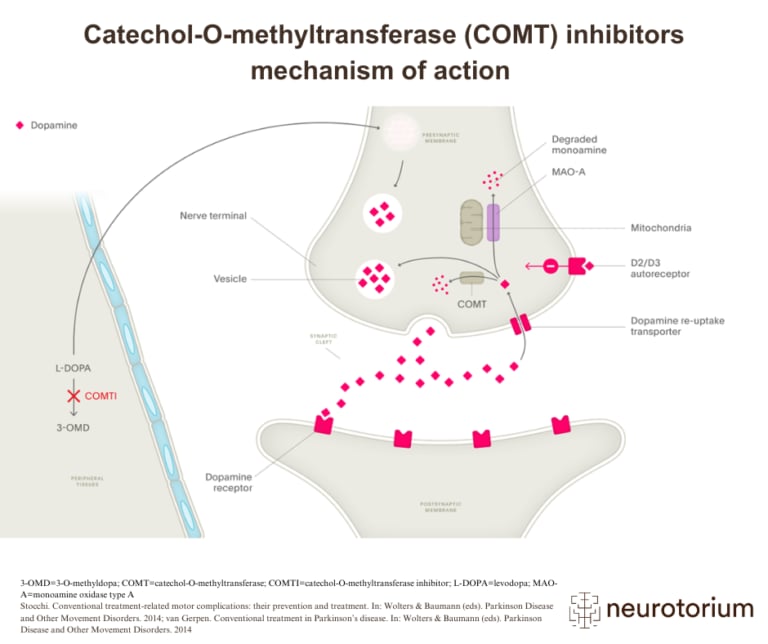
Catechol-O-methyltransferase (COMT) inhibitors: mechanism of action
Illustration of how COMT inhibitors increase dopamine availability in Parkinson’s disease by preventing the breakdown of L-DOPA
26.06.2025
Parkinson’s Disease