

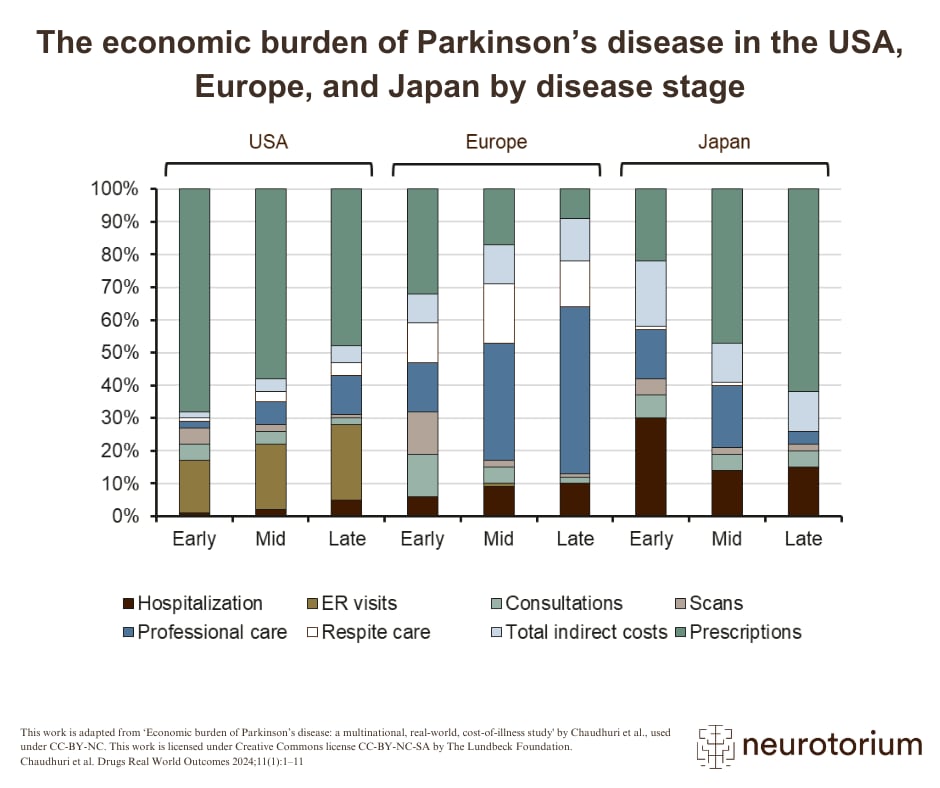
A real-world, multinational study has shown that the economic burden of Parkinson’s disease (PD) increases as the disease progresses. The main factors that drove healthcare costs were the direct cost of hospitalization and medication costs, and indirect costs.1 Therefore, treatments to slow or halt PD progression would have substantial economic value to the world.1
Related content
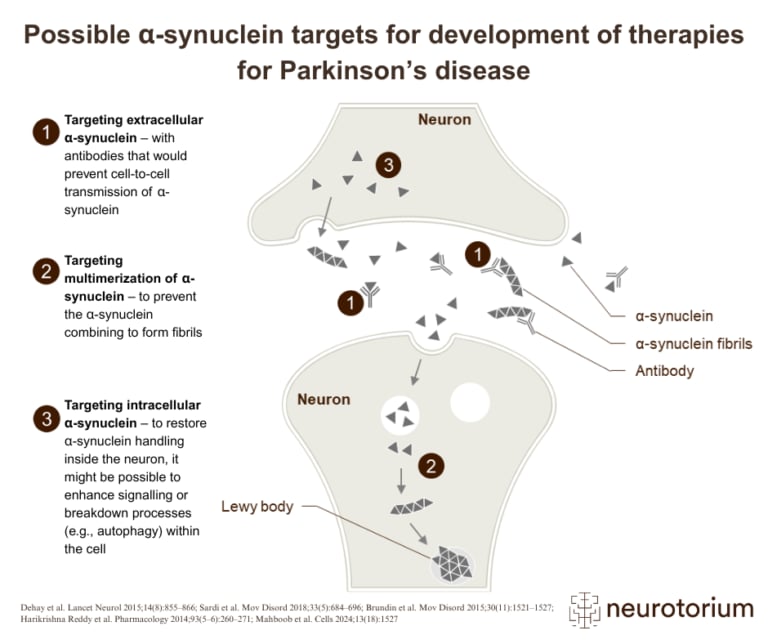
Overview of three therapeutic strategies targeting alpha-synuclein in the development of disease-modifying treatments for Parkinson’s disease
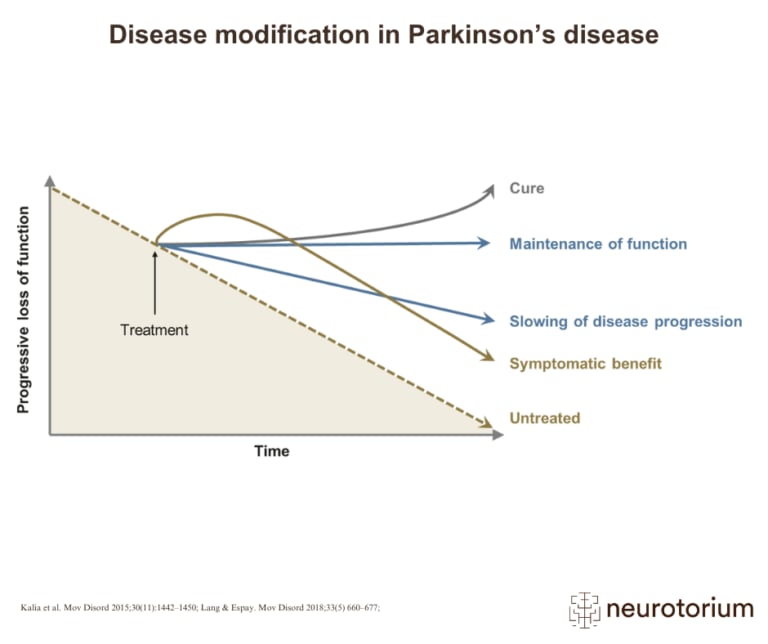
Graphical representation of how various treatment strategies can impact disease progression in Parkinson’s disease, from symptom relief to potential cure
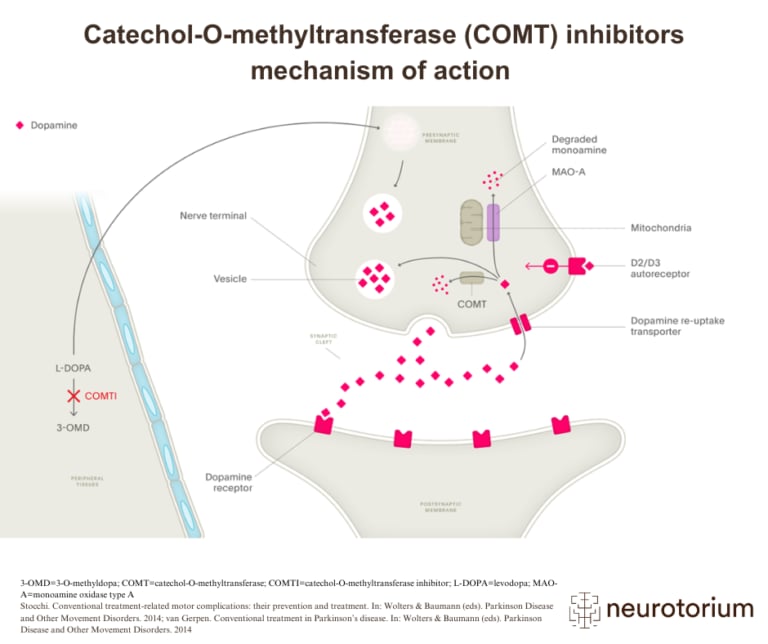
Illustration of how COMT inhibitors increase dopamine availability in Parkinson’s disease by preventing the breakdown of L-DOPA