

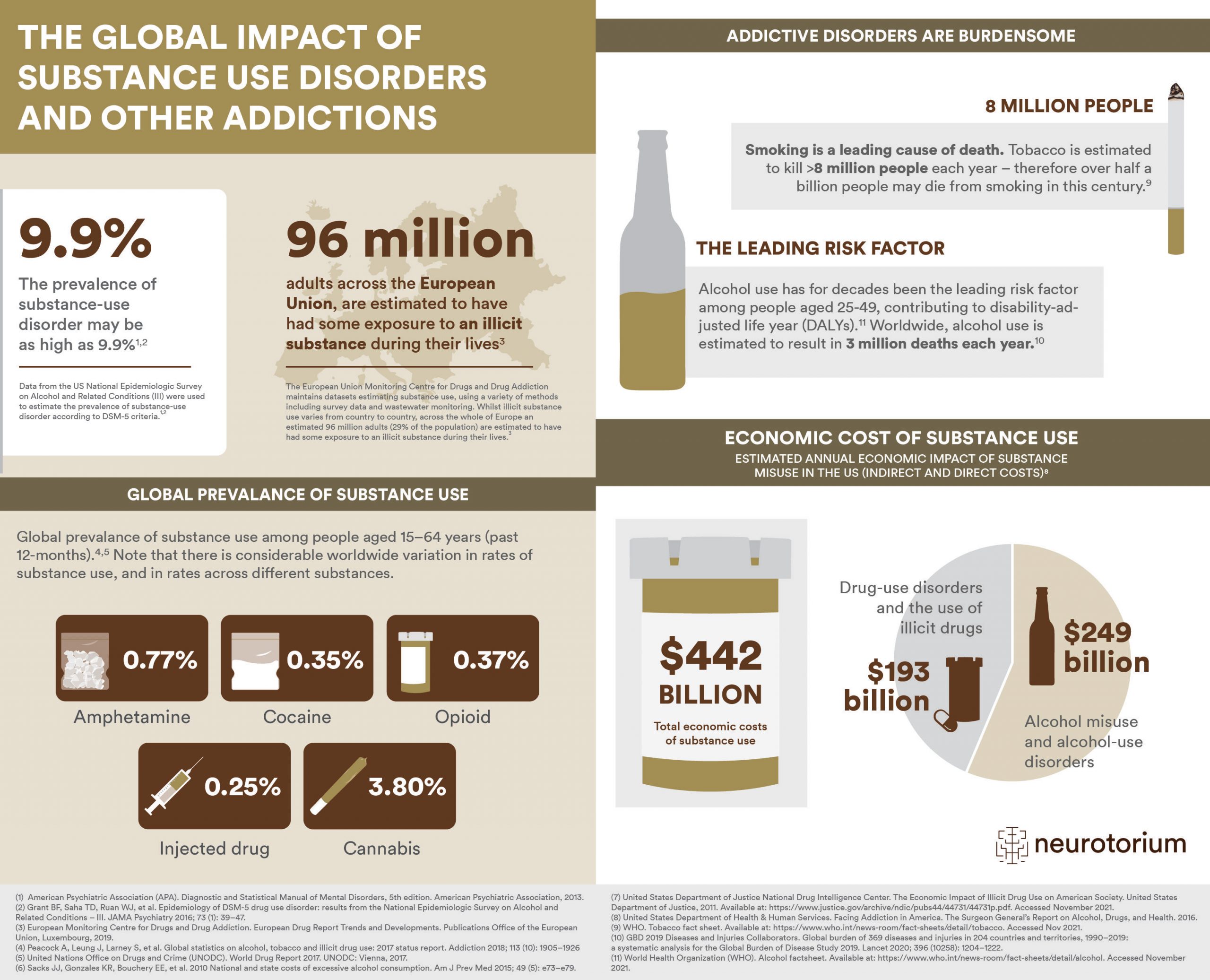
This infographic provides a visual, at-a-glance overview of the global impact of substance use disorders and other addictions.
The prevalence of substance use disorder may be as high as 9.9%, and an estimated 96 million adults across the European Union have had some exposure to an illicit substance during their lives.
Alcohol use has for decades been the leading risk factor for disability-adjusted life years among people aged 25–49, and is estimated to result in 3 million deaths worldwide each year.
Related content
Current evidence on the neurobiology of addictive behaviour highlights the transition from reward-driven to habitual drug use through alterations in mesolimbic dopamine, glutamatergic signalling, frontostriatal circuitry, and stress-related systems.
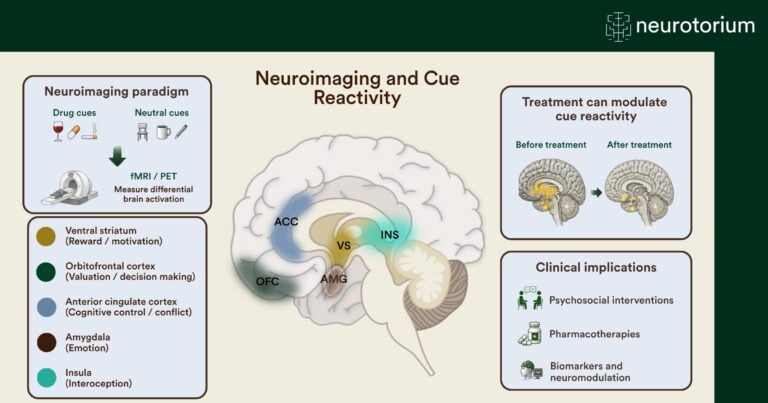
Functional neuroimaging studies commonly compare brain responses to substance-related cues versus neutral cues during fMRI or PET scanning and measure differential brain activation.
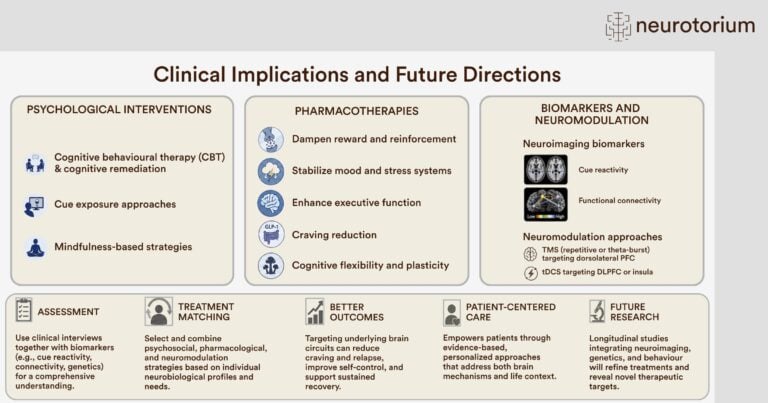
Recognition of addiction as a disorder of distributed brain circuits provides a framework for personalized assessment and treatment of addiction.