

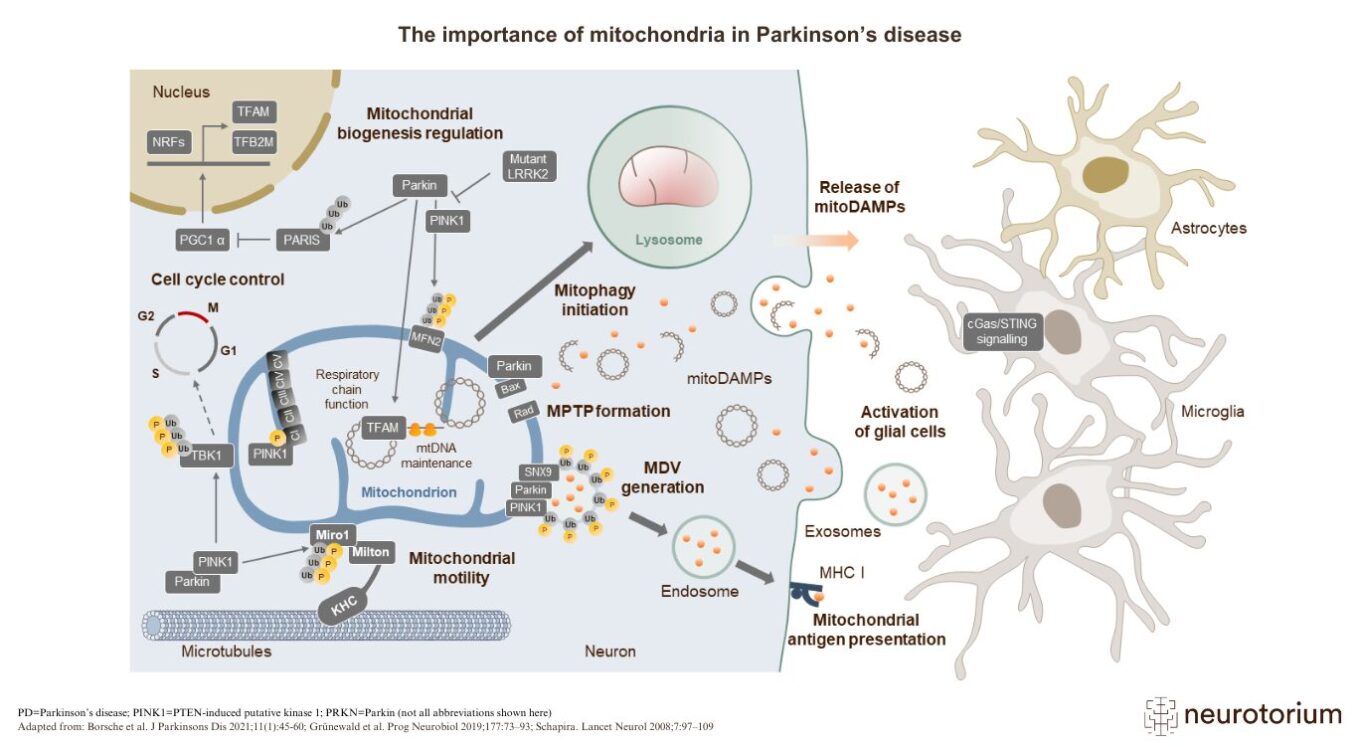
Mitochondria are known as the ‘power plants of the cell’. They use metabolic fuels such as glucose to produce the high-energy molecule, adenosine triphosphate (ATP), which drives many important physiological processes.
A toxic by-product of normal mitochondrial function is the generation of free radicals, which cause oxidative stress.4 The cellular responses to this oxidative stress are regulated by the genes DJ-1, PINK1, PRKN, and UCH-L1, all of which have genetic variations associated with Parkinson’s Disease.1-3 Taken together, the evidence strongly suggests that mitochondrial dysfunction plays an important role in the pathogenesis of PD.1,2 This opens the potential for novel treatments that may correct this dysfunction in people with PD.1
Related content
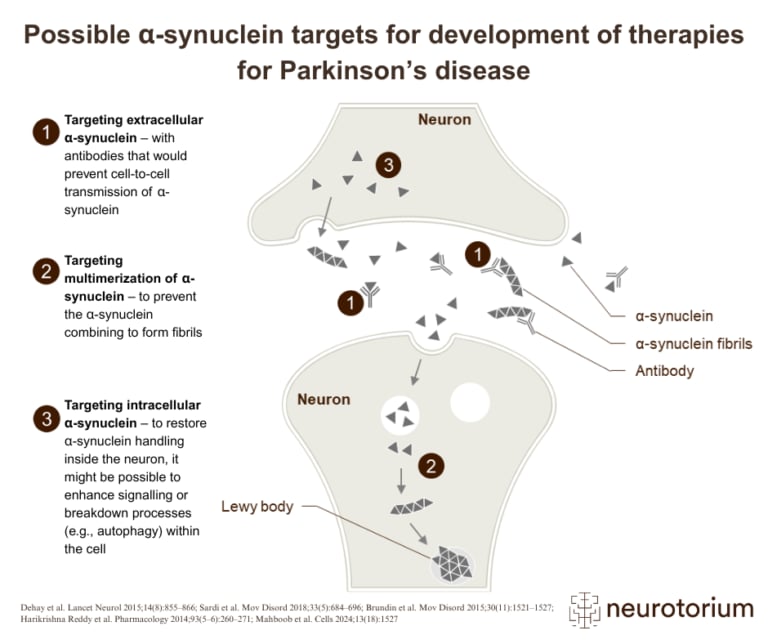
Overview of three therapeutic strategies targeting alpha-synuclein in the development of disease-modifying treatments for Parkinson’s disease
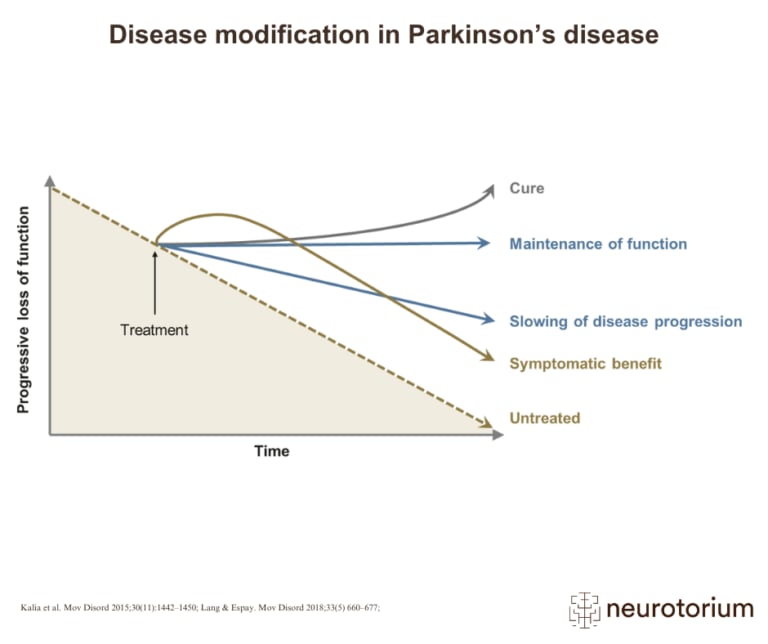
Graphical representation of how various treatment strategies can impact disease progression in Parkinson’s disease, from symptom relief to potential cure
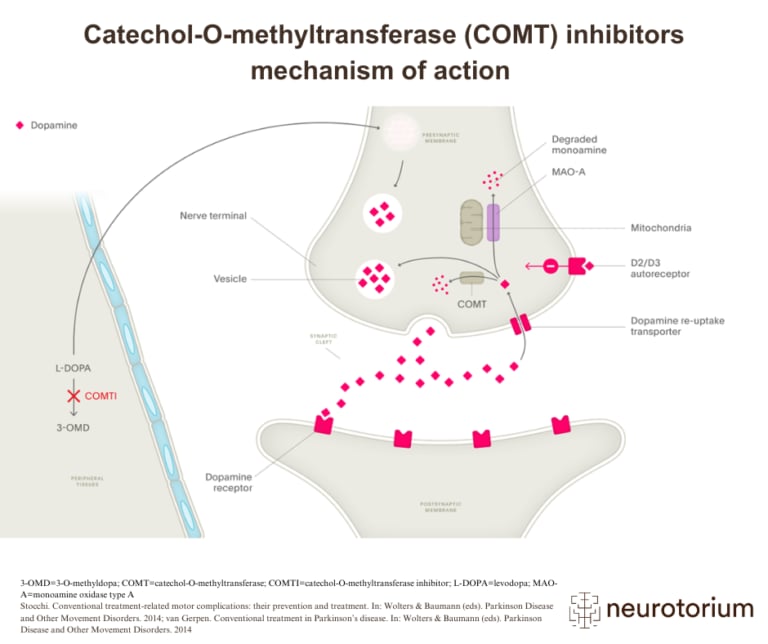
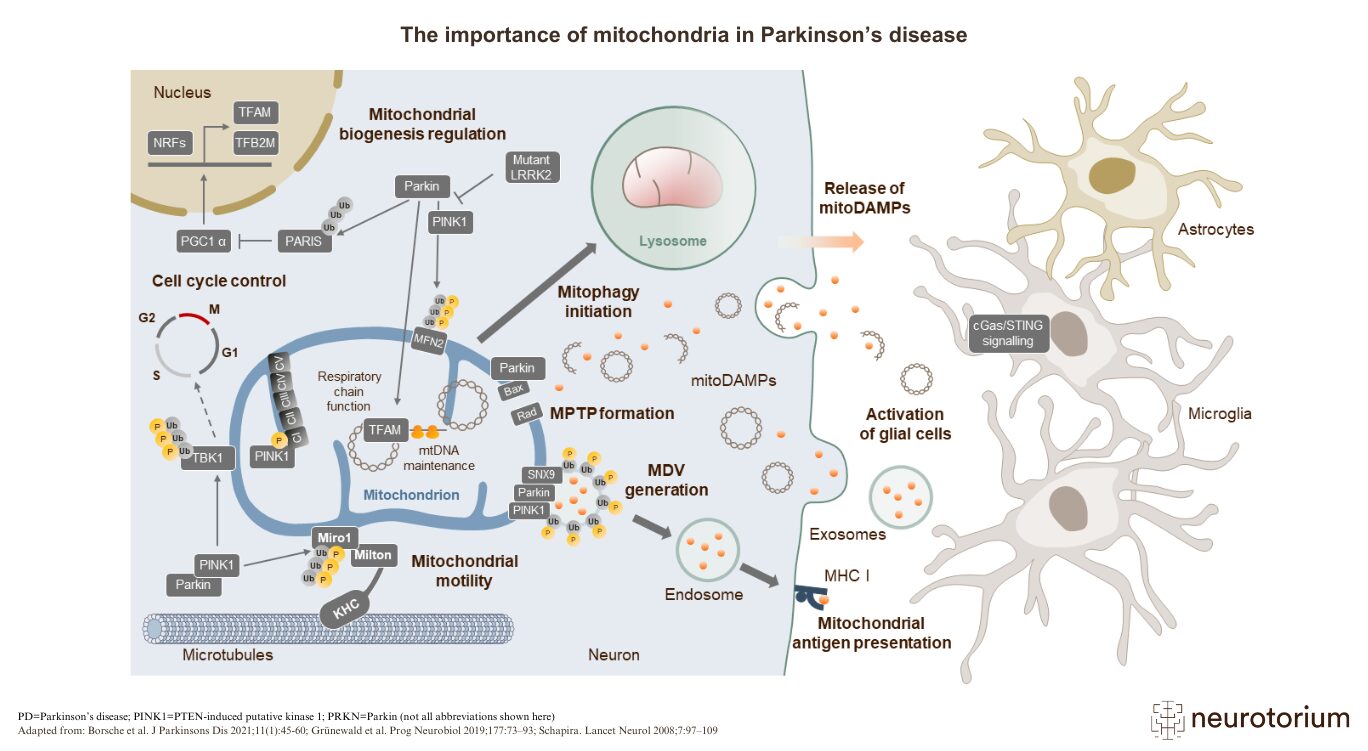
Illustration of how COMT inhibitors increase dopamine availability in Parkinson’s disease by preventing the breakdown of L-DOPA