

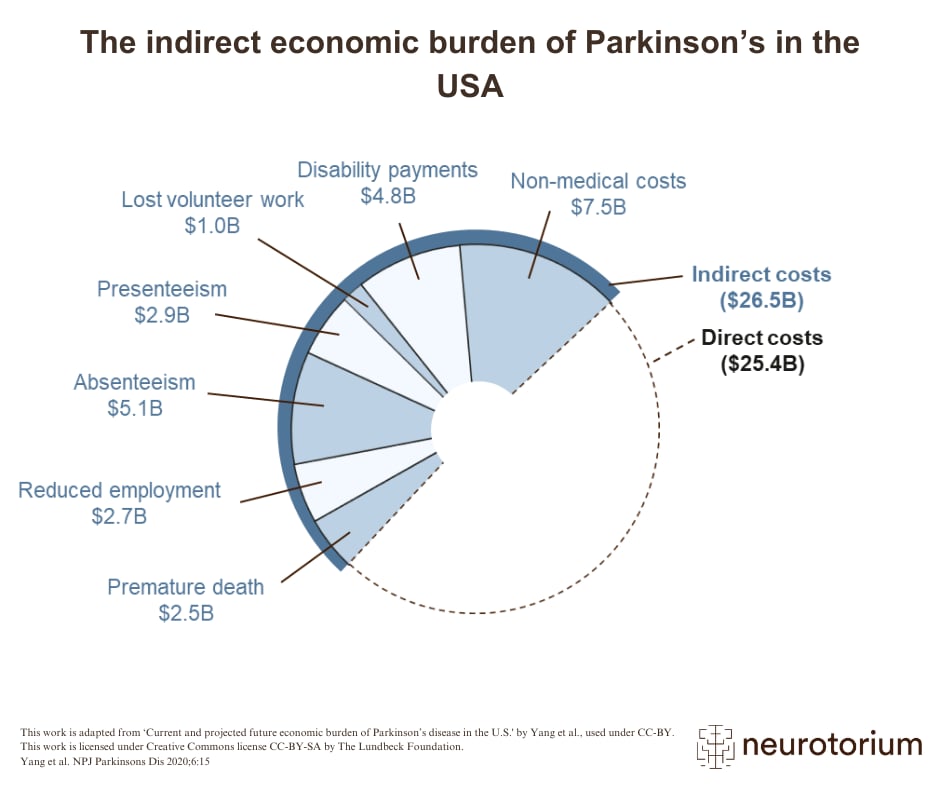
It is important to estimate indirect costs to provide an insight into the additional economic impact of a disease – beyond the more obvious costs associated with healthcare utilization.1-3 In Parkinson’s disease (PD), indirect costs make up a considerable proportion of the overall cost, and can be greater than the direct costs.3-5
The data shown on the illustration come from an analysis of US public and private administrative claims data, which estimated a prevalence of PD in the US of approximately 1 million people, equating to a total cost of $51.9 billion in 2017.3 As shown on the illustration, slightly more than half of this cost was indirect, including non-medical costs, absenteeism, and disability payments.3 Worldwide prevalence of PD is estimated to be around 10 million in 20244,5, suggesting substantial indirect costs globally.
Related content
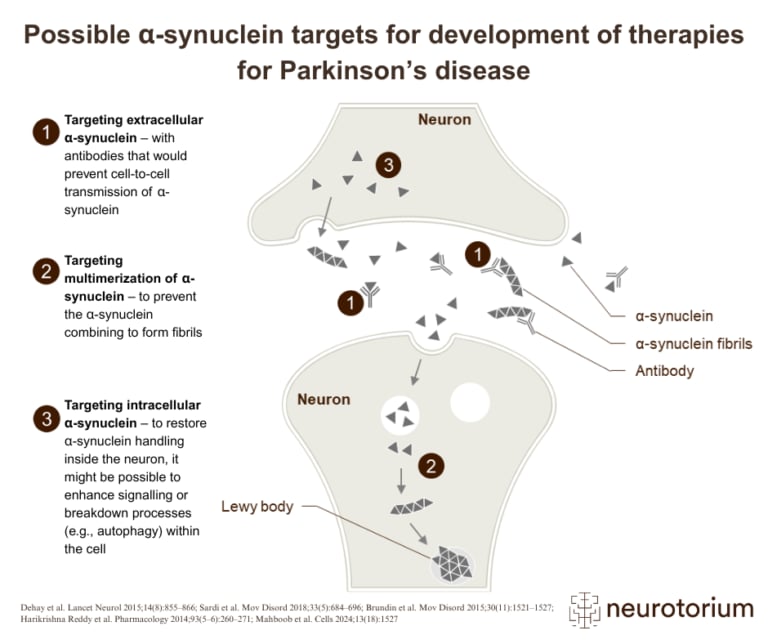
Overview of three therapeutic strategies targeting alpha-synuclein in the development of disease-modifying treatments for Parkinson’s disease
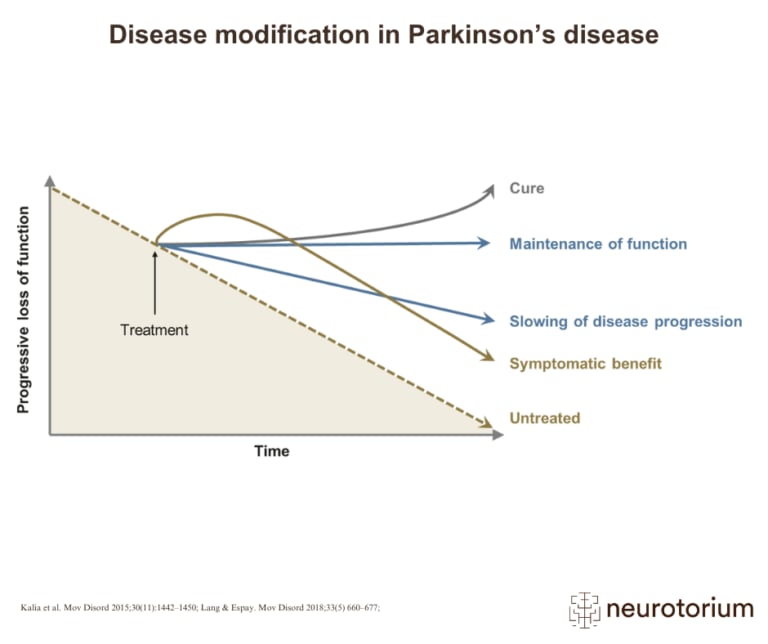
Graphical representation of how various treatment strategies can impact disease progression in Parkinson’s disease, from symptom relief to potential cure
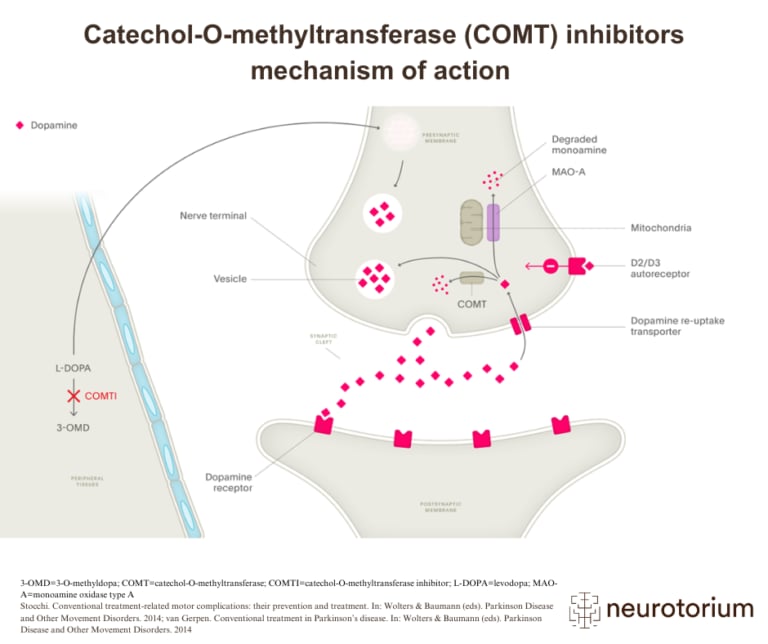
Illustration of how COMT inhibitors increase dopamine availability in Parkinson’s disease by preventing the breakdown of L-DOPA