

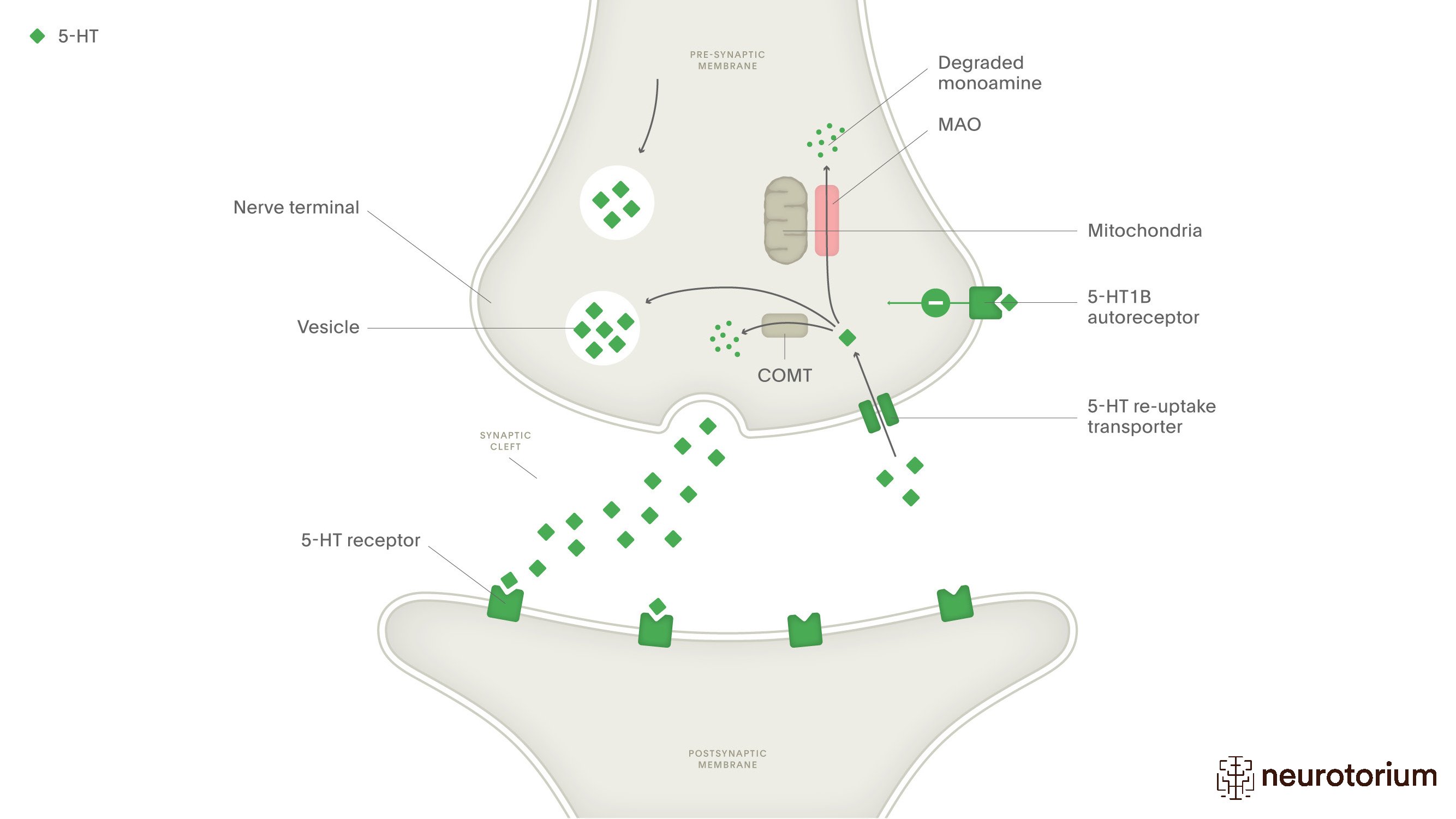
When a nerve impulse arrives at a serotonin (5-HT) nerve terminal, 5-HT is released from synaptic vesicles into the synaptic cleft. 5-HT molecules bind to their receptors on the post-synaptic membrane and the nerve impulse is propagated or inhibited, depending on the specific receptor. 5-HT molecules are then released from the receptors and taken back into the nerve terminal via the 5-HT re-uptake transporter. 5-HT is degraded by monoamine oxidase (MAO) and catechol-O-methyltransferase (COMT).
Related content
Current evidence on the neurobiology of addictive behaviour highlights the transition from reward-driven to habitual drug use through alterations in mesolimbic dopamine, glutamatergic signalling, frontostriatal circuitry, and stress-related systems.
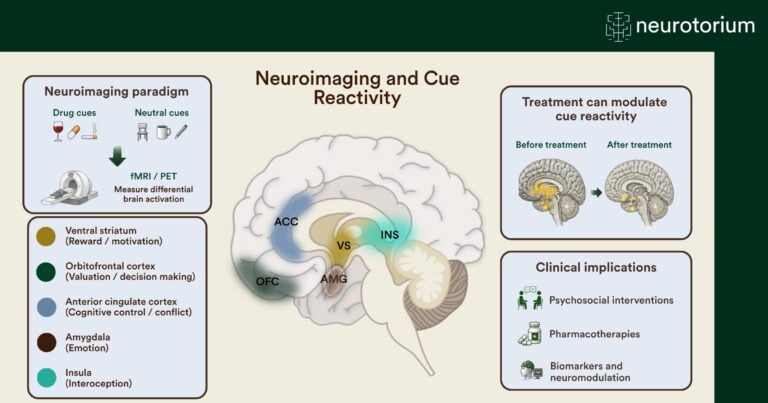
Functional neuroimaging studies commonly compare brain responses to substance-related cues versus neutral cues during fMRI or PET scanning and measure differential brain activation.
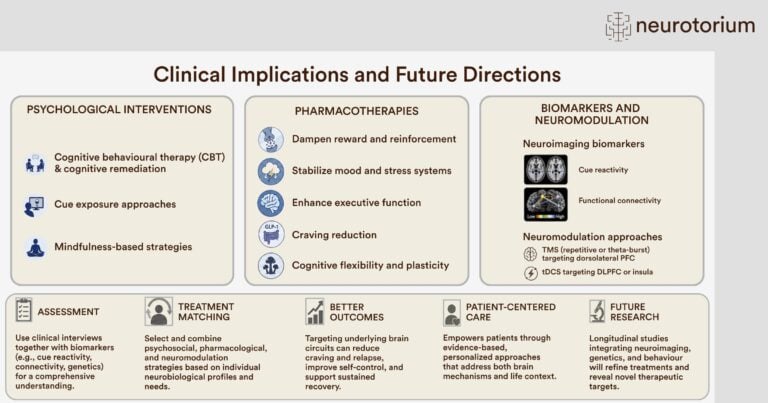
Recognition of addiction as a disorder of distributed brain circuits provides a framework for personalized assessment and treatment of addiction.