

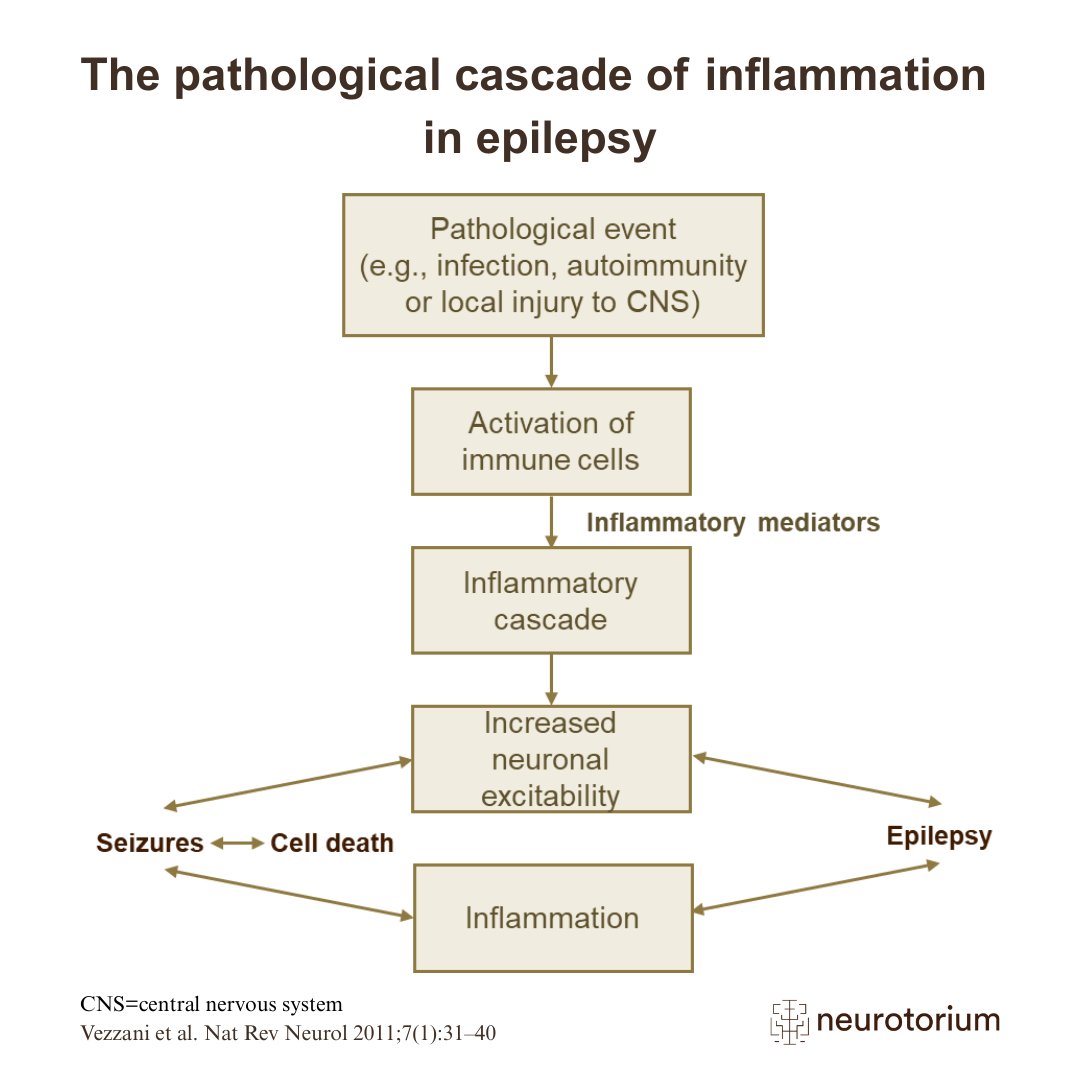
A seizure is an inflammatory event, which can itself induce neuroinflammation. Chronic inflammation of the brain comprises:
- Activation of microglia, astrocytes, and peripheral immune cells
- Activation of the endothelial cells of the blood–brain barrier
- Production of inflammatory mediators
Inflammation is now viewed by some as an intrinsic part of some forms of epilepsy, being the cause of, as well as the result of, a seizure. However, more research is needed to understand the role of inflammation in epileptogenesis and to confirm observations from preclinical studies.
There may be a role for treating autoimmune epilepsy with immune-modulating therapies; a better understanding of the role of inflammation in other forms of epilepsy may lead to new avenues of therapy targeting immune processes
CNS=central nervous system
Related content
In this video, Professor Dr. Nathalie Jetté reviews depression as a common yet often under-recognized comorbidity in epilepsy.
In this video, Professor Dr. Gretchen Birbeck examines epilepsy-associated stigma as a global public-health challenge
In this video, Professor Dr. Jacqueline French reviews practical, first-line decision-making for anti-seizure medication selection