

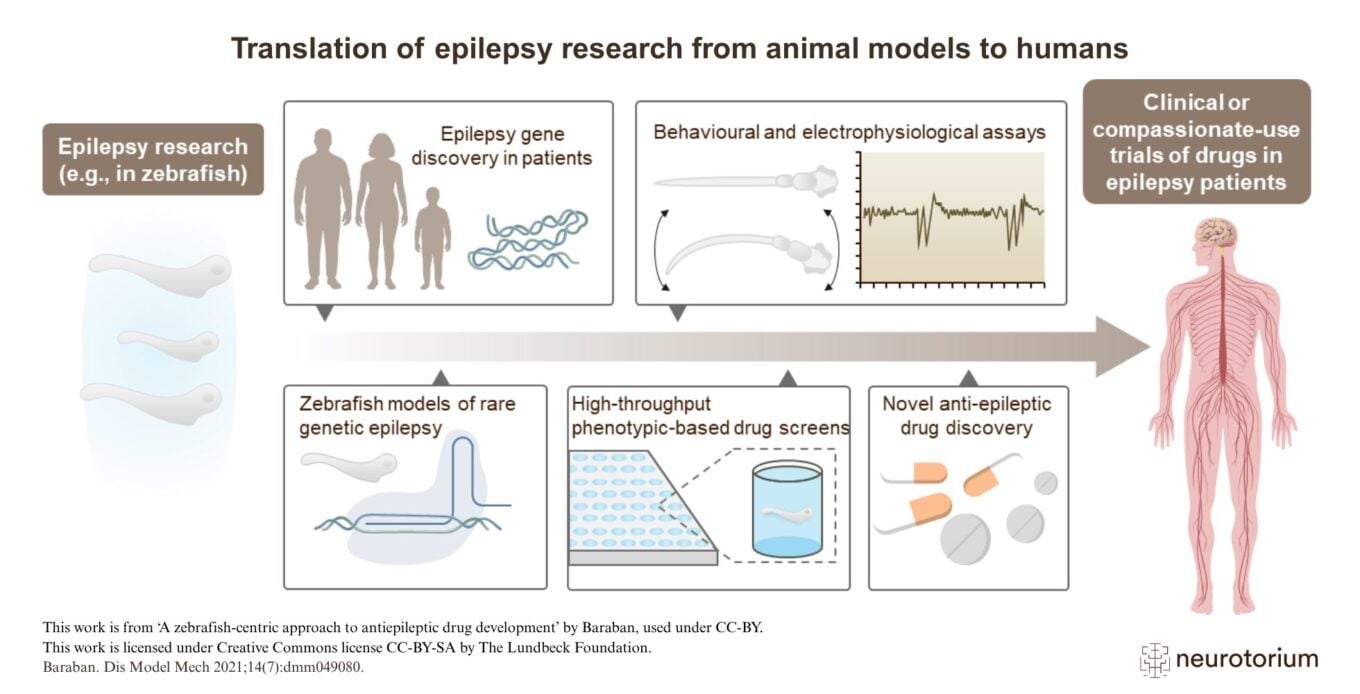
Observations made in animal models (e.g., zebra fish or mice) require translation to humans to provide useful insights into human disease.1-3 Drugs identified in screens of potential new drugs can be tested in clinical studies.1 Potential new therapies from screens for specific genetic causes of epilepsy may have wider application than just people with those mutations, depending on the mechanisms involved.2
Related content

In this video, Professor Dr. Nathalie Jetté reviews depression as a common yet often under-recognized comorbidity in epilepsy.

In this video, Professor Dr. Gretchen Birbeck examines epilepsy-associated stigma as a global public-health challenge

In this video, Professor Dr. Jacqueline French reviews practical, first-line decision-making for anti-seizure medication selection