

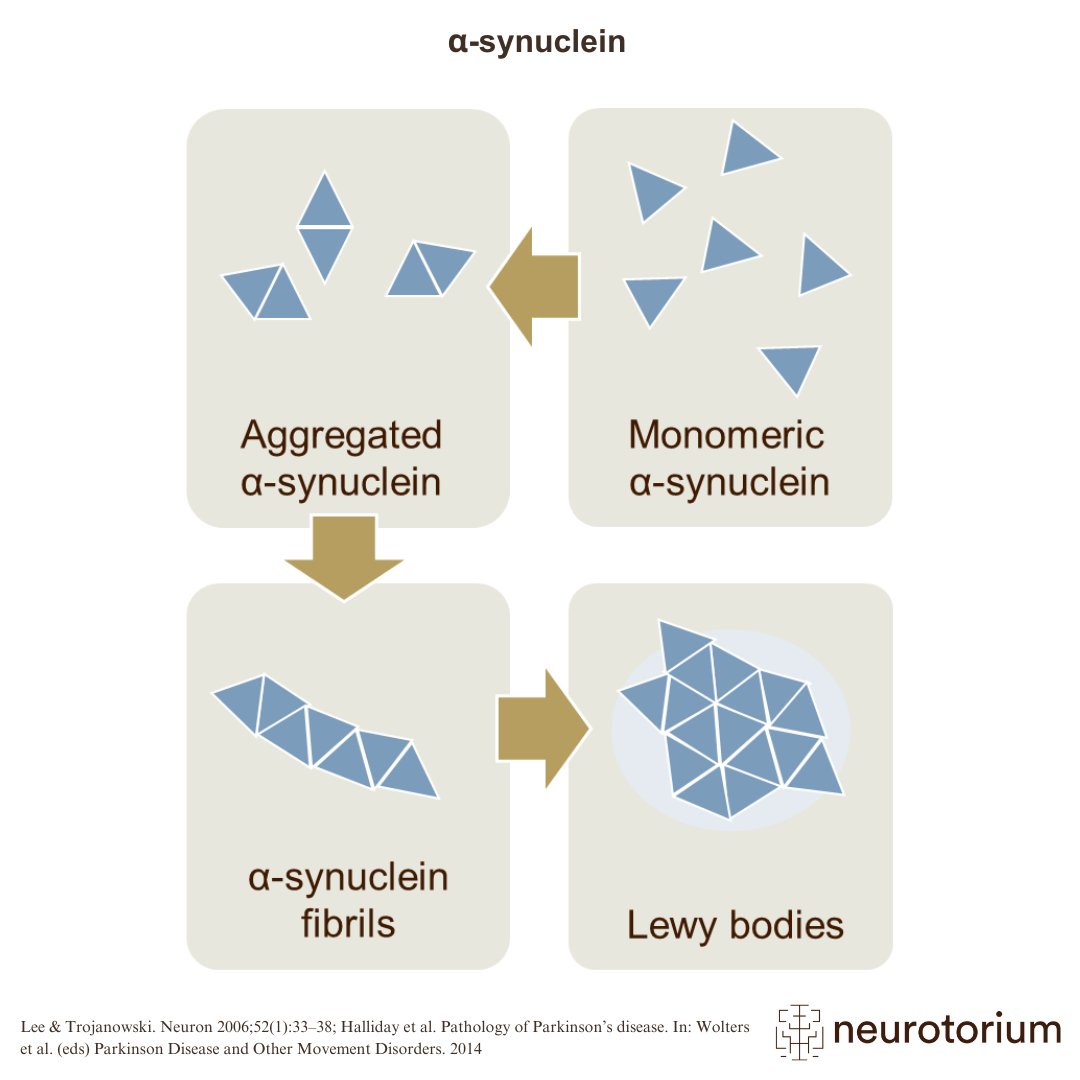
The protein α-synuclein was first isolated from human brain tissue during the early 1990s.1 Its role in Parkinson’s Disease only became apparent in 1997, when a mutation in the α-synuclein gene was discovered in groups of patients with a rare, autosomal dominant form of familial parkinsonism,2 and the major component of Lewy bodies was identified as α-synuclein.3
While the precise functional mechanisms of α-synuclein are still being elucidated, it appears to interact with and affect various proteins involved with vesicle formation, vesicle pools, and pore opening of the presynaptic terminal.1,4,5
Related content
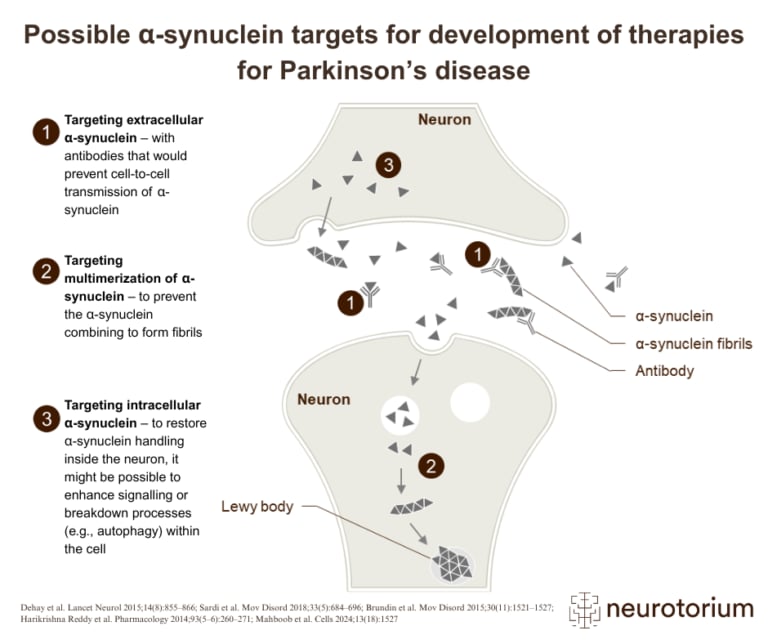
Overview of three therapeutic strategies targeting alpha-synuclein in the development of disease-modifying treatments for Parkinson’s disease
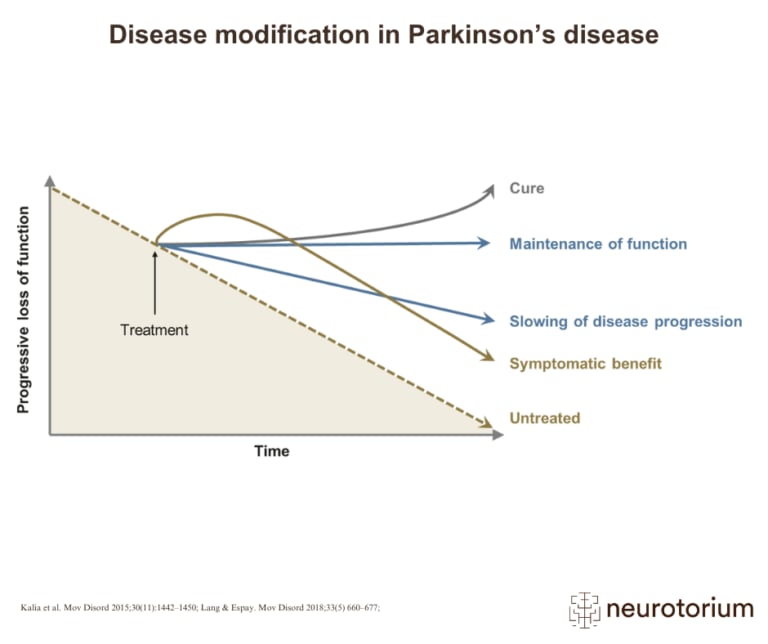
Graphical representation of how various treatment strategies can impact disease progression in Parkinson’s disease, from symptom relief to potential cure
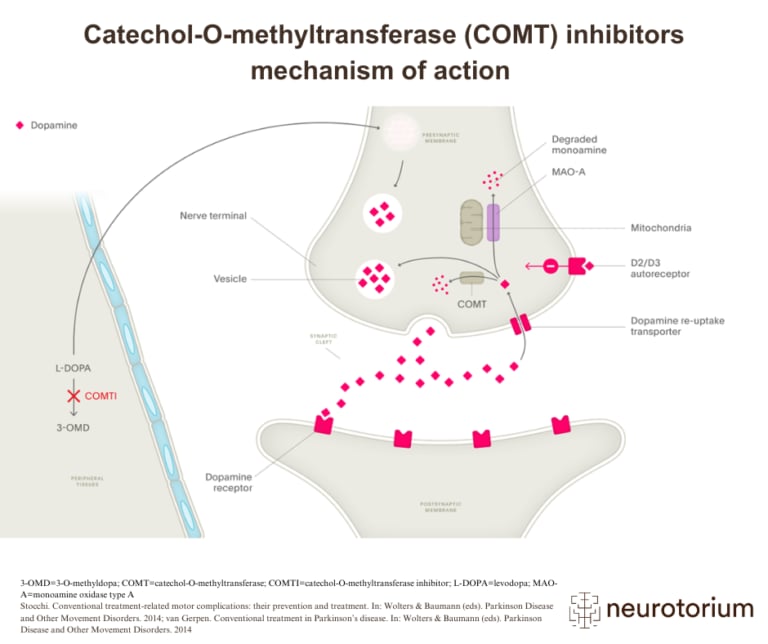
Illustration of how COMT inhibitors increase dopamine availability in Parkinson’s disease by preventing the breakdown of L-DOPA