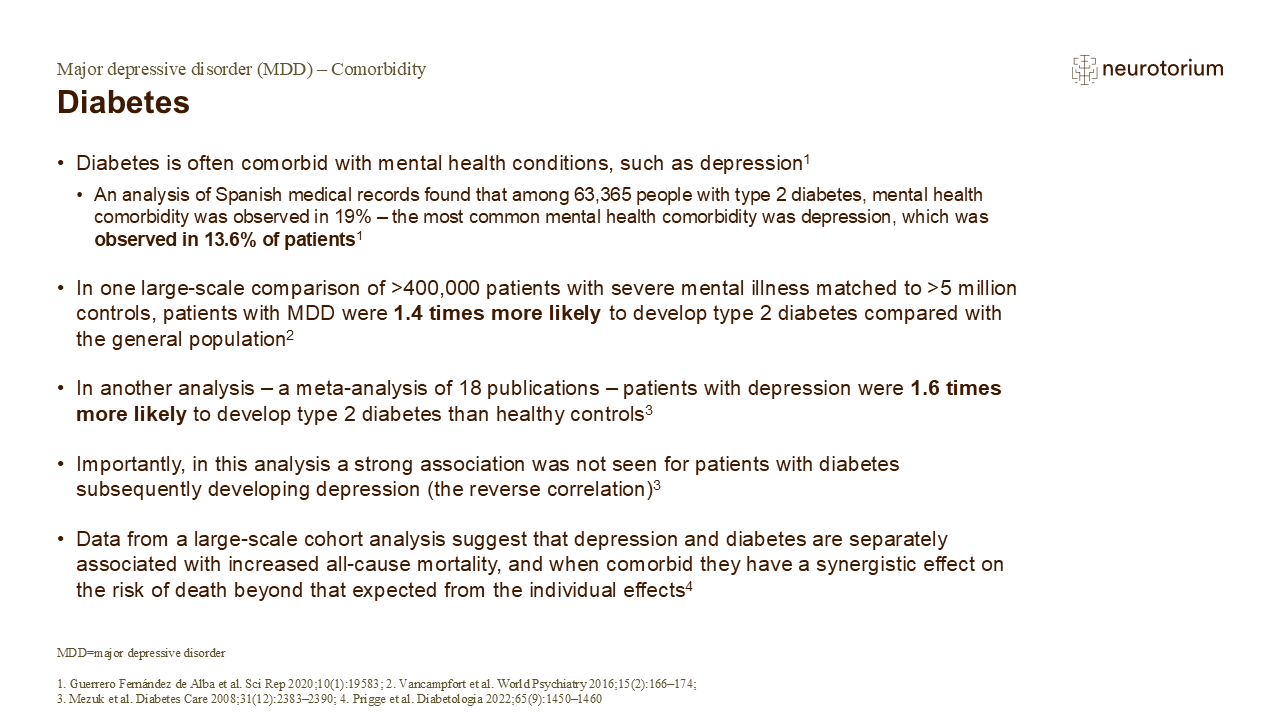
Whilst the association between depression and diabetes is clearly complex, several meta-analyses have shown an increased risk in patients with MDD compared with the general population.2,3 It is not clear what pathology underlies this association, which is complicated by the many risk factors that link diabetes and depression such as physical inactivity, and obesity.2,3,5 It has been hypothesised that the dysregulation of the hypothalamic–pituitary–adrenal axis, commonly seen in patients with MDD, could be partly responsible for symptoms of insulin resistance.5 More research is needed to clarify the relationship. In the meantime, attending physicians should be aware of the potential comorbidity of type 2 diabetes with depression, and be prepared to diagnose and manage the conditions in tandem.5
References:
1.Guerrero Fernández de Alba I, Gimeno-Miguel A, Poblador-Plou B, et al. Association between mental health comorbidity and health outcomes in type 2 diabetes mellitus patients. Sci Rep 2020; 10 (1): 19583.
2.Vancampfort D, Correll CU, Galling B, et al. Diabetes mellitus in people with schizophrenia, bipolar disorder and major depressive disorder: a systematic review and large scale meta-analysis. World Psychiatry 2016; 15 (2): 166–174.
3.Mezuk B, Eaton WW, Albrecht S, Golden SH. Depression and type 2 diabetes over the lifespan: a meta-analysis. Diabetes Care 2008; 31 (12): 2383–2390.
4.Prigge R, Wild SH, Jackson CA. Depression, diabetes, comorbid depression and diabetes and risk of all-cause and cause-specific mortality: a prospective cohort study. Diabetologia 2022; 65 (9): 1450–1460.
5.Kreider KE. Diabetes distress or major depressive disorder? A practical approach to diagnosing and treating psychological comorbidities of diabetes. Diabetes Ther 2017; 8 (1): 1–7.