

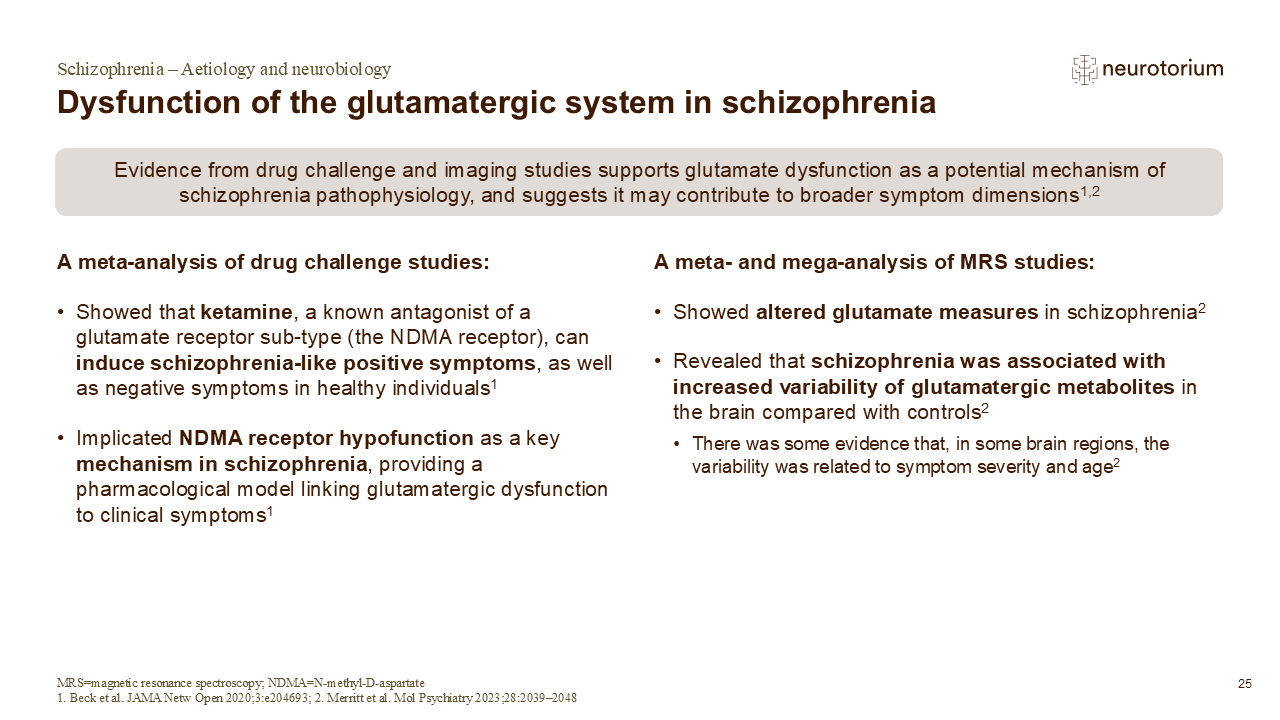
A meta-analysis of 36 studies, including 725 healthy individuals, found that the acute administration of ketamine relative to placebo was associated with a meaningful increase in positive and negative symptoms of psychosis in healthy volunteers and patients with schizophrenia. This association was greater for positive than for negative symptoms.1 These findings suggest that NDMA hypofunction is a key mechanism underlying psychosis-like symptoms.1
A meta- and mega-analysis of 123 MRS studies demonstrated that, compared with controls, individuals with schizophrenia had altered glutamatergic measures in the medial frontal cortex, dorsolateral prefrontal cortex, and thalamus.2 Mean values of glutamatergic metabolites were lower in the medial frontal cortex but higher in the thalamus and basal ganglia.2 Further, studies in younger, more symptomatic patients found greater variability in the basal ganglia and temporal lobe, while studies with older, more symptomatic patients showed greater variability in the medial frontal cortex, suggestive that variability in glutamatergic metabolites may be related to symptom severity or age.2
Abbreviations: MRS=magnetic resonance spectroscopy; NDMA=N-methyl-D-aspartate
References:
1. Beck K, Hindley G, Borgan F, et al. Association of ketamine with psychiatric symptoms and implications for its therapeutic use and for understanding schizophrenia: a systematic review and meta-analysis. JAMA Netw Open 2020; 3: e204693.
2. Merritt K, McCutcheon RA, Aleman A, et al. Variability and magnitude of brain glutamate levels in schizophrenia: a meta and mega-analysis. Mol Psychiatry 2023; 28: 2039–2048.