

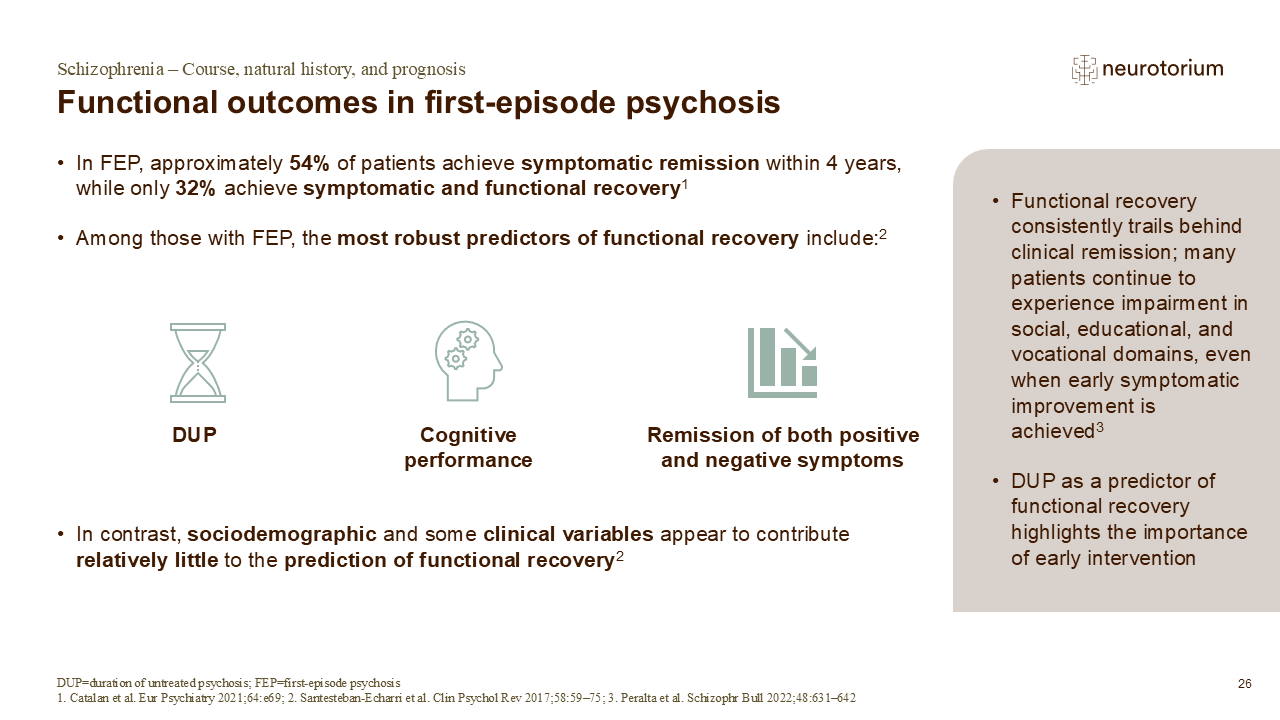
Functional impairment in schizophrenia-spectrum disorders affects multiple areas of everyday life.4 Improvements in symptoms alone may not adequately capture functional outcomes in daily life.5 Key domains of functioning, including activities of daily living, social functioning, and productive activities, may show differing patterns of impairment and recovery, highlighting the importance of assessing functional domains separately.4
Self-report measures show modest convergence with objective and informant-based measures of functioning, whereas high-contact informant ratings are more consistently associated with performance-based functional capacity measures.6
There is no single gold-standard instrument for functional assessment in schizophrenia. Several tools demonstrate adequate reliability and validity, including the Specific Level of Functioning scale and the Personal and Social Performance scale; the World Health Organization Disability Assessment Scale 2.0 may also be used, although schizophrenia-specific data are limited. More detailed instruments, such as the Social Functioning Scale, assess a broad range of domains but may be less feasible in routine clinical practice.7 Overall, outcome assessment in schizophrenia should integrate domain-specific functional measures with symptomatic outcomes and personal recovery perspectives, rather than relying on a single global outcome indicator.7
References:
1. Catalan A, Richter A, Salazar de Pablo G, et al. Proportion and predictors of remission and recovery in first-episode psychosis: Systematic review and meta-analysis. Eur Psychiatry 2021; 64: e69.
2. Santesteban-Echarri O, Paino M, Rice S, et al. Predictors of functional recovery in first-episode psychosis: a systematic review and meta-analysis of longitudinal studies. Clin Psychol Rev 2017; 58: 59–75.
3. Peralta V, García de Jalón E, Moreno-Izco L, et al. Long-term outcomes of first-admission psychosis: a naturalistic 21-year follow-up study of symptomatic, functional and personal recovery and their baseline predictors. Schizophr Bull 2022; 48: 631–642.
4. Tang SX, Hänsel K, Oliver LD, et al. Functional phenotypes in schizophrenia spectrum disorders: defining the constructs and identifying biopsychosocial correlates using data-driven methods. Schizophrenia (Heidelb). 2024; 10: 58.
5. Silva MA, Restrepo D. Functional recovery in schizophrenia. Rev Colomb Psiquiatr (Engl Ed). 2019; 48: 252–260.
6. Sabbag S, Twamley EM, Vella L, et al. Assessing everyday functioning in schizophrenia: not all informants seem equally informative. Schizophr Res. 2011; 131: 250–255.
7. Correll CU, Cortese S, Solmi M, et al. Beyond symptom improvement: transdiagnostic and disorder-specific ways to assess functional and quality of life outcomes across mental disorders in adults. World Psychiatry 2025; 24: 296–318.