

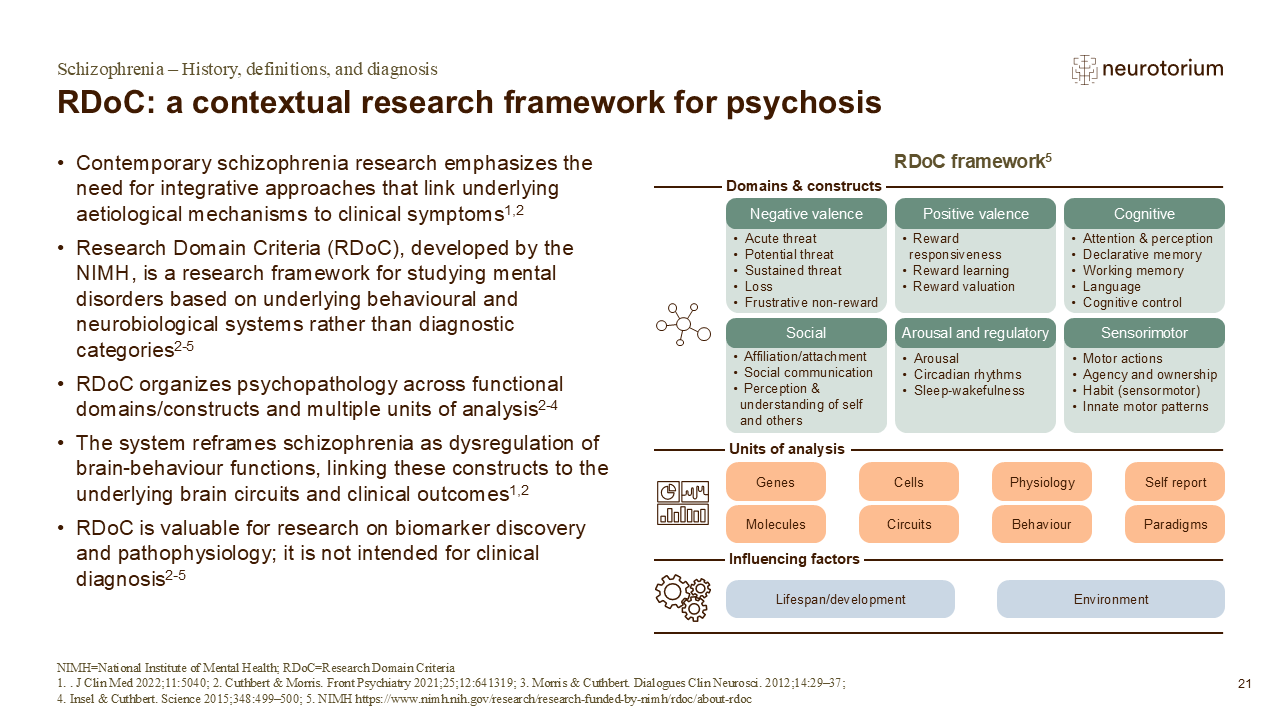
The RDoC framework provides a research approach that views mental health in the context of major domains of basic human neurobehavioural functioning. Rather than defining illness by symptoms and then exploring underlying pathology, RDoC reverses the perspective by considering psychopathology in terms of deviations from normal functions that could account for specific symptoms.5 Neurobehavioural functioning falls under six major functional domains, represented by psychological/biological constructs, which are studied along the full range of functioning from normal to abnormal.5 Both behavioural and biological aspects of functioning evolve across the lifespan and are influenced by the environment, including physical environment, cultural components, and factors such as social determinants of health. Measuring multiple units of analysis allow for comprehensive understanding of the construct(s) under study.5
Abbreviations: RDoC=Research Domain Criteria
References:
4.Insel TR & Cuthbert BN. Brain disorders? Precisely Science 2015; 348: 499–500.