


Index for
slide deck
Introduction
History, definitions, and diagnosis
Introduction and history of schizophrenia
Introduction and history of schizophrenia
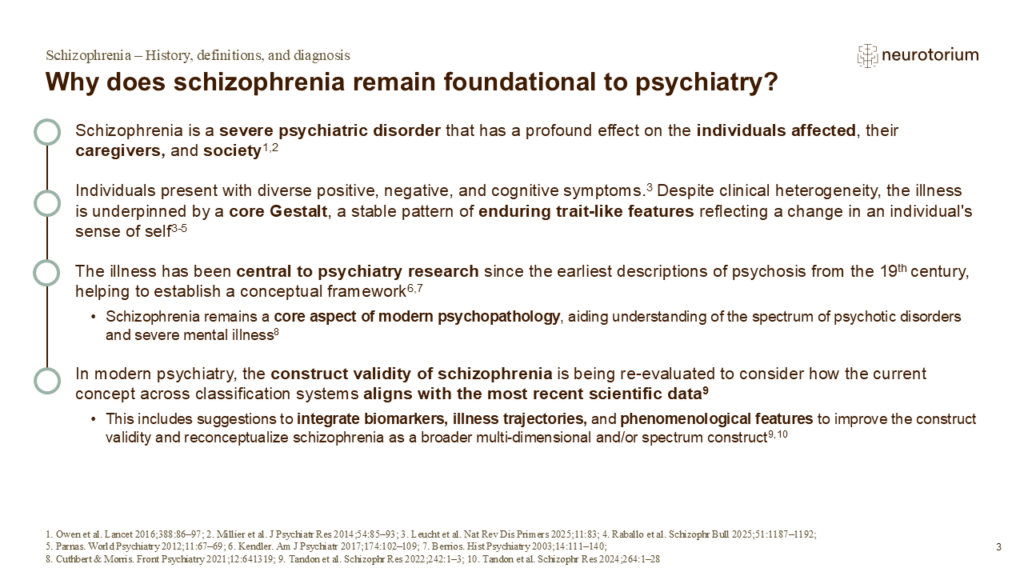
Why does schizophrenia remain foundational to psychiatry?
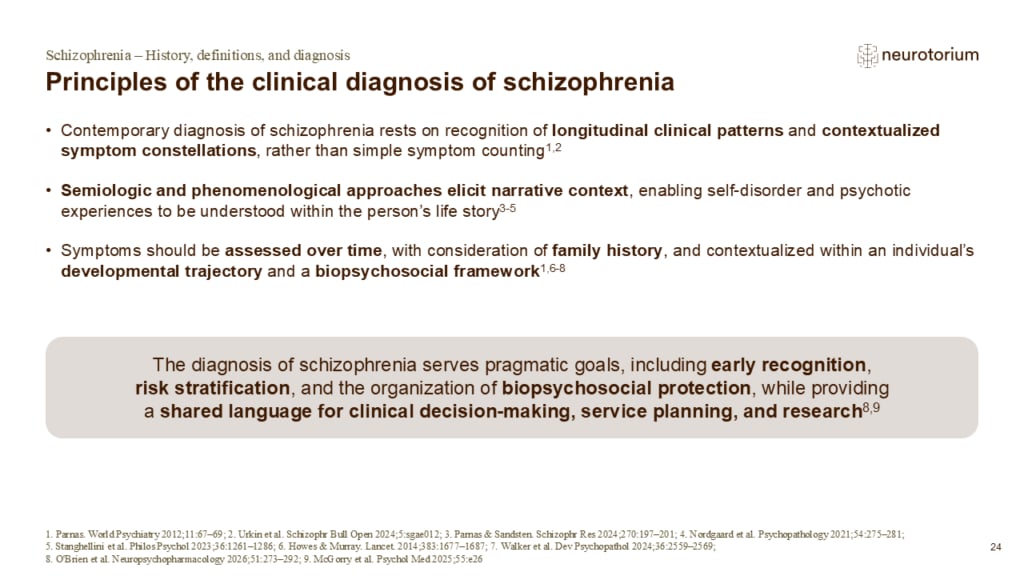
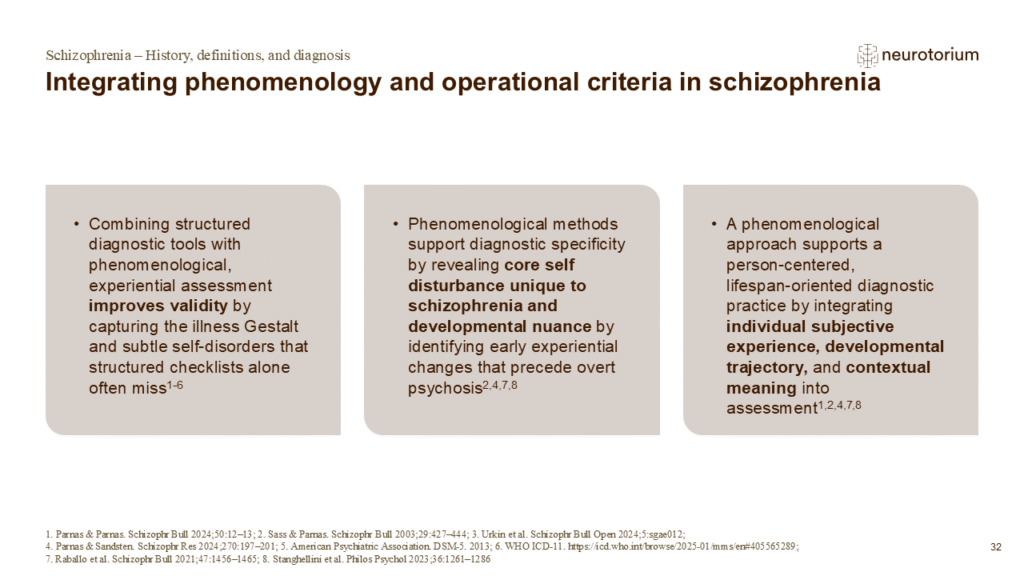
Schizophrenia cannot be understood by counting symptoms (such as hallucinations, delusions, etc.), but rather by recognizing a pattern of change in the structure of an individual’s sense of self.5 This pattern, or Gestalt, suggests symptoms are not mutually independent bu…
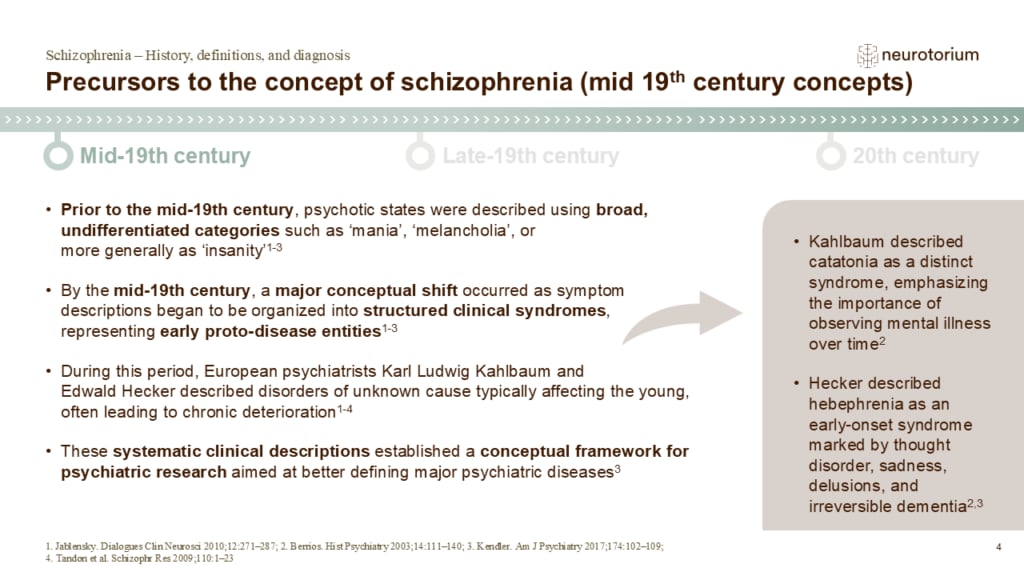
Precursors to the concept of schizophrenia (mid 19th century concepts)
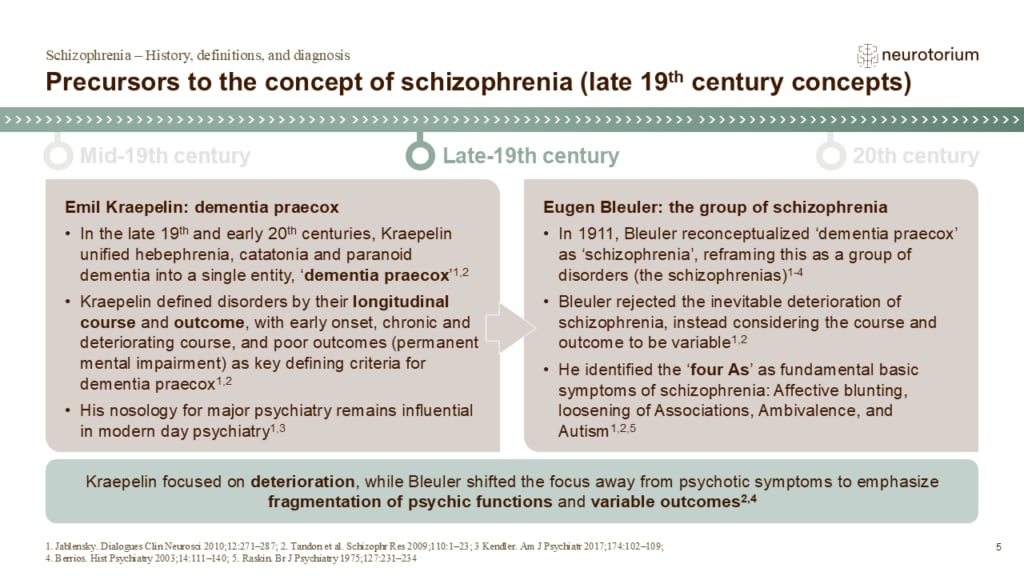
Precursors to the concept of schizophrenia (late 19th century concepts)
Bleuler reconceptualized Kraepelin’s original idea by adding to its scope of clinical illnesses which did not evolve into the kind of ‘terminal state’ of deterioration, considered by Kraepelin to be a defining feature of the disease.1 Bleuler introduced a fundamental dist…
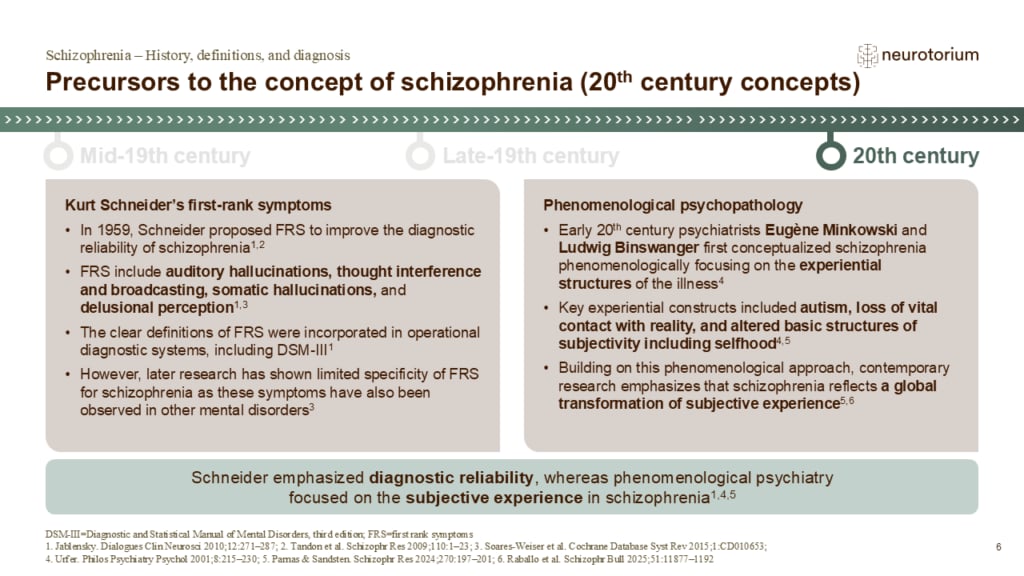
Precursors to the concept of schizophrenia (20th century concepts)
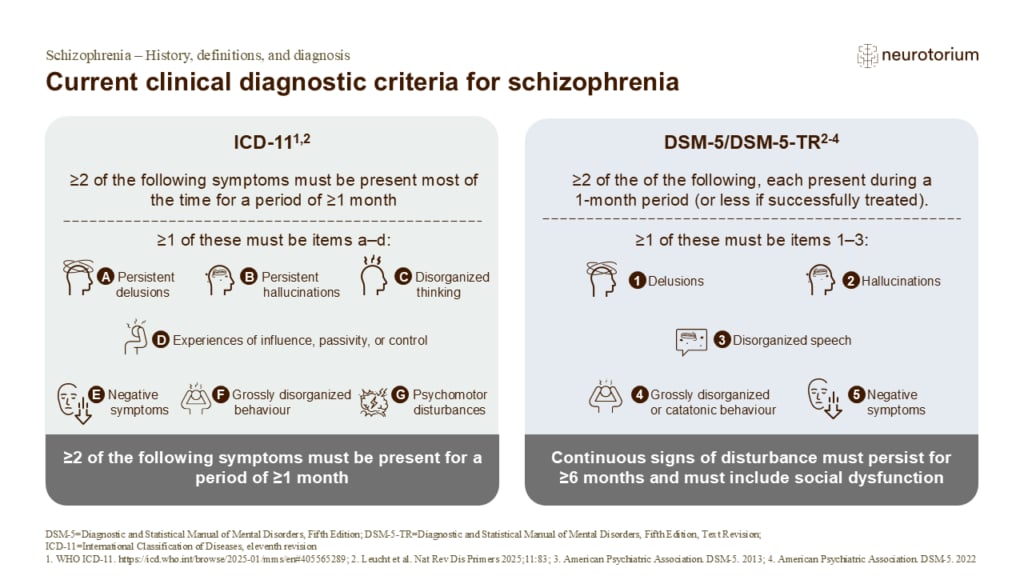
Definitions of schizophrenia
Definitions of schizophrenia
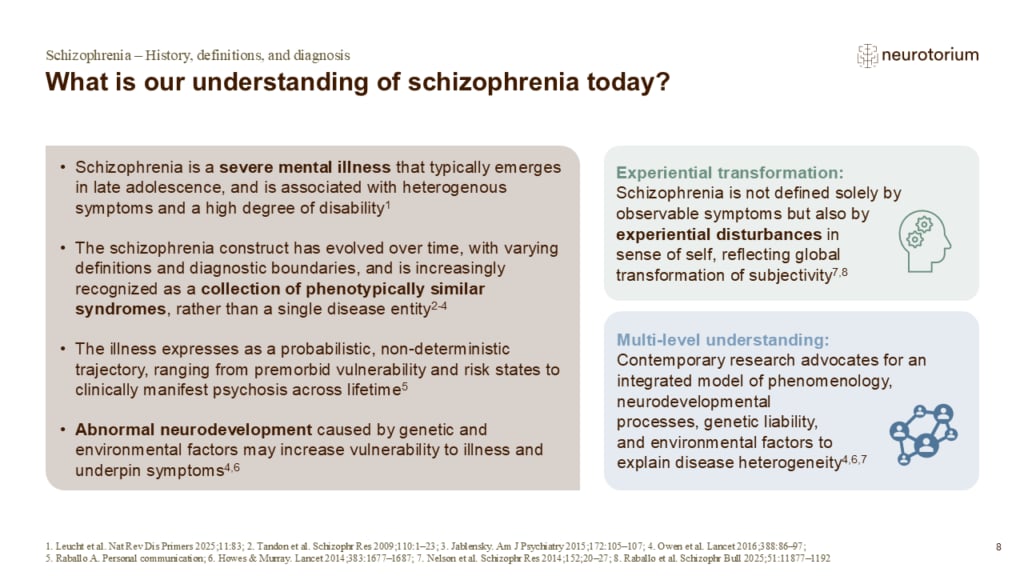
What is our understanding of schizophrenia today?
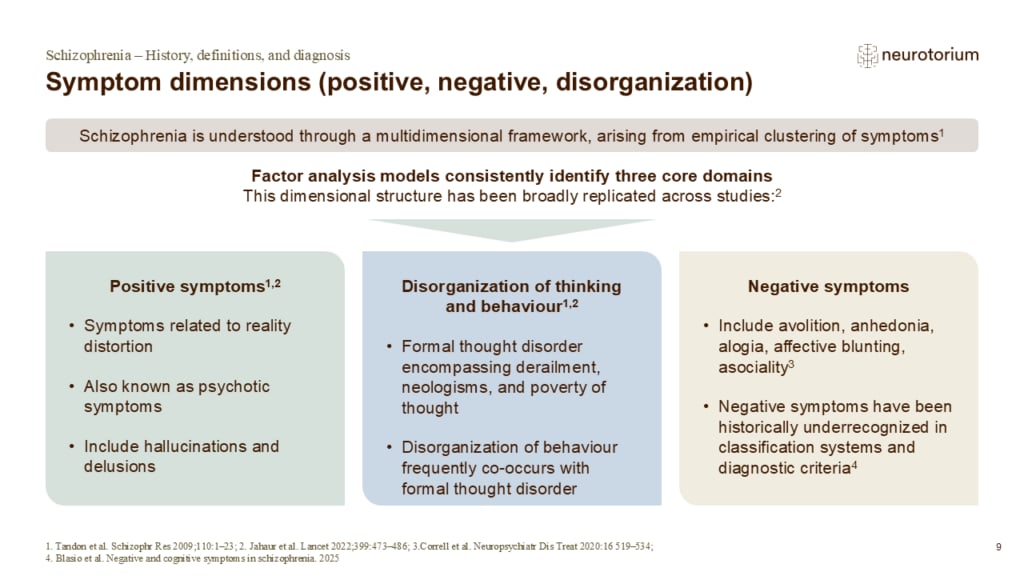
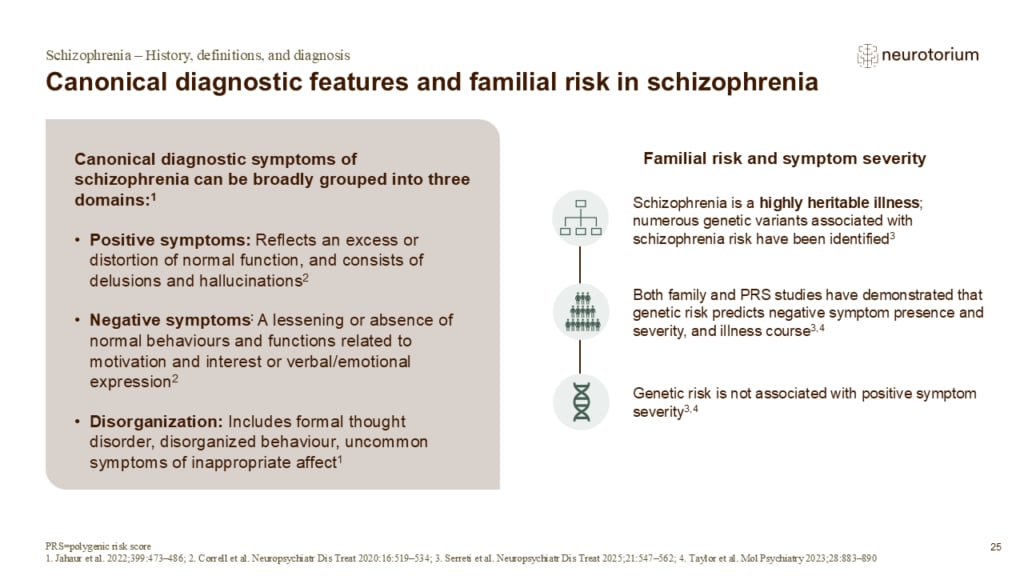
Symptom dimensions (positive, negative, disorganization)
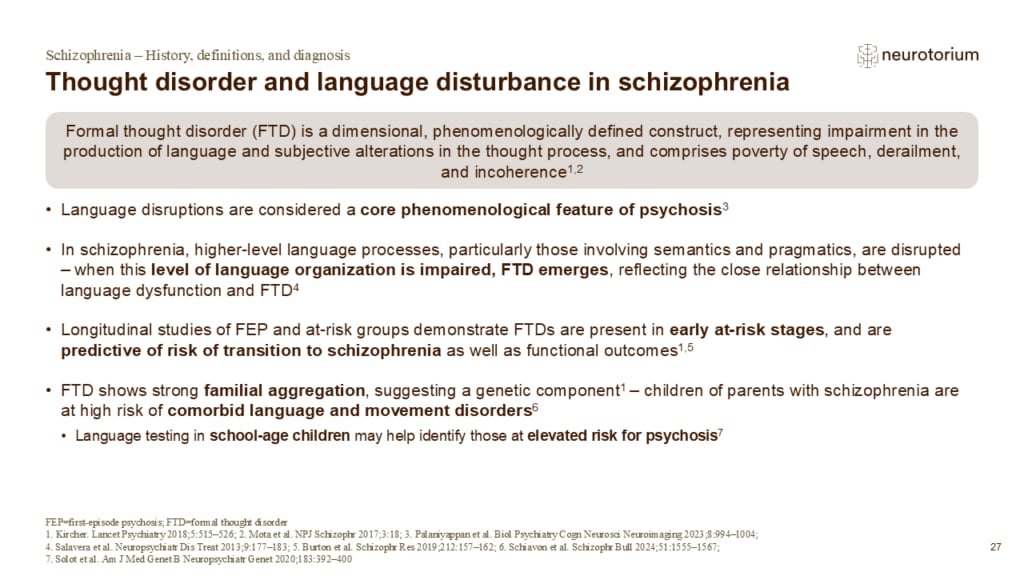
While the three-dimensional model of positive, negative, and disorganization symptoms is the most popular, it has been criticized as too simplistic and more complex models have been proposed; however, there is no consensus as to the number and nature of dimensions necessa…
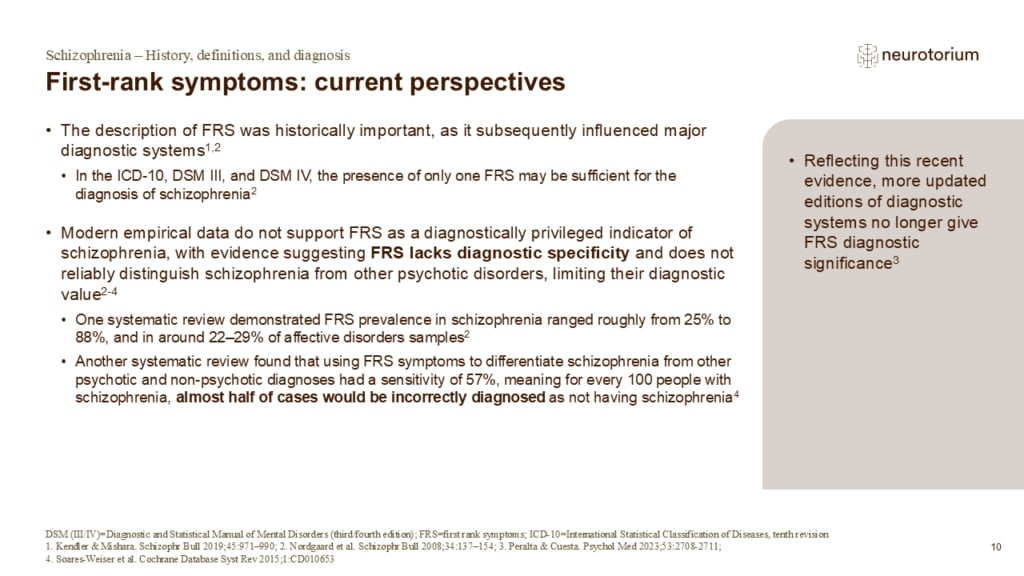
First-rank symptoms: current perspectives
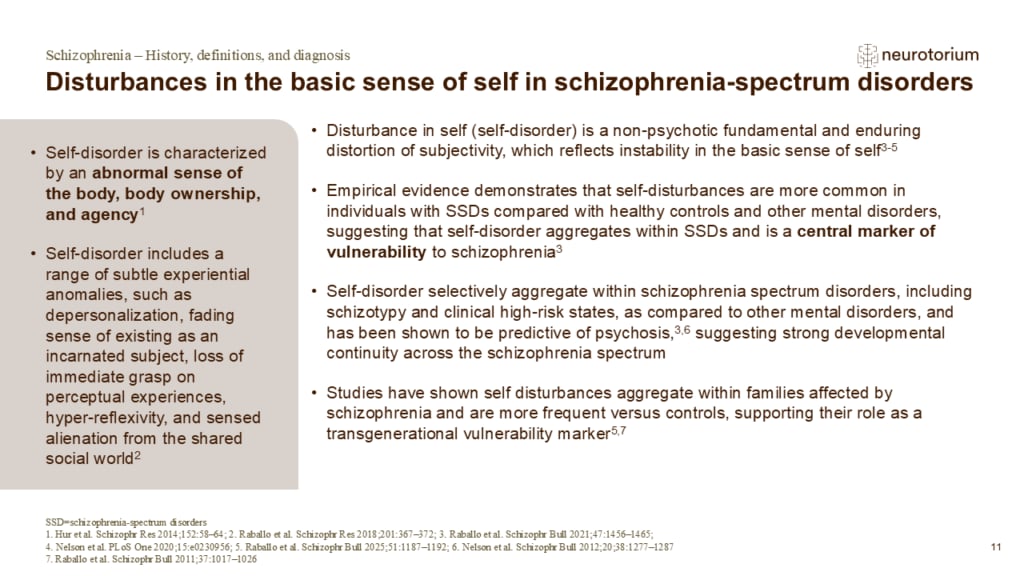
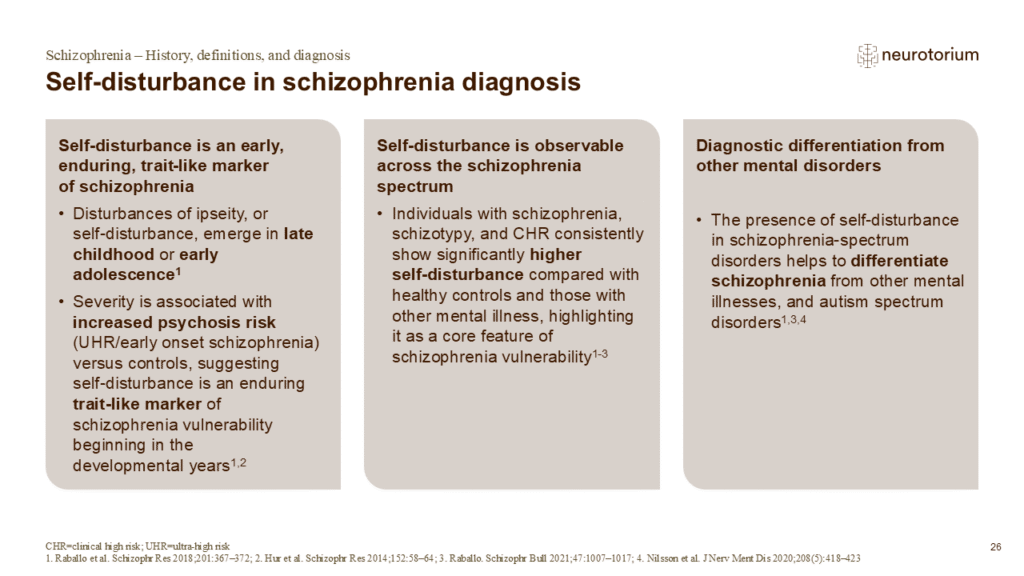
Disturbances in the basic sense of self in schizophrenia-spectrum disorders
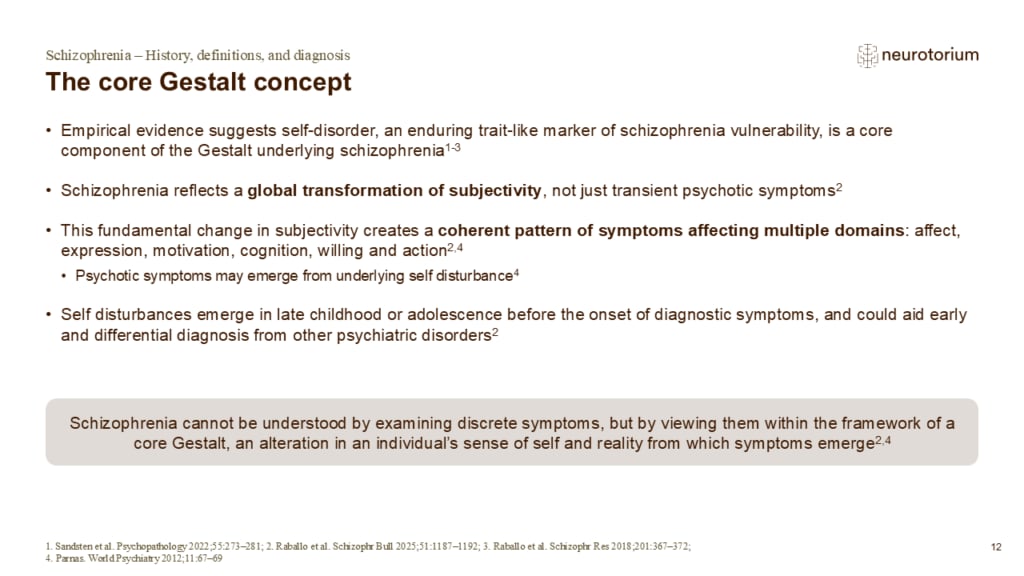
The core Gestalt concept
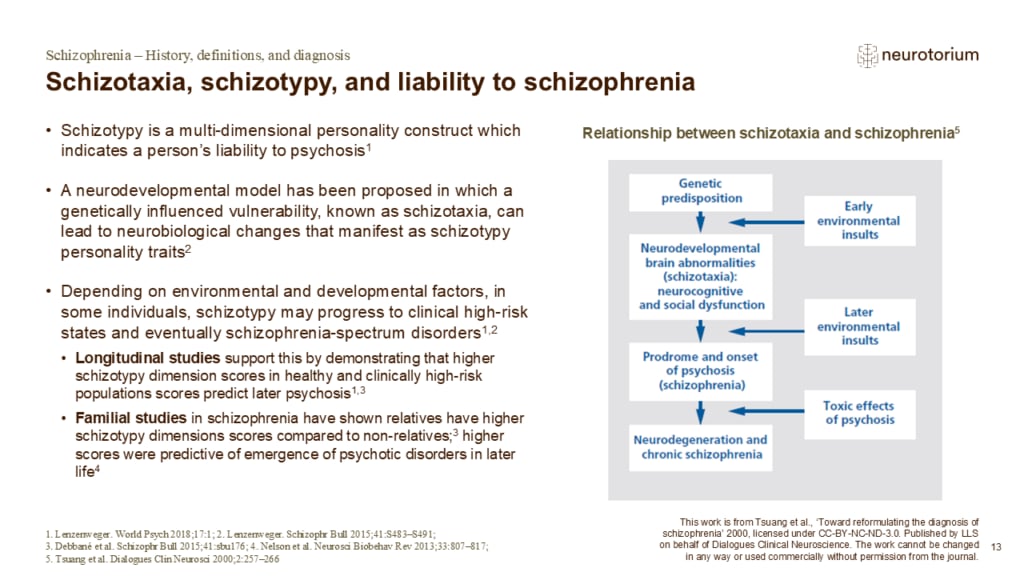
Schizotaxia, schizotypy, and liability to schizophrenia
The schizotypal personality traits broadly correspond to the positive, negative and disorganized dimensions observed in schizophrenia. The personality traits include positive (cognitive-perceptual), such as magical thinking, unusual perceptual experiences, ideas of refere…
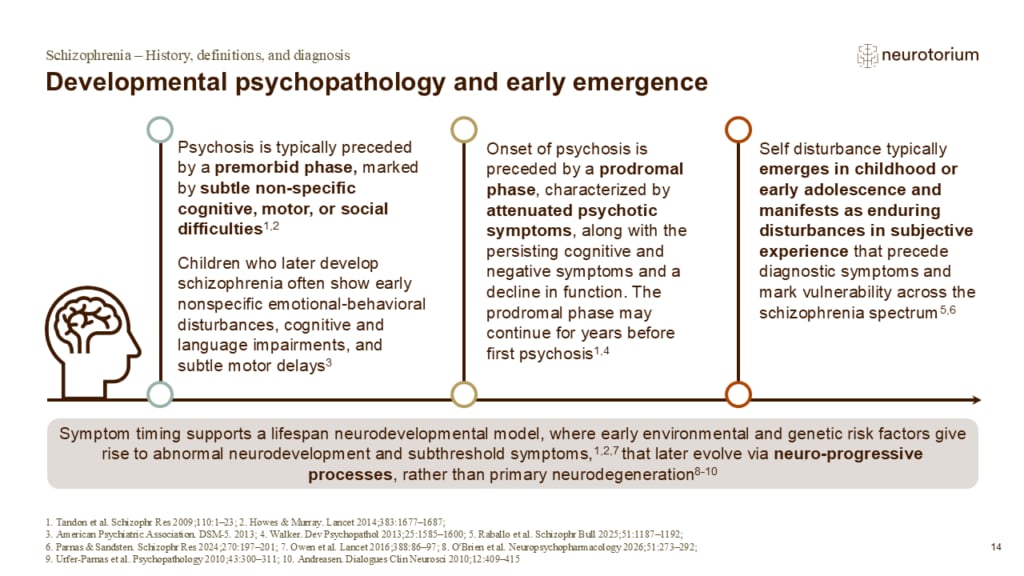
Developmental psychopathology and early emergence
For individuals with psychotic spectrum disorders, including schizophrenia, multiple genetic liabilities (including diverse CNVs) and environmental exposures (biological and social) interact to alter neurodevelopmental trajectories.4,8,11
Abbreviations: CNV=copy number va…
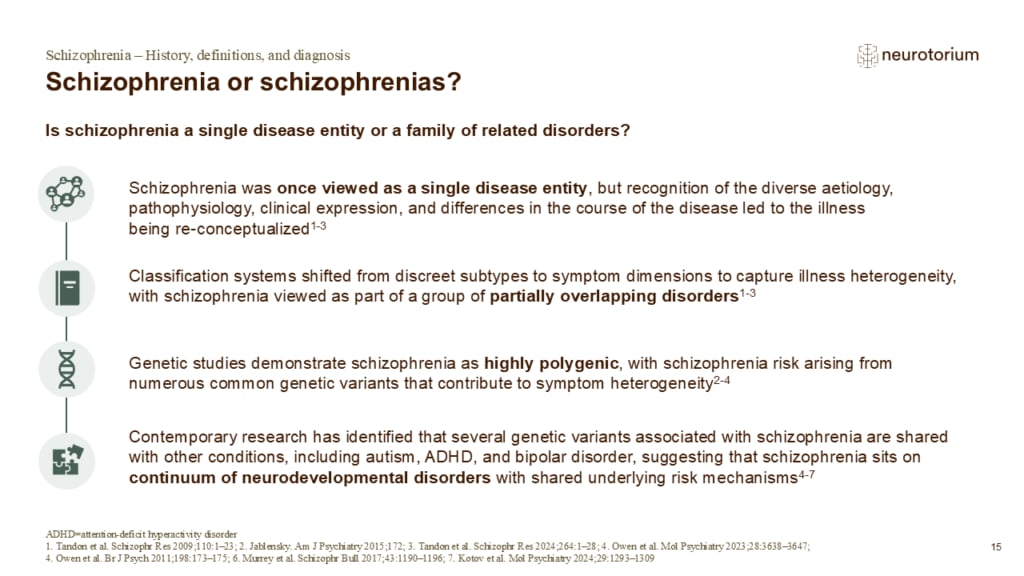
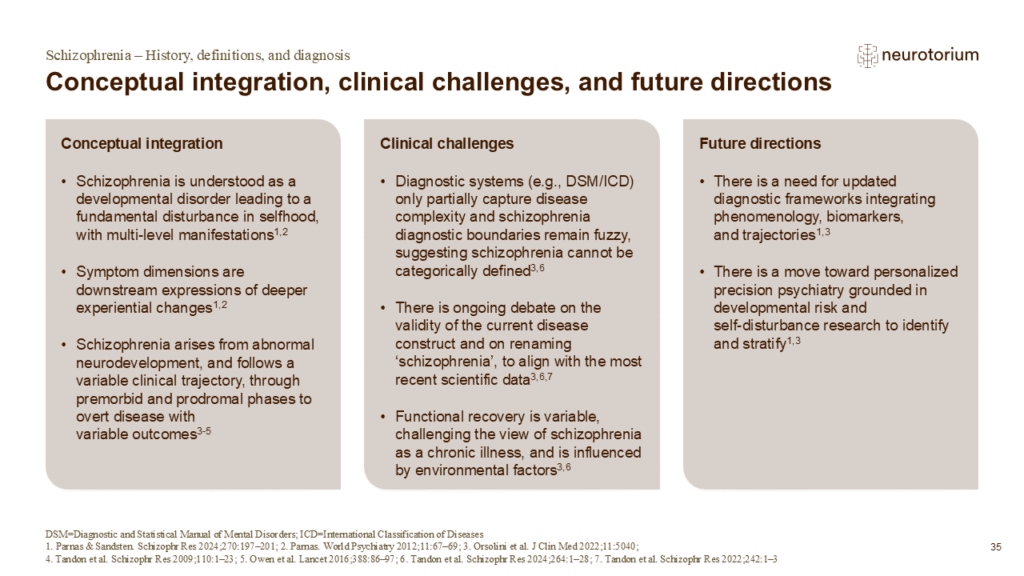
Schizophrenia or schizophrenias?
Neurodevelopmental aberrations in schizophrenia are largely mediated by numerous common variants of small effect, alongside CNVs with larger effect sizes. These CNVs have also been associated with conditions such as autism, ADHD, and bipolar disorder, supporting the conce…
Related content

Continuous maintenance therapy is associated with a lower risk of relapse than intermittent treatment, supporting ongoing treatment strategies in schizophrenia and related psychotic disorders.
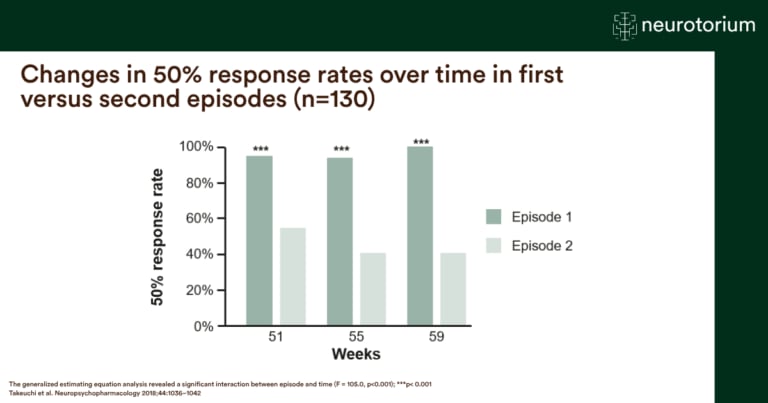
Treatment response tends to be higher during a first episode than during subsequent episodes, emphasizing the importance of early intervention and effective management.
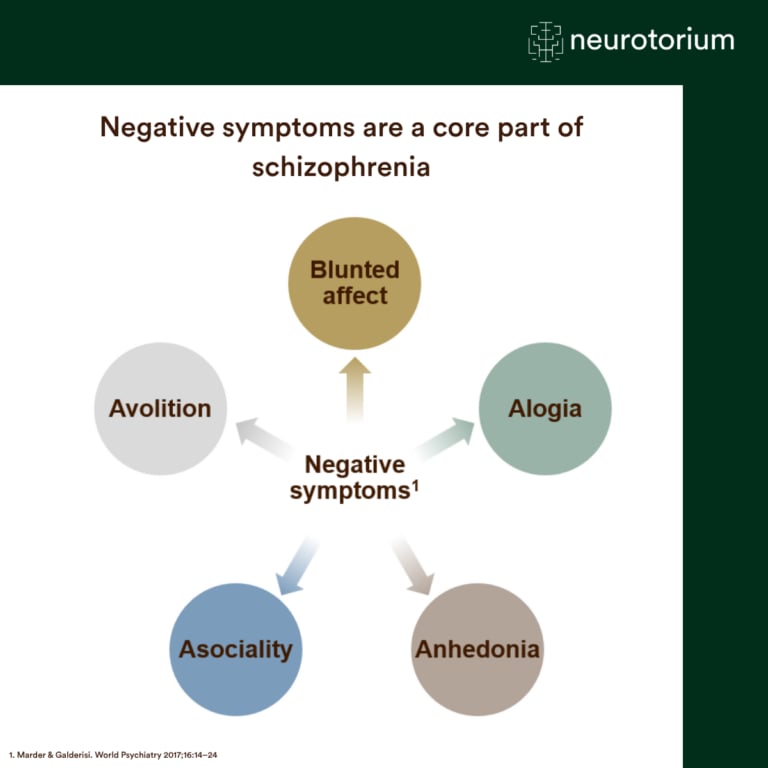
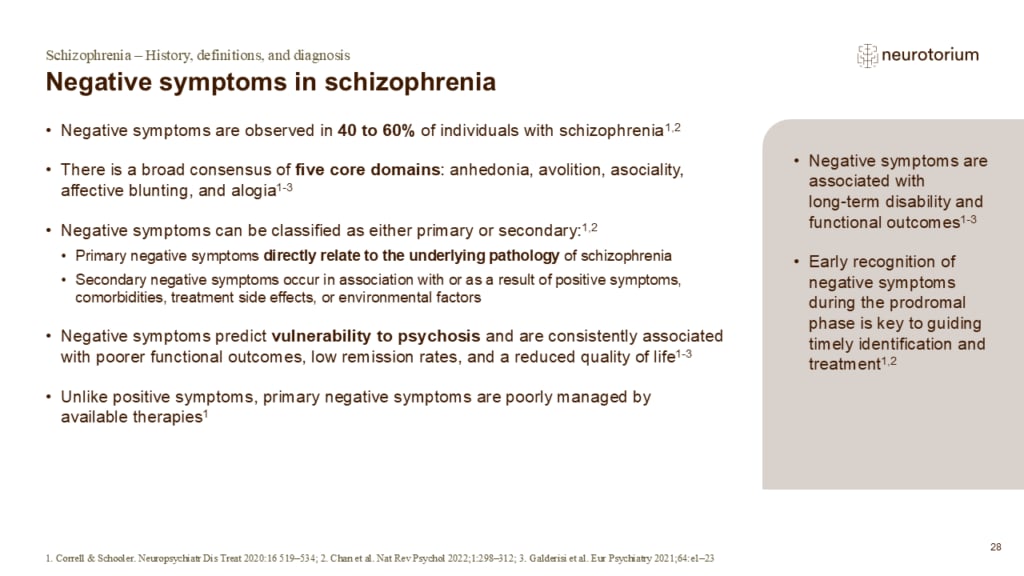
Negative symptoms are a core feature of schizophrenia and can have a profound impact on functioning, social relationships, and quality of life.