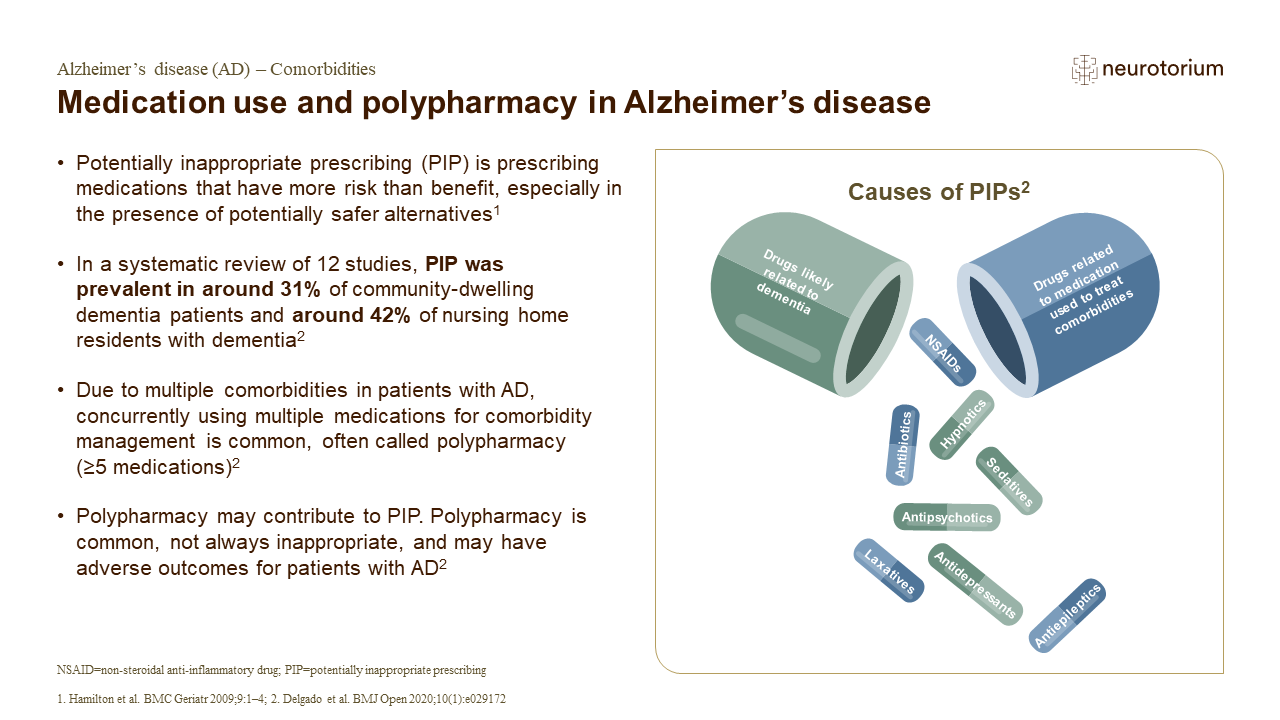
Commonly reported drugs that are associated with the cause of potentially inappropriate prescribing (PIP) include dementia-related treatments, such as sedatives and hypnotics, antipsychotics, and antidepressants.2 However, medications used to treat comorbidities of dementia have also been associated with PIPs, including cardiovascular drugs and anti-hypertensives, non-steroidal anti-inflammatory drugs (NSAIDs), antiacid drugs, laxatives, antihistamine drugs, diabetes drugs, anti-incontinence drugs including anti-muscarinic drugs, analgesic drugs (including opioids), antibiotic drugs, and antiepileptic drugs.2 Identifying the comorbidities driving risk of PIP may allow targeted interventions to reduce PIP in individuals living with dementia.2
Medication use and polypharmacy in Alzheimer’s disease