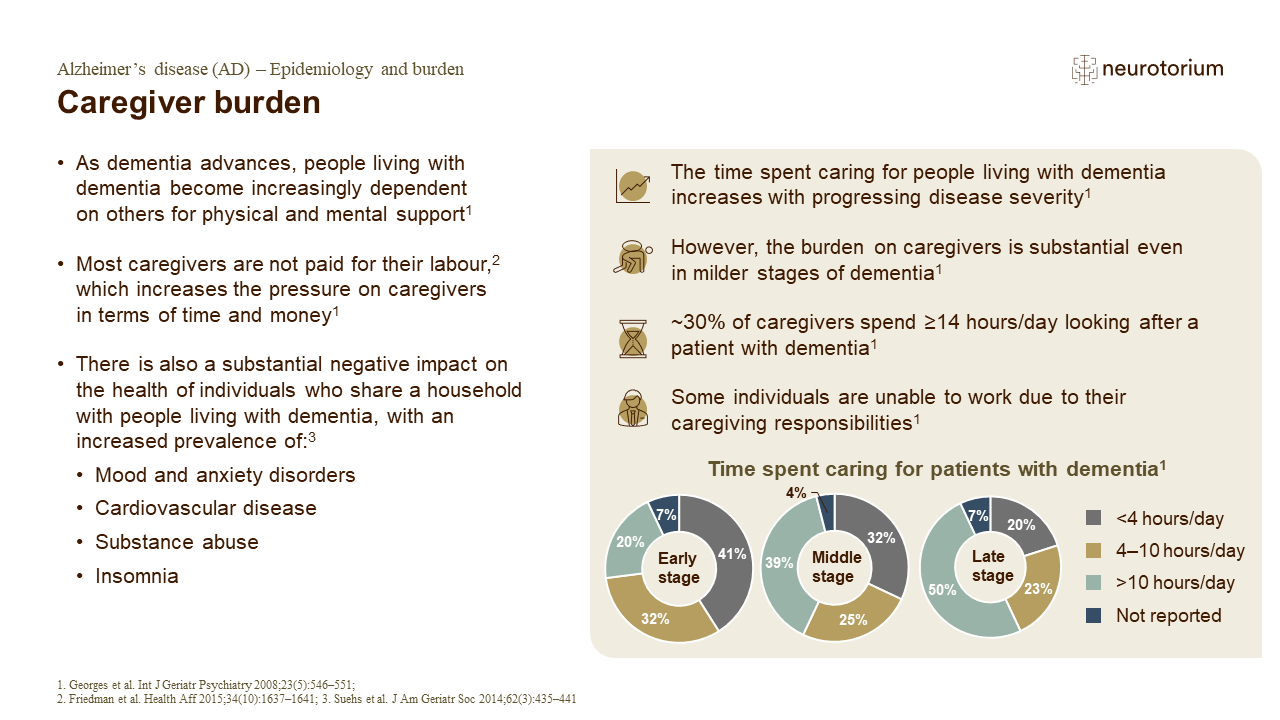
For caregivers of people living with dementia, the role involves helping the patient with acts of daily living (i.e., household chores, shopping, preparing meals, managing finances, arranging medical appointments, maintaining personal hygiene), administering medications, making arrangement for other forms of care, and managing behavioural symptoms of the patient.4 Neuropsychiatric symptoms are more common in moderate and advanced disease stages, and are associated with a significant burden for caregivers.4
In one study, it was found that over half (57%) of family caregivers of people living with dementia had provided care for four or more years.5 As caregiving is a time-consuming role, many caregivers do not have time for their own personal life, which increases loneliness.6
References:
1. Georges J, Jansen S, Jackson J, et al. Alzheimer’s disease in real life – the dementia carer’s survey. Int J Geriatr Psychiatry 2008; 23 (5): 546–551.
2. Friedman EM, Shih RA, Langa KM, Hurd MD. US Prevalence and predictors of informal caregiving for dementia. Health Aff (Millwood) 2015; 34 (10): 1637–1641.
3. Suehs BT, Shah SN, Davis CD, et al. Household members of persons with Alzheimer’s disease: health conditions, healthcare resource use, and healthcare costs. J Am Geriatr Soc 2014; 62 (3): 435–441.
4. Alzheimer’s Association. 2023 Alzheimer’s disease facts and figures. Alzheimers Dement 2023; 19 (4): 1598–1695.
5. Kasper JD, kkFreedman VA, Spillman BC, Wolff JL. The disproportionate impact of dementia on family and unpaid caregiving to older adults. Health Aff (Millwood). 2015; 34 (10): 1642–1649.
6. Lindeza P, Rodrigues M, Costa J, et al. Impact of dementia on informal care: a systematic review of family caregivers’ perceptions. BMJ Support Palliat Care 2020: bmjspcare-2020-002242.