

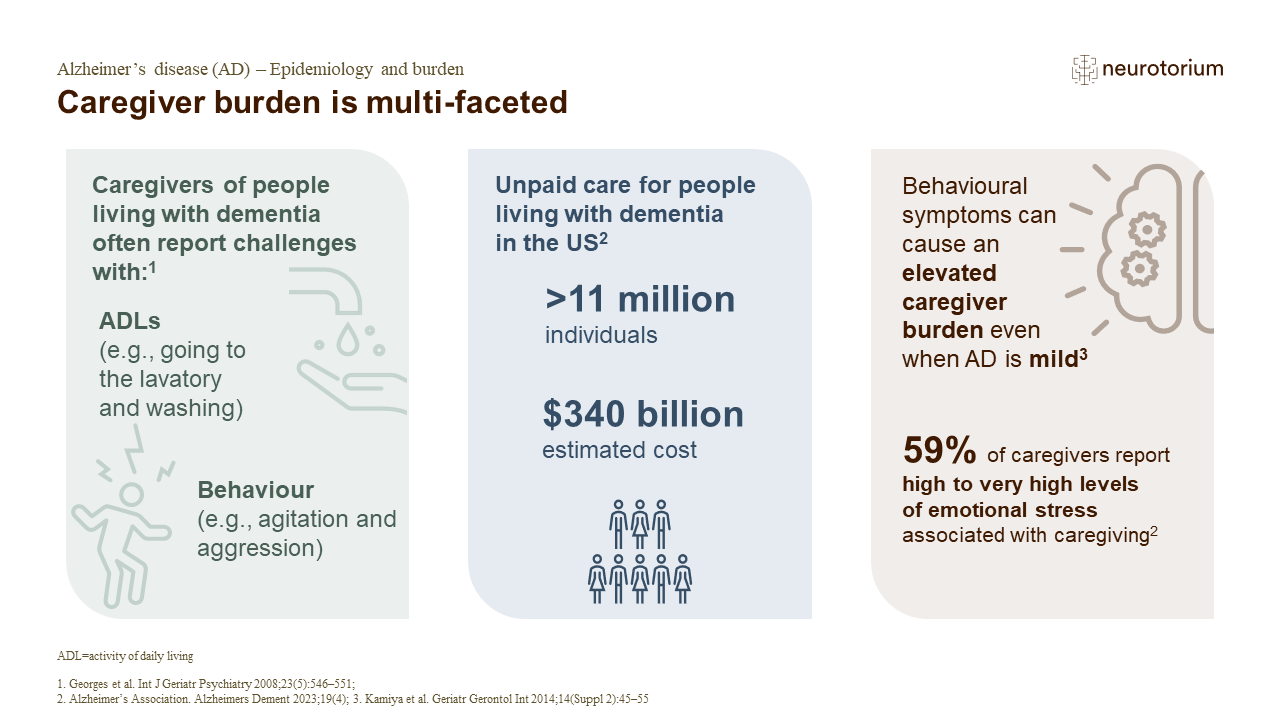
As AD progresses, people living with dementia become increasingly dependent on the caregiver.2 The current healthcare system is highly reliant on informal unpaid caregivers, many of whom are also socioeconomically and medically vulnerable.4,5 As a result, family and caregivers are at increased risk of health consequences associated with the physical and mental stress of caregiving,6 which include cardiovascular disease, diabetes, obesity, cancer, and depression.2 In addition to the health risks involved with caregiving, caregivers are likely to experience disruptions to their work schedule, reduce the hours they work, or leave the workforce,2,4 which may further increase stress. Compared with non-AD caregivers, caregivers of people living with dementia experience a greater prevalence of psychological and medical conditions, greater resource use, and greater costs.6
4. National Alliance for Caregiving. Research recommendations: dementia caregiving in the US. Available at: www.caregiving.org/wp-content/uploads/2020/05/Dementia-Caregiving-Report-2017_Research-Recommendations_FINAL.pdf. Accessed 21 July 2023.
5. Upadhyay & Weiner. Issue brief: long-term care financing in the United States. Available at: https://ldi.upenn.edu/wp-content/uploads/archive/pdf/LDI%20Issue%20Brief%202019%20Vol.%2023%20No.%201_7_0.pdf. Accessed 21 July 2023.