

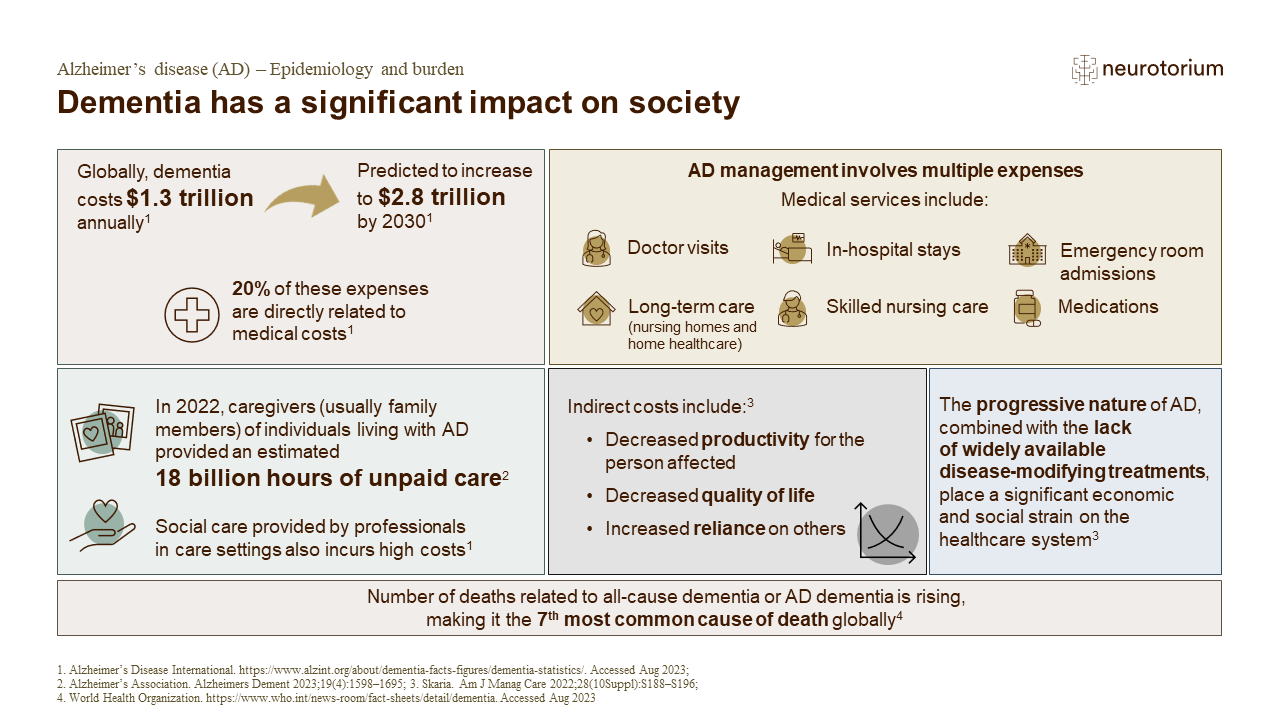
People living with dementia live with the disease for a long time, and therefore, spend a long time living with disability and depending on caregivers.2 As a result, this significantly contributes to the public health impact of the disease.2,5 Cost of care can be divided into direct and indirect costs.5 Direct costs associated with treatment of AD include physician office visits, hospital admissions, emergency department visits, skilled nursing care, and medications,5,6 with long-term care accounting for the majority of direct costs associated with treatment of AD.3 Indirect costs include those associated with premature death, loss of productivity for the patient and caregiver, and informal unpaid care costs or indirect costs borne by the patient’s family or caregiver.5,6
References:
1. Alzheimer’s Disease International. Dementia statistics. Available at: https://www.alzint.org/about/dementia-facts-figures/dementia-statistics/. Accessed 31 August 2023.
4. World Health Organization. Dementia fact sheet. Available at: https://www.who.int/news-room/fact-sheets/detail/dementia. Accessed 31 August 2021.