

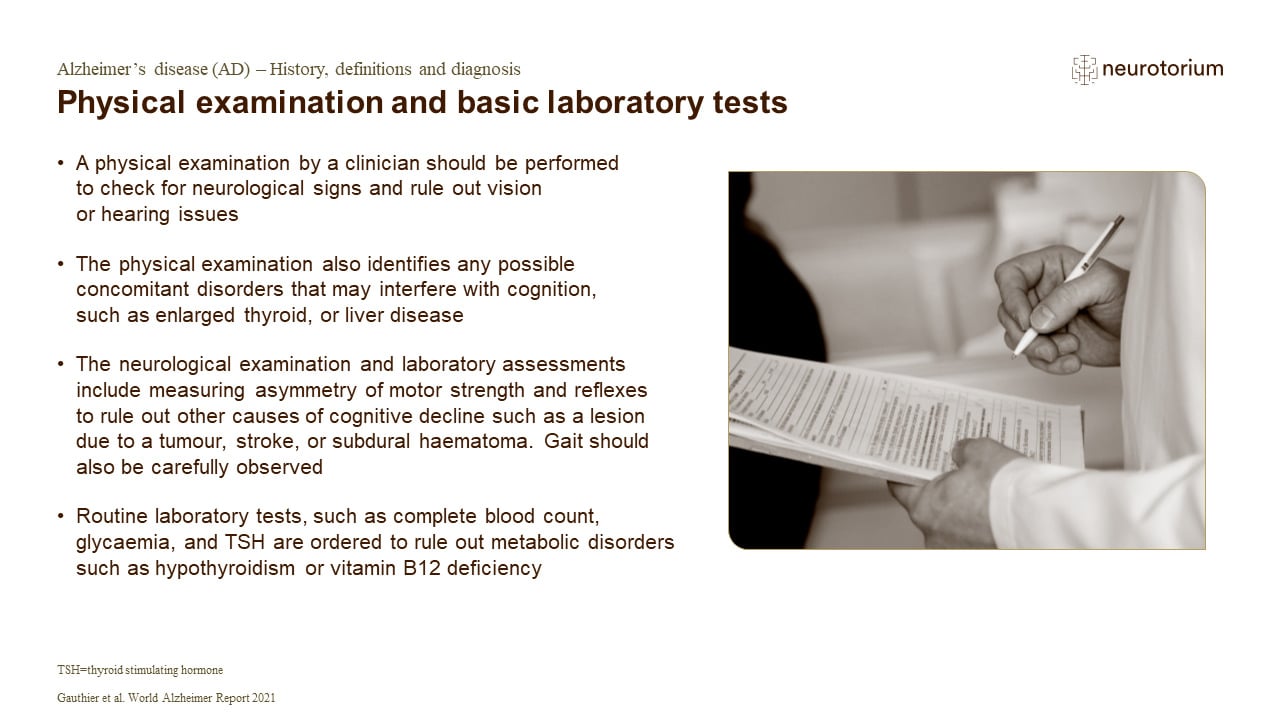
In the initial stages of a dementia diagnosis, a physical examination is conducted.1 This examination is similar to the physical examination conducted when visiting a new doctor.1 Assessments will focus on vital signs such as heart rate, blood pressure, and listening to the heart and major blood vessels (i.e., carotid arteries in the neck).1 Incorporated into the physical examination is the neurological examination, which involves evaluating eye movement speed, and/or the ability to walk steadily in the presence of, or without, distractions.1 In addition, the neurological examination should assess the presence of any asymmetry in motor tone, strength, and reflexes (which may be due to a silent stroke).1 Generally the initial physical examination for a potential case of dementia should be comprehensive and in-person to identify any prevalent conditions such as cardiovascular disease (CVD), carotid stenosis, organomegalies, hypothyroidism, and B12 or folate deficiency.1 Therefore various laboratory tests may also be conducted.1 General laboratory tests that are recommended include CBC, sed rate, TSH, T4, electrolytes, calcium, BUN, creatinine, glycaemia, ALT, B12, folate, syphilis serology, and an HIV screen.1 Performing blood tests is a key part of the evaluation process.1 They allow the physician to rule out prevalent conditions (i.e., diabetes mellitus and dyslipidaemia) that may lead to vascular cognitive impairment and worsen neuropathology conditions such as AD, and identify any clinical issues that can lead to cognitive decline (i.e., hepatic and kidney failure).1
References:
1. Gauthier S, Rosa-Neto P, Morais JA, Webster C. World Alzheimer Report 2021: Journey through the diagnosis of dementia. Available at: https://www.alzint.org/u/World-Alzheimer-Report-2021.pdf. Accessed 15 November 2023.