

Lumbar puncture denotes the medical procedure for CSF collection.2 Regional differences in medical practice, insurance coverage, and clinical guidelines influence the number of lumbar punctures that are performed in individuals with potential AD pathophysiology.2 There is evidence that there is considerable hesitation in requesting lumbar punctures for AD.2 The perceived invasiveness of the lumbar puncture procedure may explain this hesitation, as well as potential adverse events.2 These hesitations may arise when serial procedures are required, and when considering the limited utility of early diagnosis and limited improvement from currently available therapies for AD.2
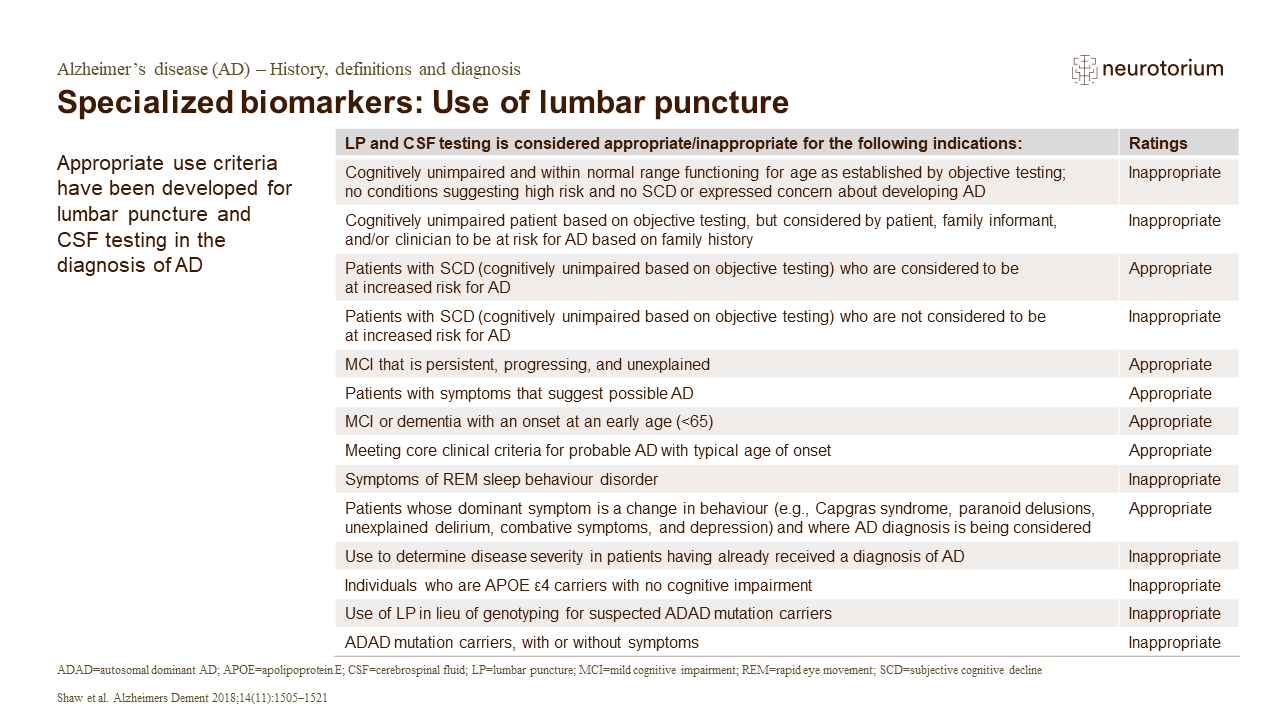
Previously, a group of experts (the workgroup) convened by the Alzheimer’s Association developed an appropriate use criteria (AUC) to aid healthcare practitioners with the information necessary on the appropriate, and inappropriate, use of lumbar puncture, with a goal to optimize patient safety and care.1 In developing the criteria, the workgroup assessed the appropriateness of a variety of clinical indications based on a systematic review of current evidence, the experience of its members with CSF testing, and ethical standards for patient care.1 The workgroup described six clinical indications where they believe CSF biomarker testing is appropriate.1 These recommendations are largely consistent with those proposed by the AUC for PET-amyloid imaging.1