

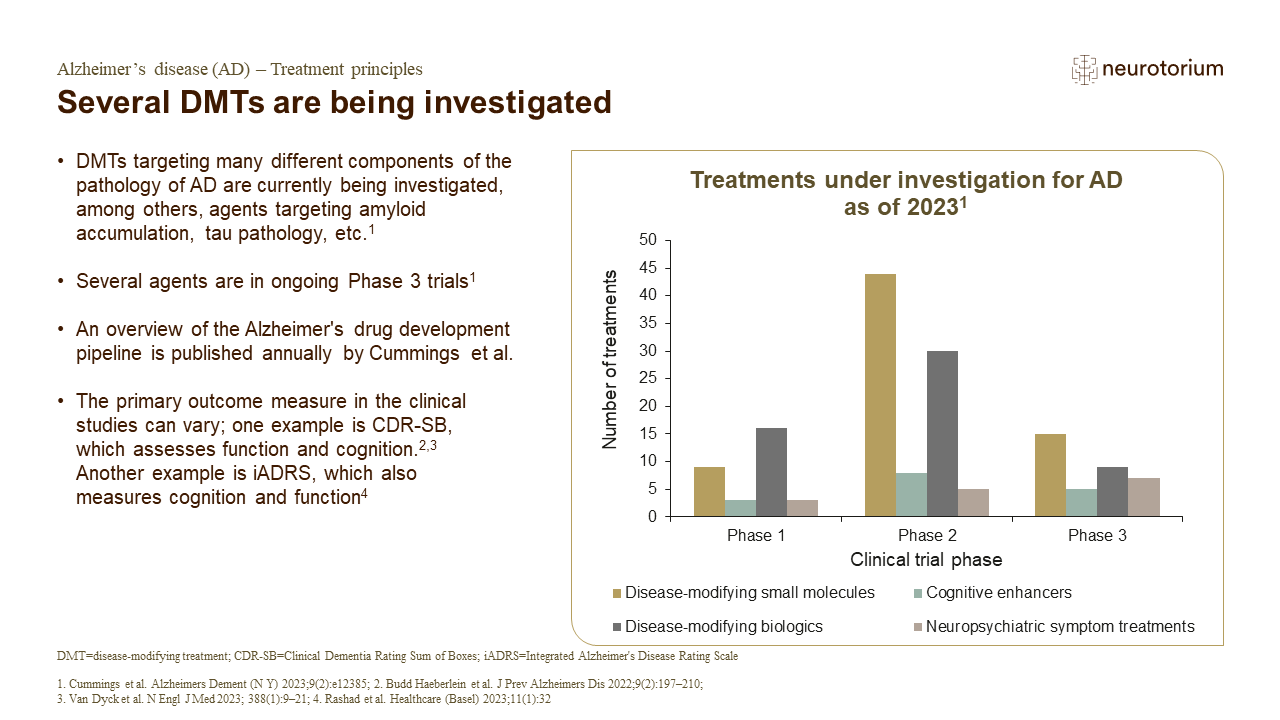
There are currently several DMTs under investigation.1 As of 2023, 44% of DMTs under investigation were biologics and 56% were small molecules.1 29% of the agents target neurotransmitters (including cognitive enhancers, and drugs being developed to reduce NPS), 17% target inflammation, 16% amyloid, 13% synaptic plasticity/neuroprotection, 9% tau, 7% metabolism and bioenergetics, 5% oxidative stress, and 3% proteostasis/proteinopathy.1 DMTs make up 67% of all Phase 3 agents, 85% of Phase 2 agents, and 81% of Phase 1 agents.1
The success of aducanumab and lecanemab suggests that understanding the biology of AD has progressed to identify targets that can slow cognitive decline following modulation.1 Additionally, improvements in identification of drug targets, availability of informative biomarkers, identification of candidate drugs with promising pharmacokinetic and pharmacodynamic characteristics, better defined trial populations, and improved trial conduct, have all strengthened drug discovery.7