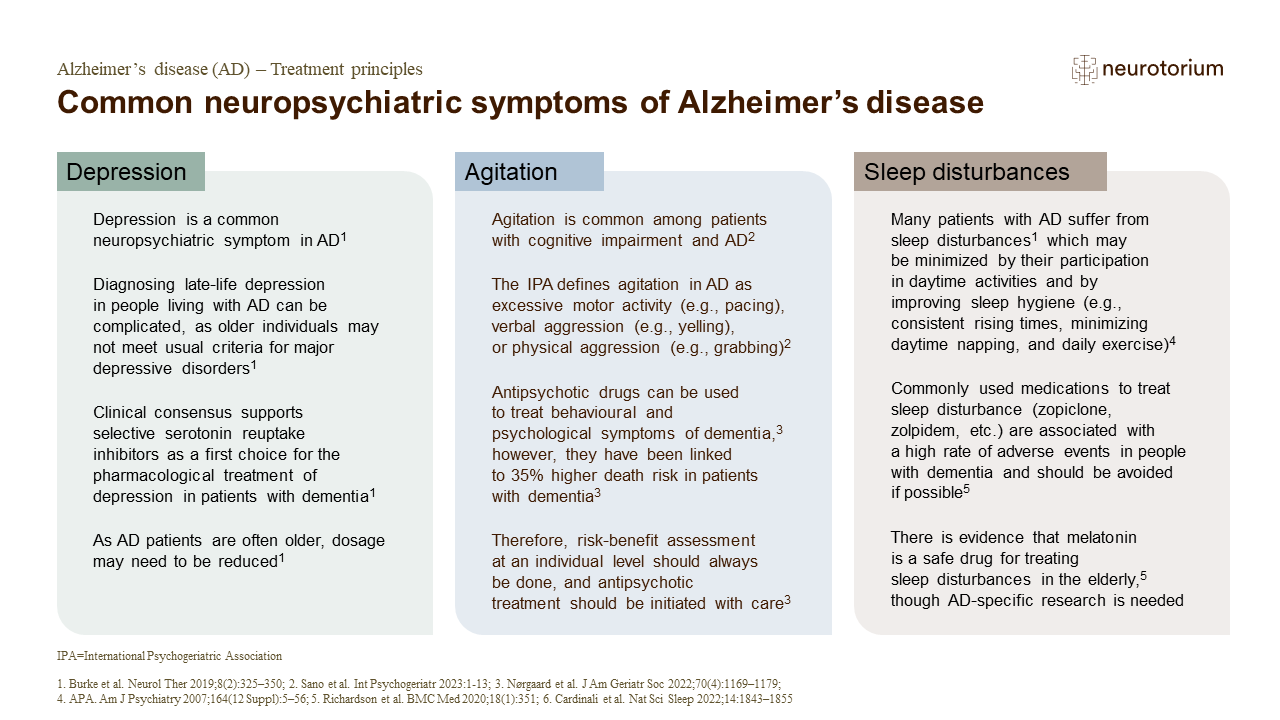
Neuropsychiatric symptoms (NPS) affect approximately 97% of patients with AD,7 and are associated with impairments in daily function, poor quality of life, earlier institutionalization, accelerated progression of cognitive decline, and caregiver stress.7-10 The most common NPS are apathy and depression.1 Depression is common during the MCI stage and is a predictor of progression from normal cognition to MCI, and from MCI to dementia.1
Another common NPS of AD with limited available treatment is sleep disturbance, which impacts cognition, behaviour and the quality of life of the patient and caregiver.11,12 These disturbances may occur independently of and alongside depression.1 Suvorexant, which is approved for insomnia in the US, has had successful results in the treatment of insomnia in AD.13 It is important that when treating patients with AD, the impact of NPS on the patients’ quality of life should not be overlooked.1 However, there is a need for additional research and the development of assessment tools for depression in the geriatric population.1
The most active research area in drug development for neuropsychiatric symptoms in AD is the treatment of agitation.2 In 2023, brexpiprazole received FDA approval for the treatment of agitation associated with dementia due to Alzheimer’s disease.3 Other drugs such as dextromethorphan/quinidine and AXS-05 (dextromethorphan/bupropion) have shown promising results for the treatment of agitation in Alzheimer’s dementia.4,5 Disease-modifying and symptomatic therapies are both needed to improve the outcomes of patients with AD continuum disorders.11 It is likely that future treatment plans will incorporate both types of therapy to maximize patient benefit.11
References:
1. Burke AD, Goldfarb D, Bollam P, Khokher S. Diagnosing and treating depression in patients with Alzheimer’s disease. Neurol Ther 2019; 8 (2): 325–350.
2. Sano M, Cummings J, Auer S, et al. Agitation in cognitive disorders: progress in the International Psychogeriatric Association consensus clinical and research definition. Int Psychogeriatr 2023: 1–13.
3. Nørgaard A, Jensen-Dahm C, Wimberley T, et al. Effect of antipsychotics on mortality risk in patients with dementia with and without comorbidities. J Am Geriatr Soc 2022; 70 (4): 1169–1179.
4. APA Work Group on Alzheimer’s Disease and other Dementias; Rabins PV, Blacker D, Rovner BW, et al; Steering Committee on Practice Guidelines; McIntyre JS, Charles SC, Anzia DJ, et al. American Psychiatric Association practice guideline for the treatment of patients with Alzheimer’s disease and other dementias. Second edition. Am J Psychiatry 2007; 164 (12 Suppl): 5–56.
5. Richardson K, Loke YK, Fox C, et al. Adverse effects of Z-drugs for sleep disturbance in people living with dementia: a population-based cohort study. BMC Med 2020; 18 (1): 351.
6. Cardinali DP, Brown GM, Pandi-Perumal SR. Melatonin’s benefits and risks as a therapy for sleep disturbances in the elderly: current insights. Nat Sci Sleep 2022; 14: 1843–1855.
7. Steinberg M, Shao H, Zandi P, et al. Point and 5-year period prevalence of neuropsychiatric symptoms in dementia: the Cache County Study. Int J Geriatr Psychiatry 2008; 23 (2): 170–177.
8. Lyketsos CG, Carrillo MC, Ryan JM, et al. Neuropsychiatric symptoms in Alzheimer’s disease. Alzheimers Dement 2011; 7 (5): 532–539.
9. Taragano FE, Allegri RF, Krupitzki H, et al. Mild behavioral impairment and risk of dementia: a prospective cohort study of 358 patients. J Clin Psychiatry 2009; 70 (4): 584–592.
10. Allegri RF, Sarasola D, Serrano CM, et al. Neuropsychiatric symptoms as a predictor of caregiver burden in Alzheimer’s disease. Neuropsychiatr Dis Treat 2006; 2 (1): 105–110.
11. Cummings J. New approaches to symptomatic treatments for Alzheimer’s disease. Mol Neurodegener 2021; 16 (1): 2.
12. Borges CR, Poyares D, Piovezan R, et al. Alzheimer’s disease and sleep disturbances: a review. Arq Neuropsiquiatr 2019; 77 (11): 815–824.
13. Belsomra® prescribing information February 2023. Available at: https://www.merck.com/product/usa/pi_circulars/b/belsomra/belsomra_pi.pdf. Accessed 15 August 2023.