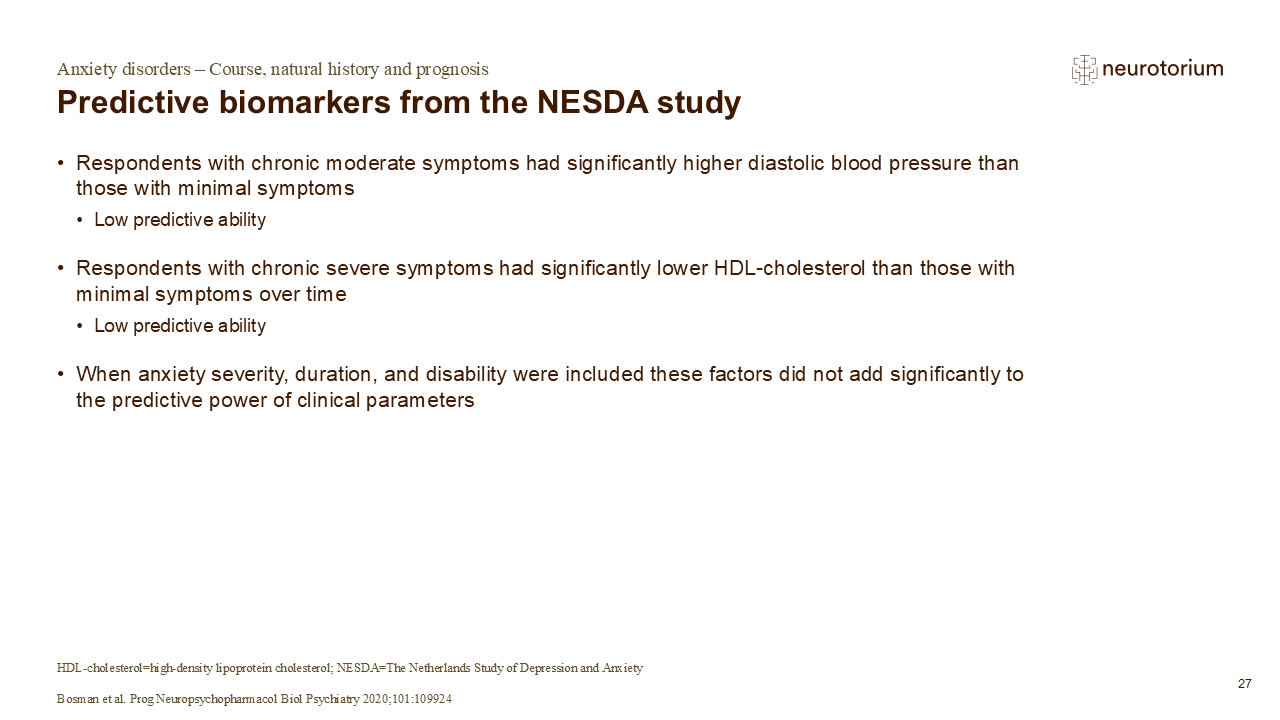
In the NESDA study, a number of clinical and biochemical factors were evaluated for their relationship with anxiety symptoms and course.1 These included the metabolic syndrome and its components (waist circumference, lipids/use of medication for lipid abnormalities, blood pressure/use of antihypertensive medication, and glucose concentration/use of glucose-lowering medication), saliva cortisol concentrations (to assess hypothalamic-pituitary-adrenal axis function), markers of inflammation (C-reactive protein, interleukin-6, and tumour necrosis factor alpha concentrations), and brain-derived neurotrophic factor concentration.1 Only diastolic blood pressure and HDL-cholesterol were found to be predictive of anxiety symptom chronicity but both had low predictive ability.1
Predictive biomarkers from the NESDA study