

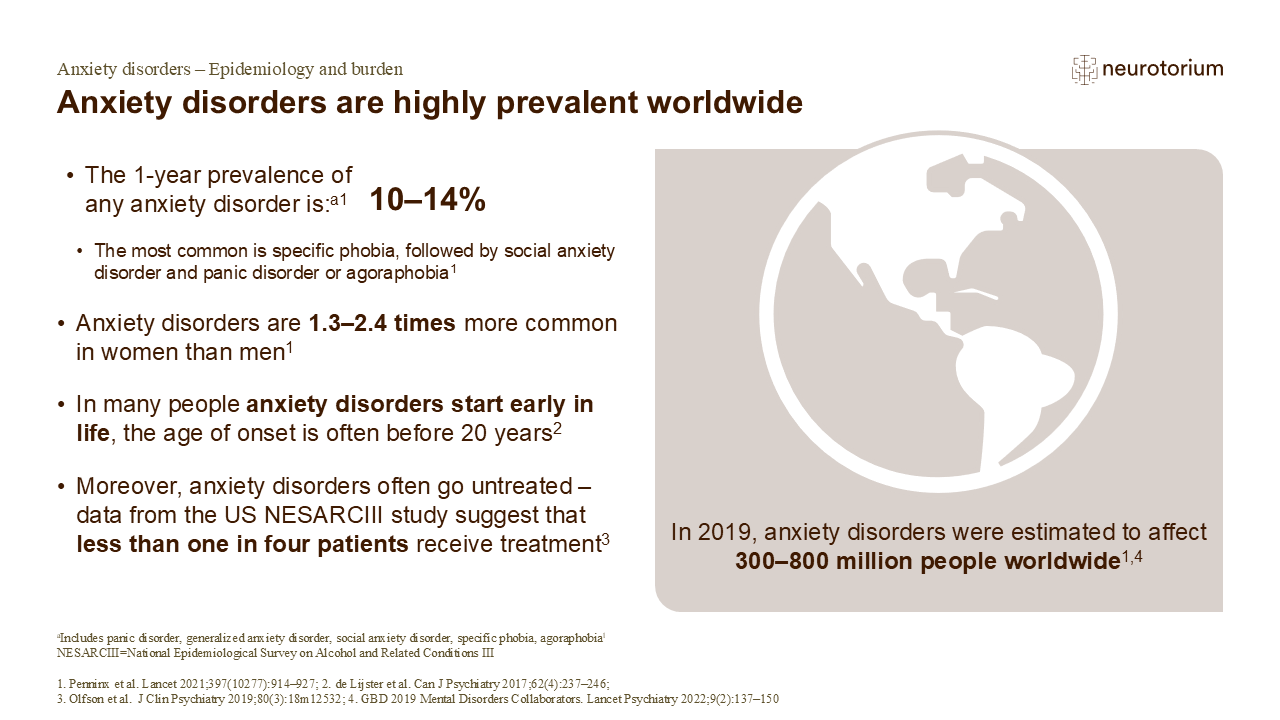
Anxiety disorders are among the most common types of mental disorder; however, due to methodological differences, estimates of the prevalence of anxiety disorders in populations around the globe vary widely across large-scale studies.1 During late adolescence and in early adulthood (between 15–25 years of age), the cumulative prevalence of all anxiety disorders is approximately twice that of the 1-year prevalence of 10–14% observed in the adult population.1 While not all anxiety disorders experienced by children and adolescents are severe or requiring medical attention,1 access to treatment is an unmet need among people with anxiety disorders. According to data from the 2012–2013 US National Epidemiological Survey on Alcohol and Related Conditions III (NESARCIII), only 24.1% of patients with anxiety were receiving treatment.3 Treatment rates were highest for panic disorder, followed by generalized anxiety disorder and social anxiety disorder; specific phobias were the least likely to get treated.3
References:
- Penninx BW, Pine DS, Holmes EA, Reif A. Anxiety disorders. Lancet 2021; 397 (10277): 914–927.
- de Lijster JM, Dierckx B, Utens EM, et al. The age of onset of anxiety disorders. Can J Psychiatry 2017; 62 (4): 237–246.
- Olfson M, Blanco C, Wall MM, et al. Treatment of common mental disorders in the United States: results from the National Epidemiologic Survey on Alcohol and Related Conditions-III. J Clin Psychiatry 2019; 80 (3): 18m12532.
- GBD 2019 Mental Disorders Collaborators. Global, regional, and national burden of 12 mental disorders in 204 countries and territories, 1990–2019: a systematic analysis for the Global Burden of Disease Study 2019. Lancet Psychiatry 2022; 9 (2): 137–150.