



Index for
slide deck
Introduction
Epidemiology and burden
Epidemiology

Epidemiology
Anxiety disorders are highly prevalent worldwide
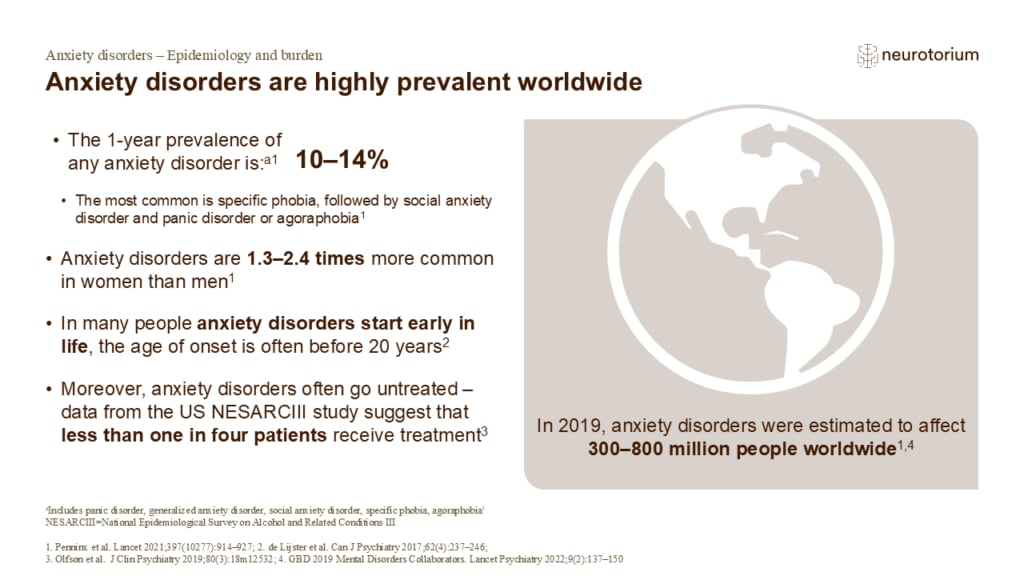
Anxiety disorders are among the most common types of mental disorder; however, due to methodological differences, estimates of the prevalence of anxiety disorders in populations around the globe vary widely across large-scale studies.1 During late adolescence and in early…
Prevalence of mental disorders across Europe
The prevalence of most mental disorders is approximately 2–3 times higher in women than in men, except for substance use disorders, which are approximately 3 times more common in men than in women, and psychotic disorders.1
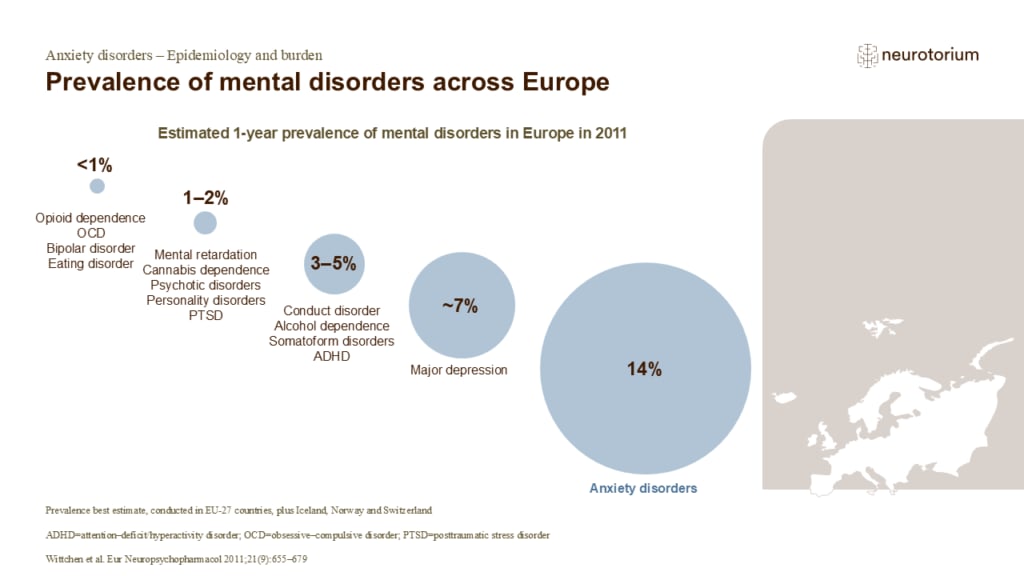
Anxiety disorders have the highest 1-year preval…
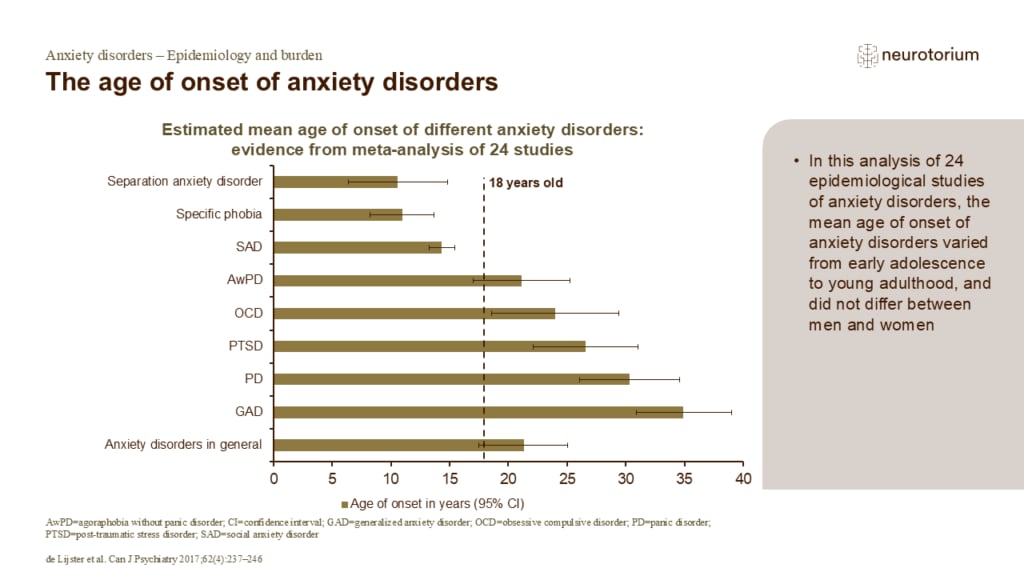
The age of onset of anxiety disorders
In a meta-analysis of 24 epidemiological studies of anxiety disorders, the estimated mean age of onset for anxiety disorders was 21.3 years.1 As evidenced by the nonoverlapping confidence intervals of their estimates, separation anxiety disorder, specific phobia, and soci…
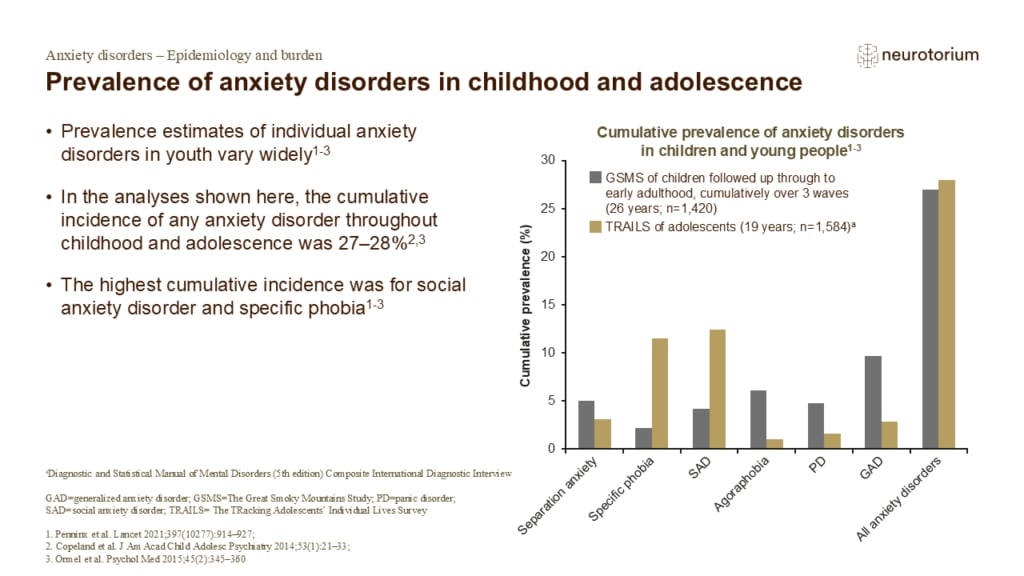
Prevalence of anxiety disorders in childhood and adolescence
Environmental factors that may consistently influence the risk of developing anxiety disorders throughout childhood include stressful life events and parenting practices, such as childhood trauma, separation from attachment figures, and forms of overprotective child-reari…
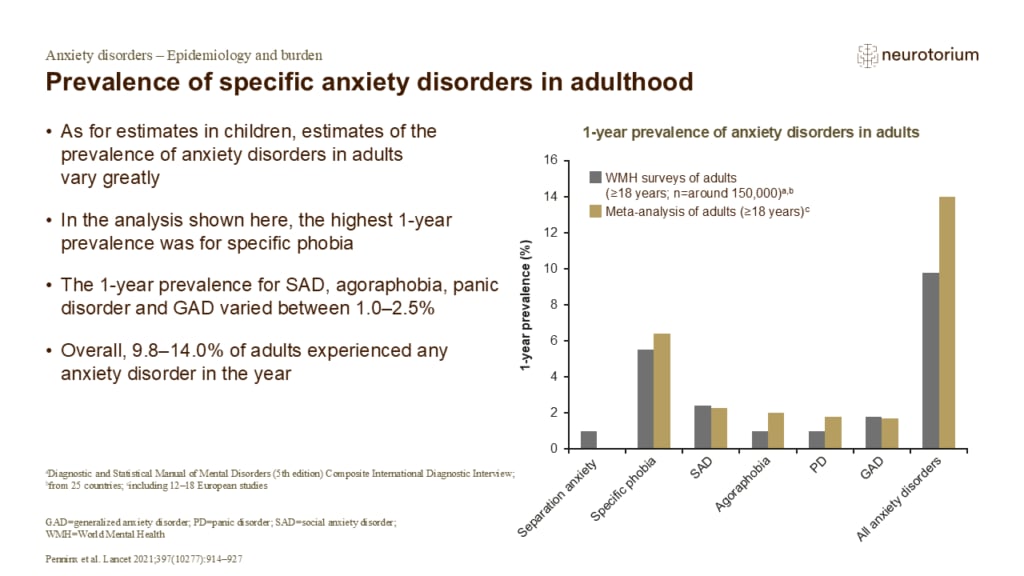
Prevalence of specific anxiety disorders in adulthood
The ratio of 1-year prevalence to lifetime prevalence is an indirect indicator of disorder persistence.2 It is relatively high for most anxiety disorders, suggesting they are chronic and recurrent.1 Among patients with only one anxiety disorder, remission rates after 2 ye…
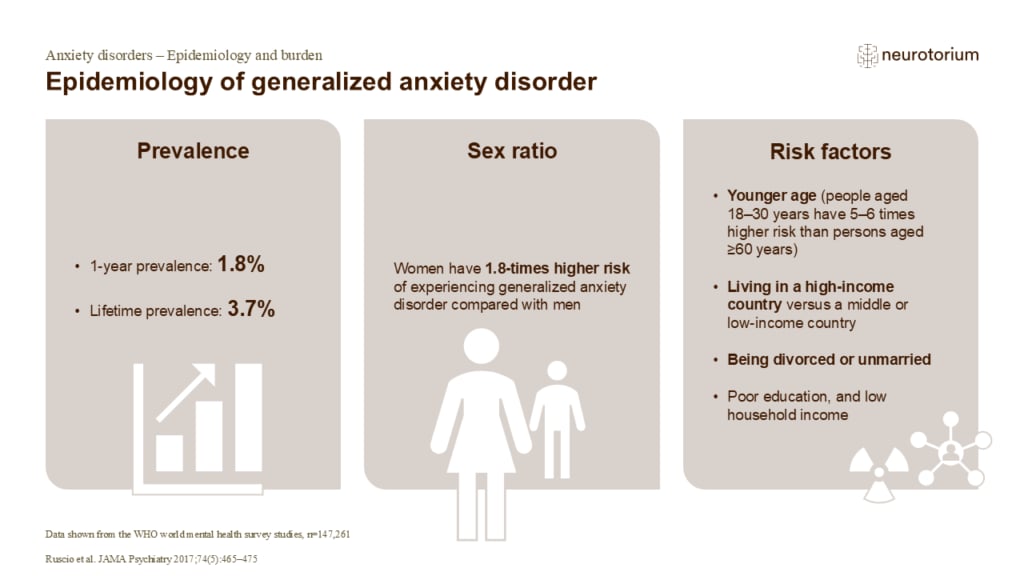
Epidemiology of generalized anxiety disorder
While the age of onset for generalized anxiety disorder tends to occur earlier in high-income countries (median age of onset: 36 years) compared with middle and low-income countries (median age of onset: 43 years for both).1 Generalized anxiety disorder tends to be more p…
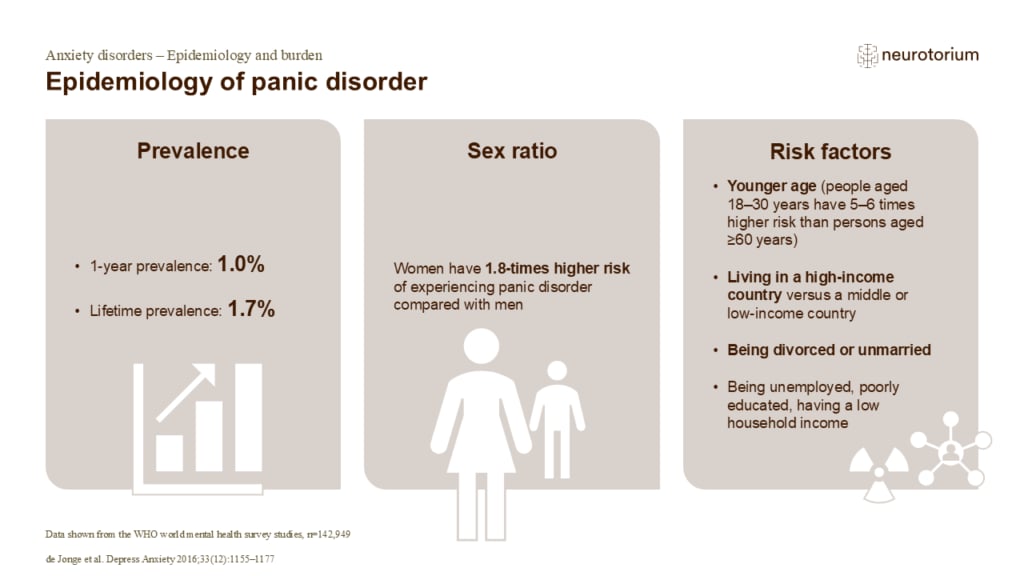
Epidemiology of panic disorder
Lifetime comorbidity with other mental health disorders in people with lifetime panic disorder (PD) is ~80%; comorbidity levels are particularly high for other anxiety disorders (63%).1 Onset of PD usually occurs following the onset of a comorbid disorder.1
Reference:
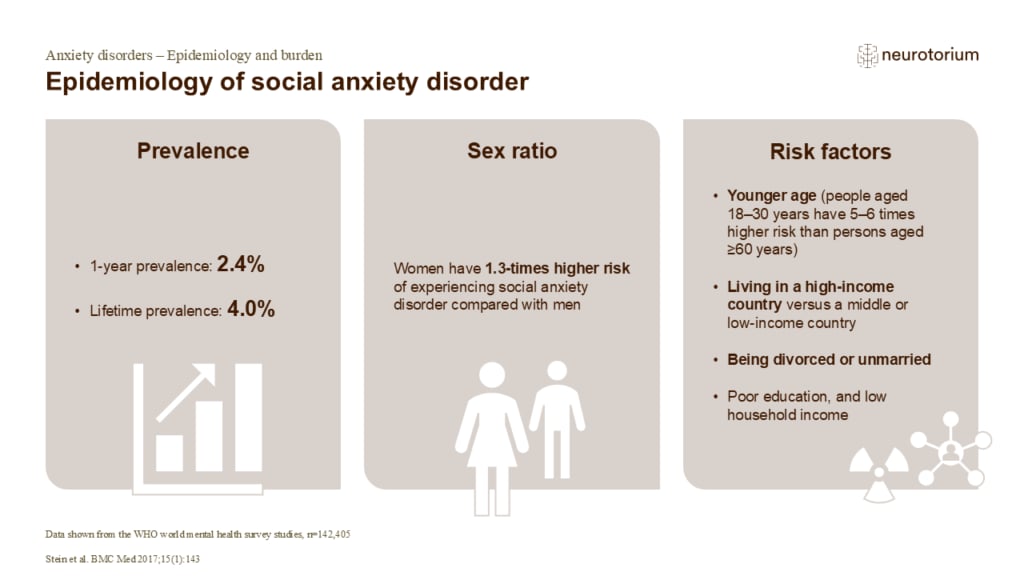
Epidemiology of social anxiety disorder
Social anxiety disorder is persistent across all countries, with a global ratio of 1-year prevalence to lifetime prevalence of 60.2%.1
Reference:
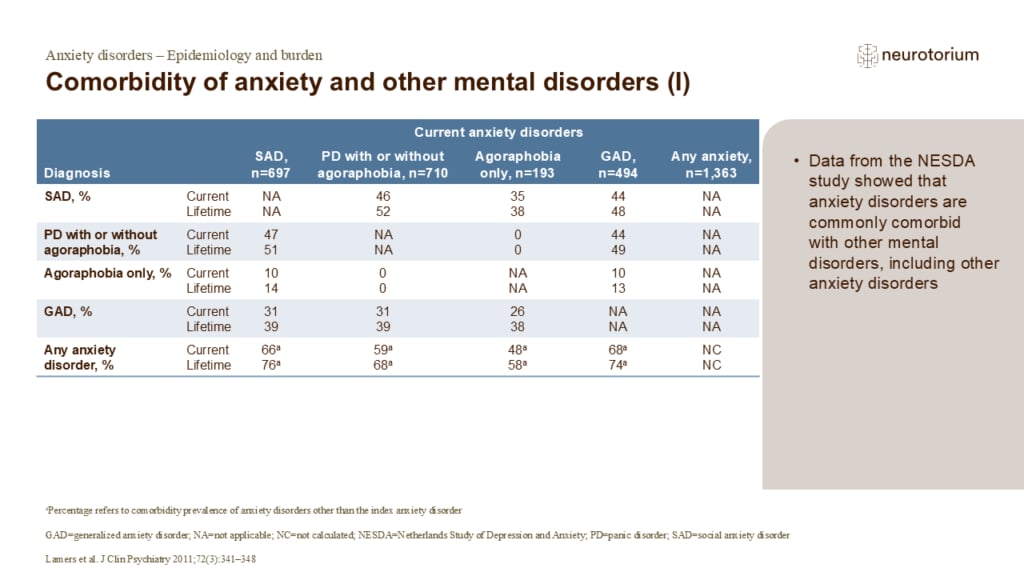
Comorbidity of anxiety and other mental disorders (I)
As highlighted on the slide, anxiety disorders are often comorbid with other mental disorders: ~60% of patients with one anxiety disorder have at least one other comorbid anxiety or depressive disorder,1,2 and ~30% of individuals have three or more of these disorders.1,2
…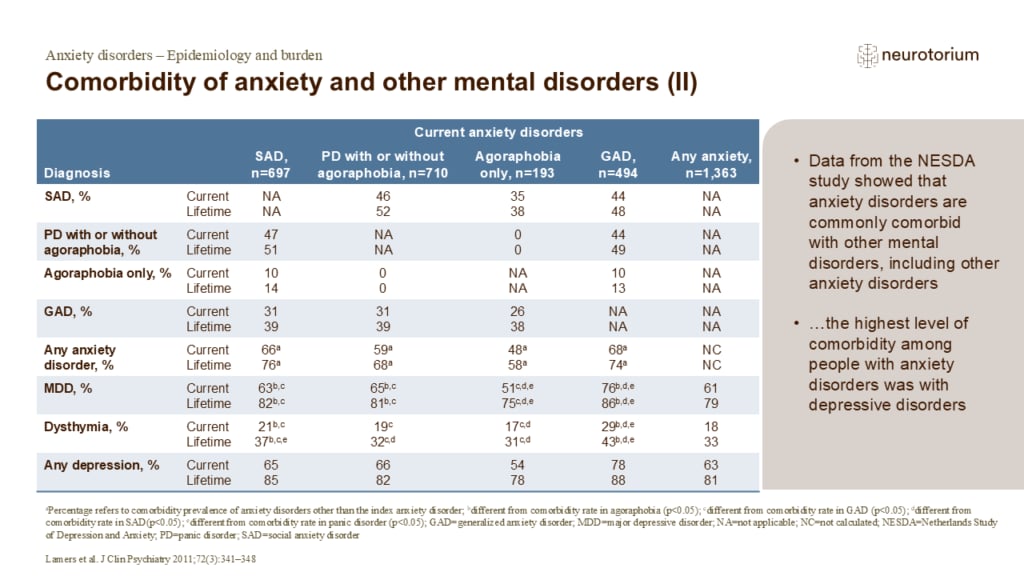
Comorbidity of anxiety and other mental disorders (II)
Social anxiety disorder (SAD), panic disorder and generalized anxiety disorder (GAD) are commonly comorbid with depressive disorders.1 Anxiety disorders (particularly SAD) usually precede depressive disorders; the onset of anxiety disorders (especially GAD) coincides with…
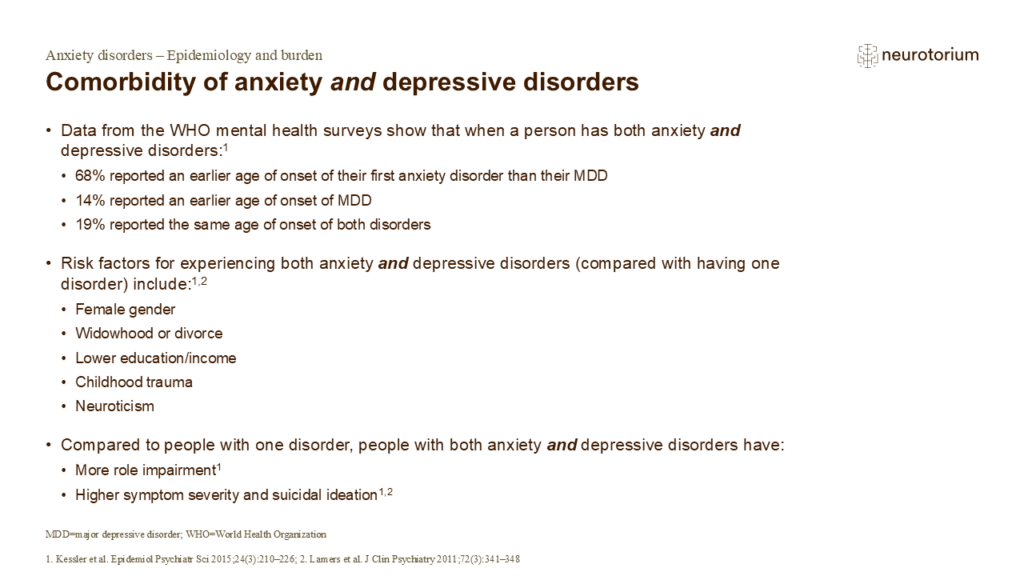
Comorbidity of anxiety and depressive disorders
Multivariate logistic regression analyses of data from the Netherlands Study of Depression and Anxiety (N=1,783) showed that when depressive disorders preceded anxiety disorders, patients had a significantly shorter duration of symptoms (p<0.01), fewer fear symptoms (p<0.…
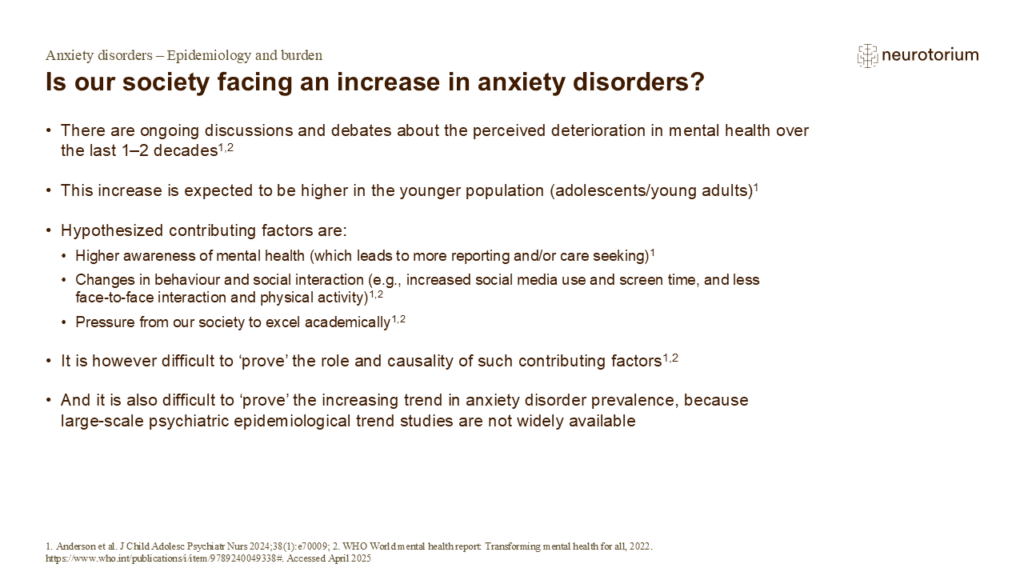
Is our society facing an increase in anxiety disorders?
Additional factors that may contribute to the increase in the prevalence rates of anxiety disorders include:
- Changing family dynamics, where a decline in care and support of children by individuals other than their biological parents places a greater burden on parents, r…
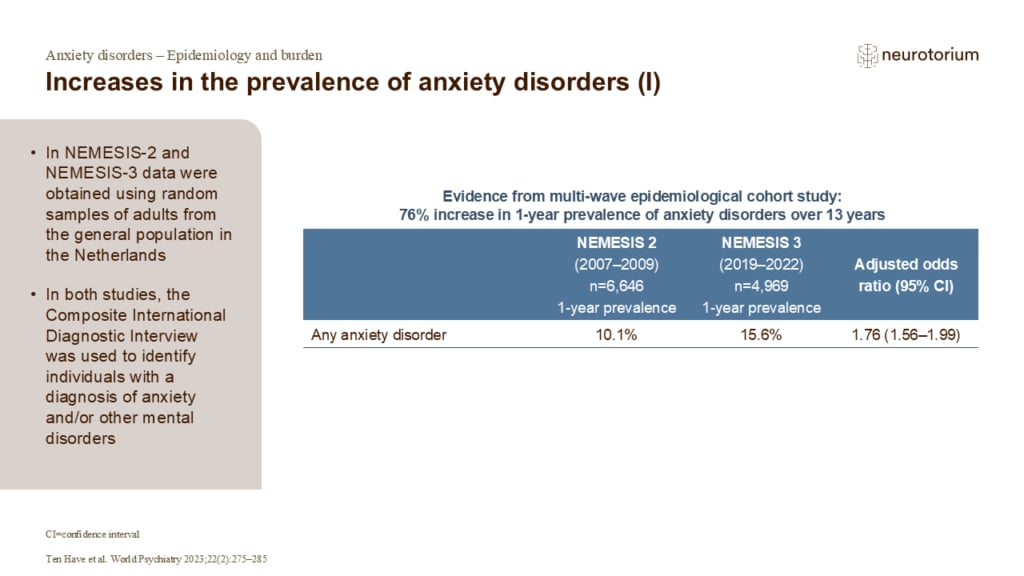
Increases in the prevalence of anxiety disorders (I)
The increase in 1-year prevalence of anxiety disorders observed over the 12 years between NEMESIS 2 and NEMESIS 3 studies remained statistically significant after controlling for differences in characteristics of the study populations.1 A more pronounced increase in the 1…
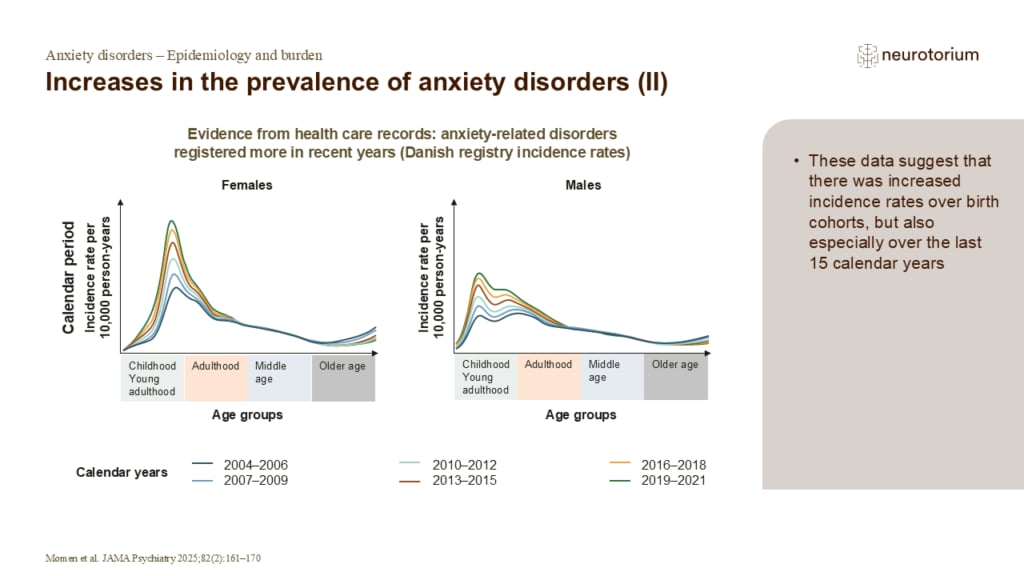
Increases in the prevalence of anxiety disorders (II)
Findings from a recent population-based Danish cohort study including 5,936,202 individuals aged 1–80 years living in Denmark between 2004 and 2021 showed growing incidence rates of anxiety-related disorders across birth cohorts among both sexes: the incidence rates of an…
Related content

Decades of twin and family research have established that anxiety disorders run in families and are meaningfully influenced by genetic factors. Family and twin studies suggest an increased recurrence risk for first degree relatives of patients with anxiety to develop any anxiety disorders.
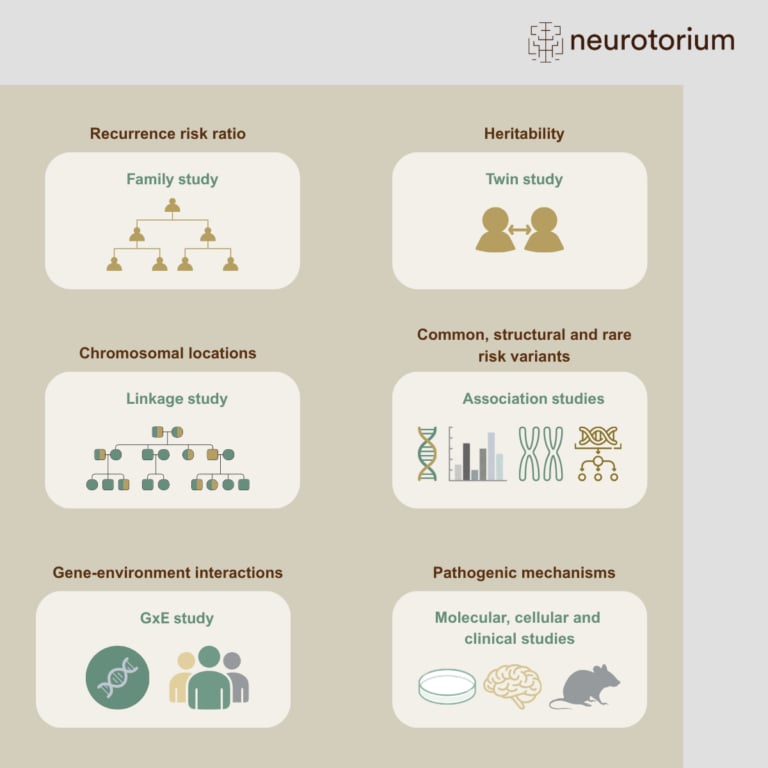
Family and twin studies estimate recurrence risk and heritability, showing that anxiety disorders aggregate in families and have a moderate genetic component.
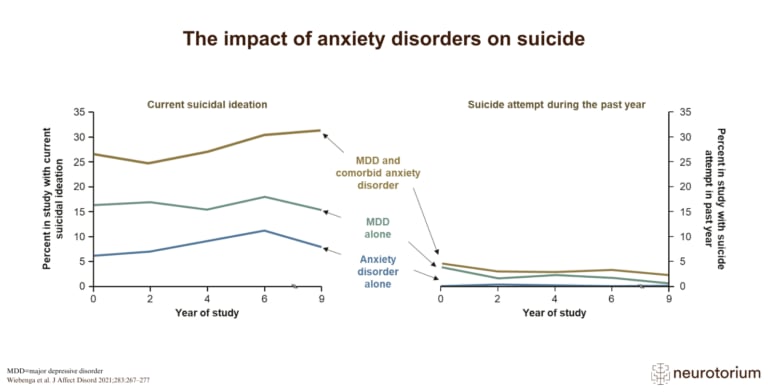
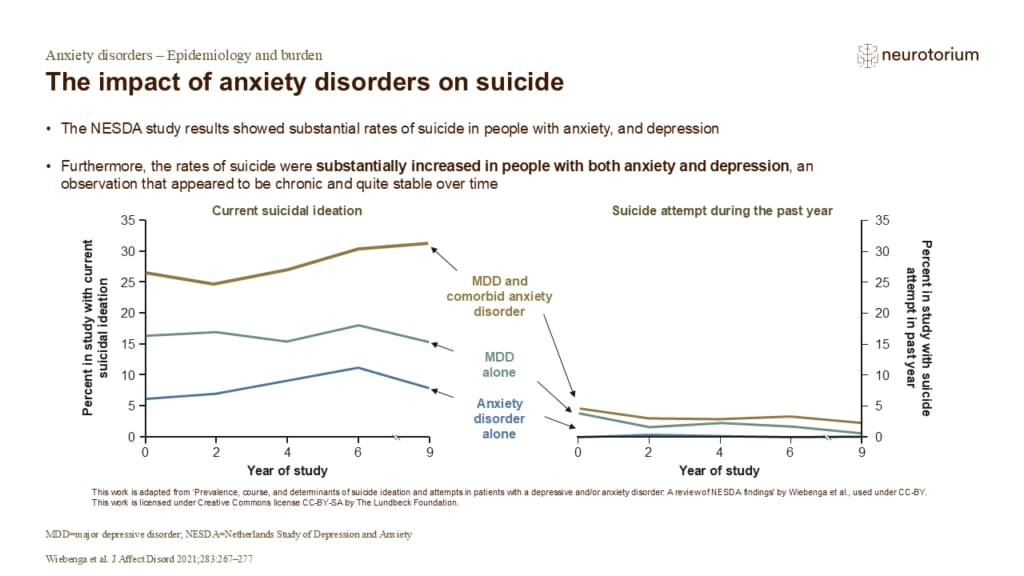
Suicidal ideation is far more common than attempts in people with anxiety or depression, especially with comorbid disorders and severe depression.