

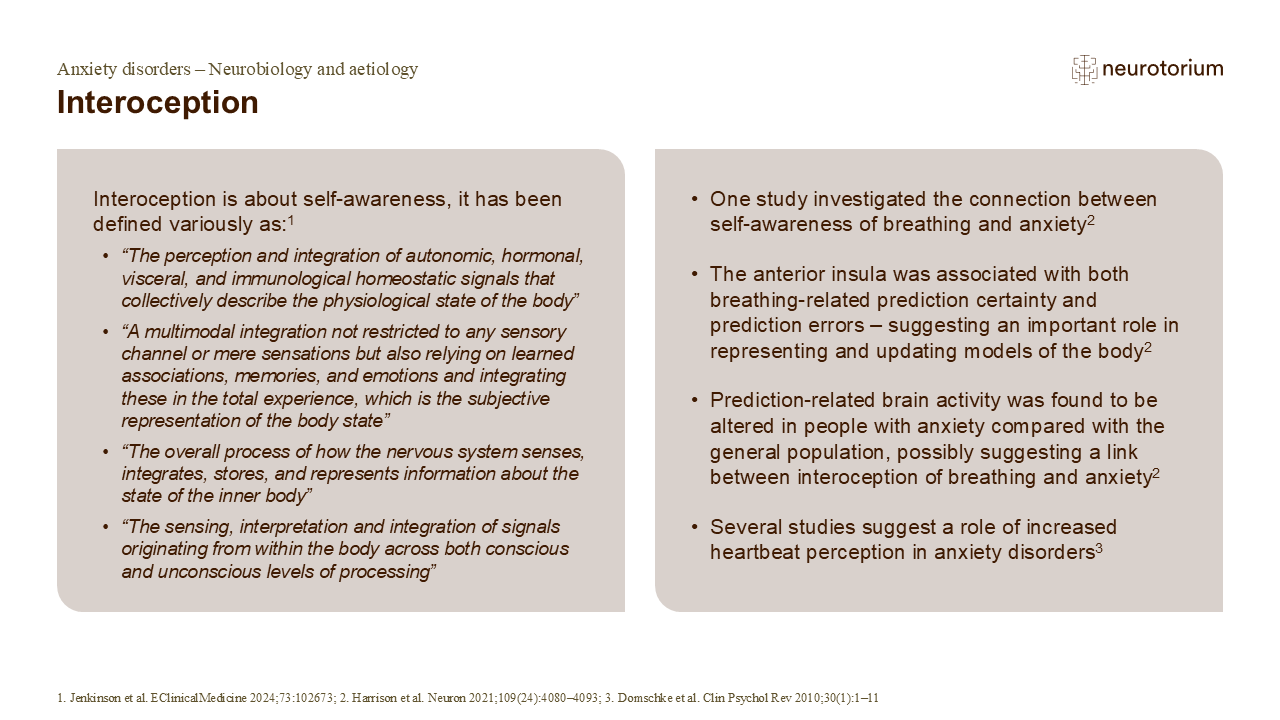
Interoception has been defined in many different ways.1 Cardiac interoceptive accuracy (the accuracy of peoples’ perception of their own heartbeat) has been studied in psychiatric conditions, with some evidence suggesting that this perception is reduced in people with psychosis, but not people with depression or anxiety.1 The study outlined on the slide suggested that breathing interoceptive accuracy may be impaired in people with anxiety.2
References:
- Jenkinson PM, Fotopoulou A, Ibañez A, Rossell S. Interoception in anxiety, depression, and psychosis: a review. EClinicalMedicine 2024; 73: 102673.
- Harrison OK, Köchli L, Marino S, et al. Interoception of breathing and its relationship with anxiety. Neuron 2021; 109 (24): 4080–4093.
- Domschke K, Stevens S, Pfleiderer B, Gerlach AL. Interoceptive sensitivity in anxiety and anxiety disorders: an overview and integration of neurobiological findings. Clin Psychol Rev 2010; 30 (1): 1–11.