



Index for
slide deck
Introduction

Neurobiology and aetiology
Fear and anxiety responses

Fear and anxiety responses
The aetiology of fear and anxiety
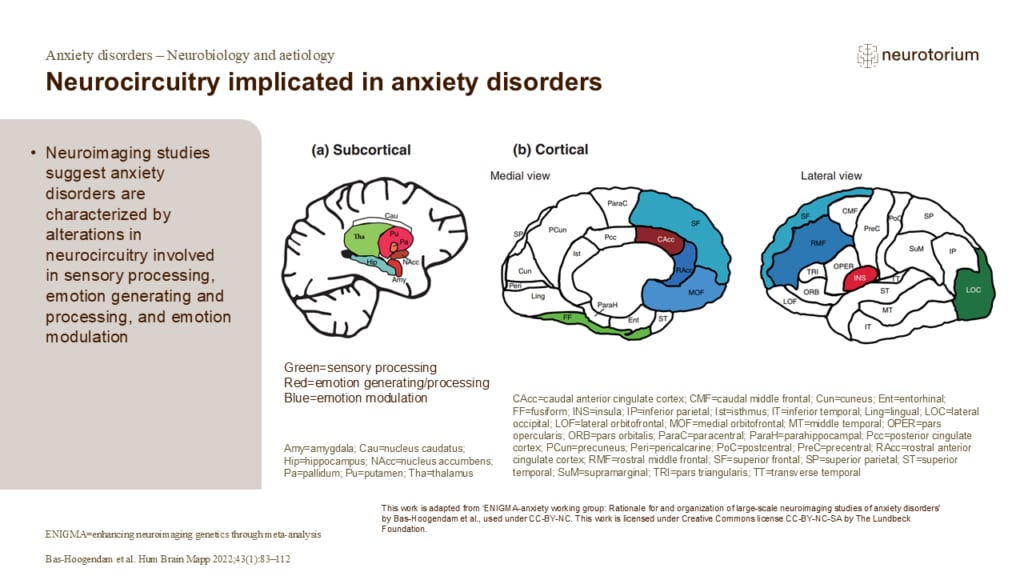
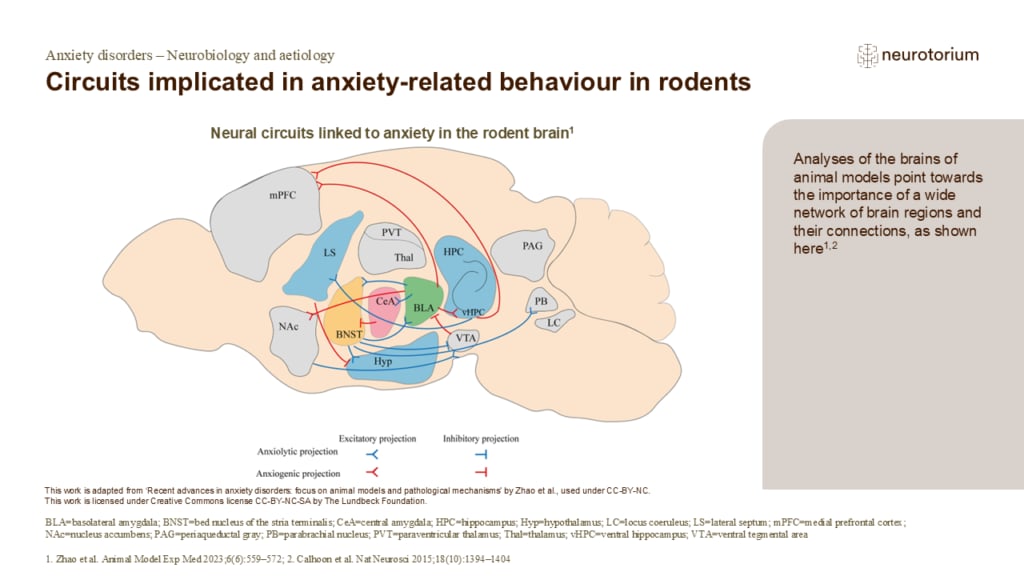
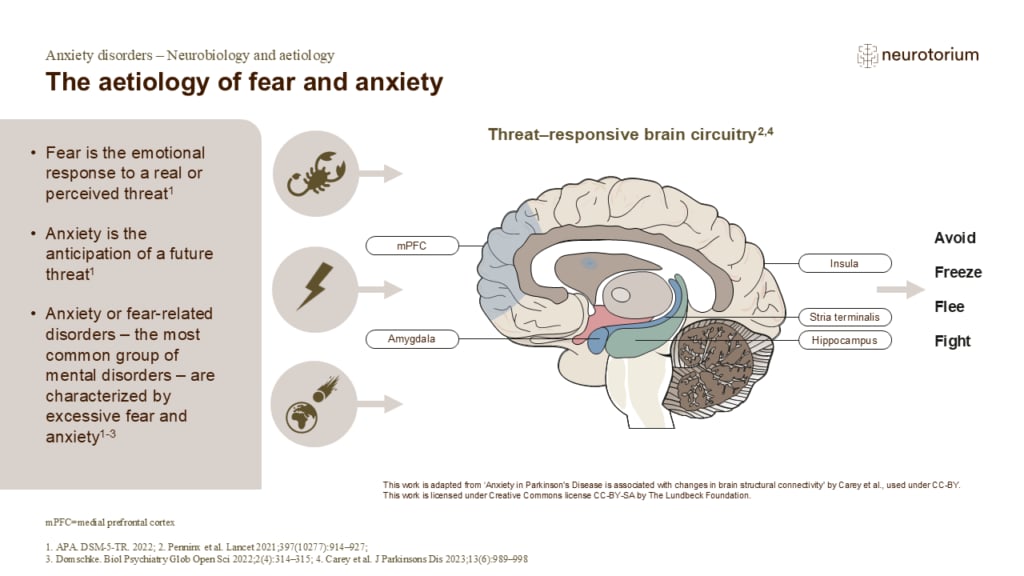
Components of the brain’s threat circuitry – including the hippocampus, stria terminalis and its bed nucleus, amygdala, and frontal regions including the medial prefrontal cortex and insula – all interact depending on the nature and proximity of perceived threats to produ…
The smoke detector principle
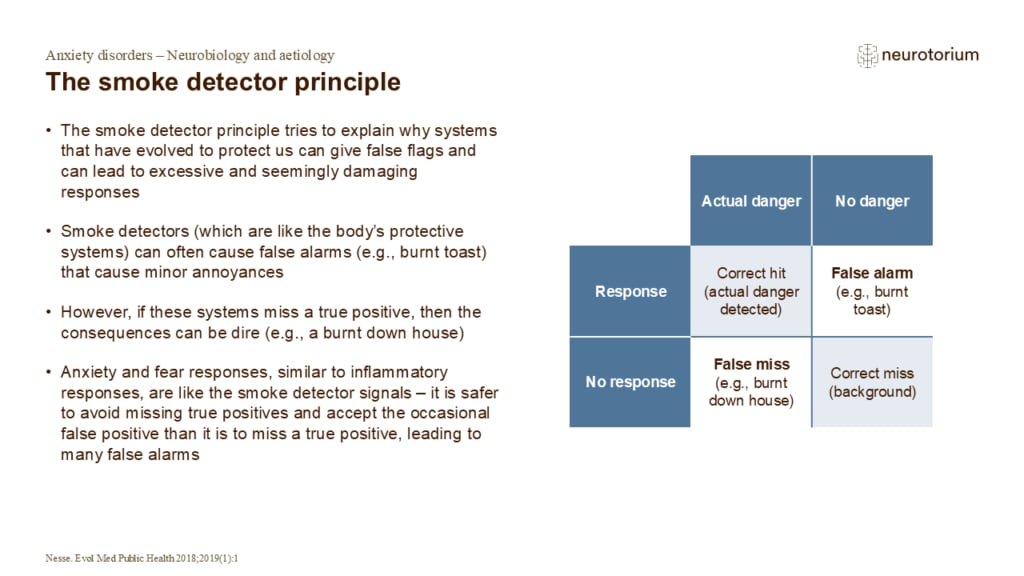
The smoke detector principle describes the difference between different types of errors and their potential ramifications.1 If the consequences of non-detection of an actual danger are serious, then it is safer to mistakenly identify non-threats even occasionally than it …
Nature versus nurture
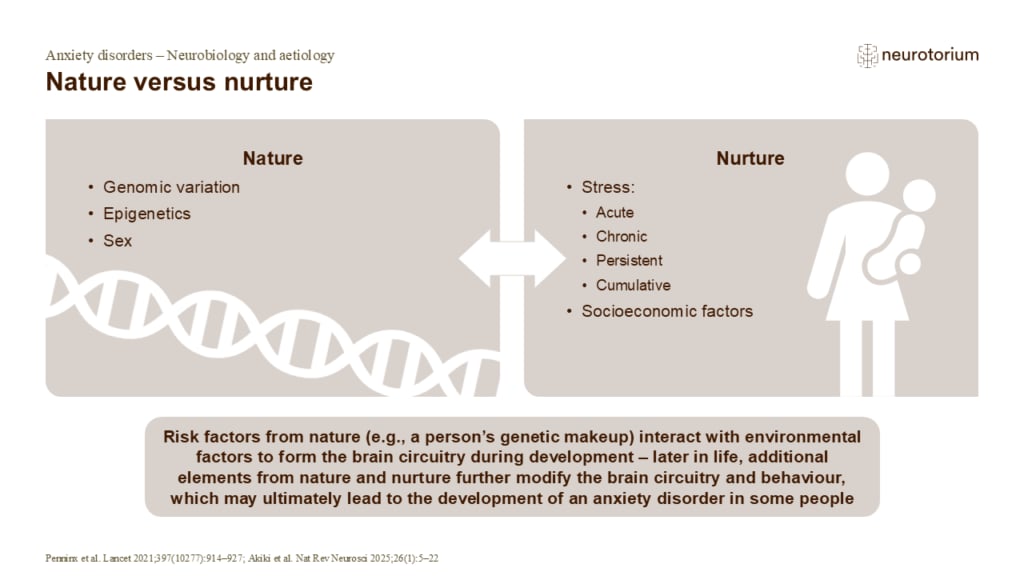
Elements of both nature and nurture are thought to interact in the development of psychiatric disorders such as anxiety disorders.3 Whilst data from epidemiological studies strongly implicates certain genes, evidence from more detailed molecular genetic studies has been l…
Early adversity and anxiety disorders
Early adversity and anxiety disorders
Early adversity and anxiety disorders
Childhood adversity and anxiety disorders
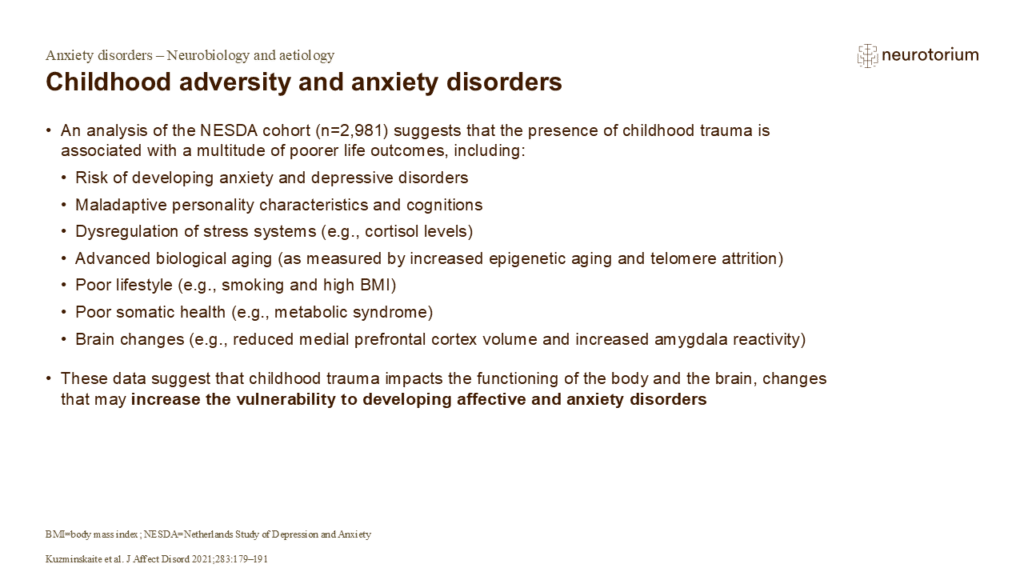
Various forms of childhood adversity were linked to the development of anxiety disorders in this analysis of the Netherlands Study of Depression and Anxiety cohort.1
Reference:
Childhood adversity and anxiety disorders
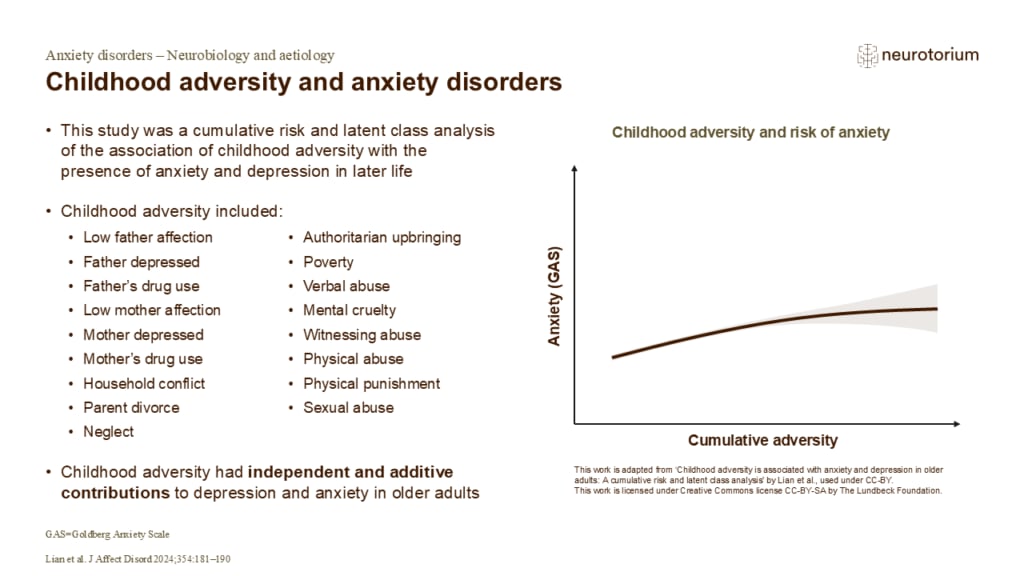
More than individually contributing to the development of anxiety disorders, this study concluded that different forms of childhood adversity had independent and additive contributions to the risk of developing anxiety later in life.1 An interesting question that remains …
Threat conditioning and fear learning
Threat conditioning and fear learning
Learning theory: basic forms of learning
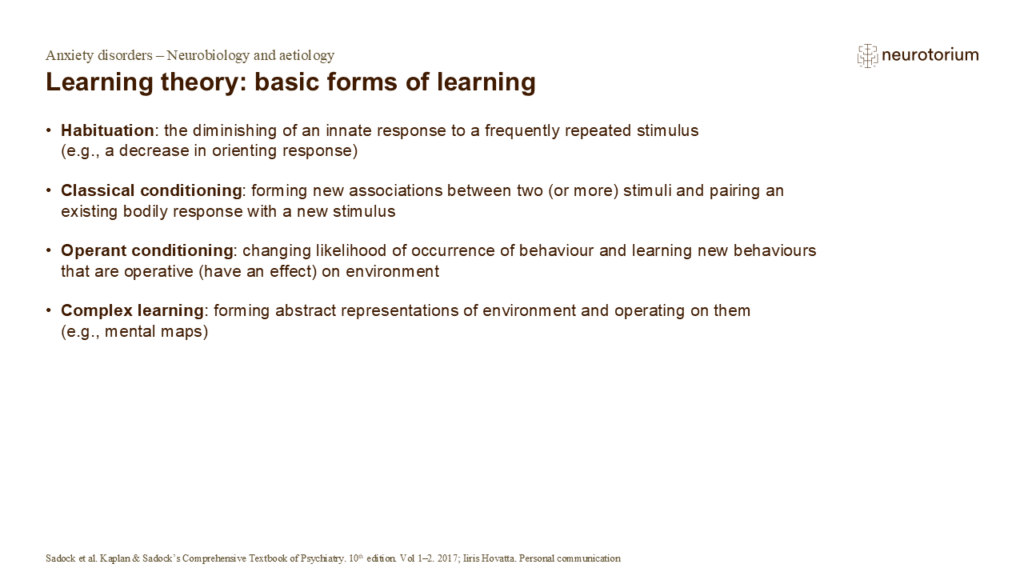
The slide defines some basic terms used in learning theory.
References:
Behavioural principles: classical conditioning
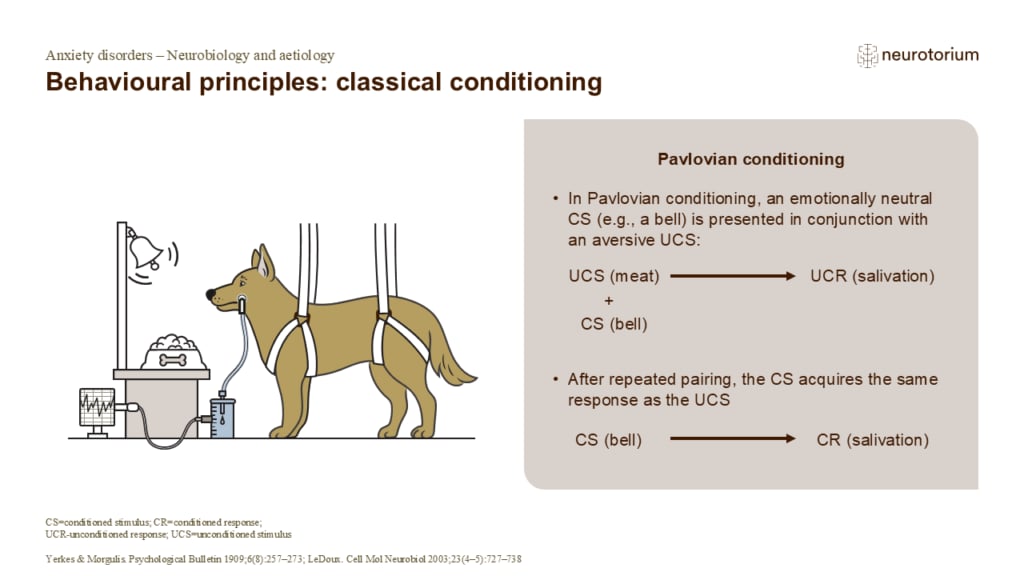
The slide shows the now-classic experiments that Pavlov performed on dogs to demonstrate the ideas of conditioning.1,2 By pairing a bell with repeated exposure to food, the conditioned dogs would then salivate on hearing the bell, expecting the food.1,2
References:
The curve of acquisition, extinction, and spontaneous recovery
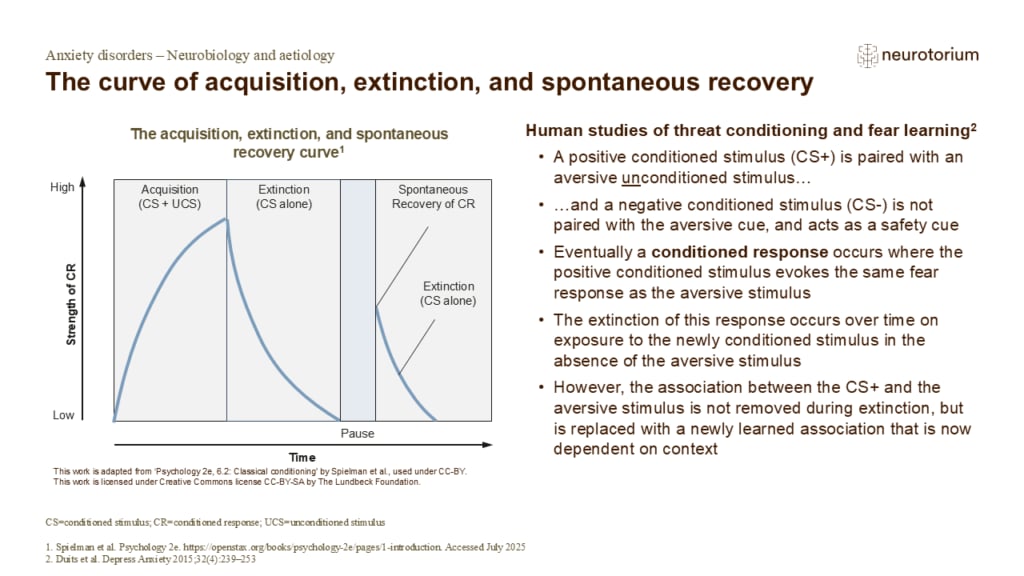
The rising curve in the graph on the slide represents the conditioned response becoming stronger through repeated association of the conditioned stimulus and the unconditioned stimulus, after which the strength weakens during the extinction phase when only the conditioned…
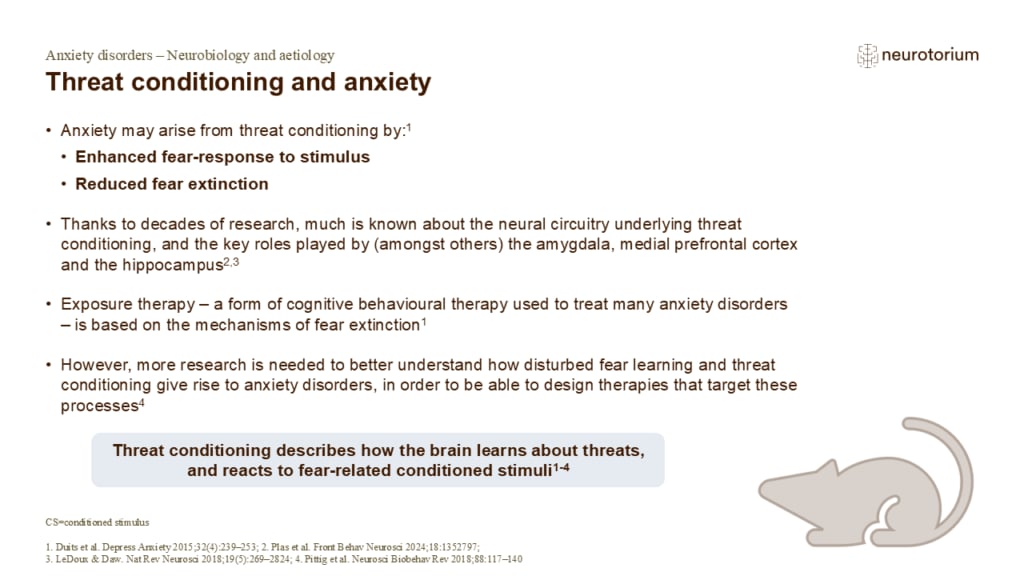
Threat conditioning and anxiety
Our understanding of the fear and defence circuitry of the brain primarily comes from animal studies, which allow partial translation of this research to humans.1,2
References:
Related content

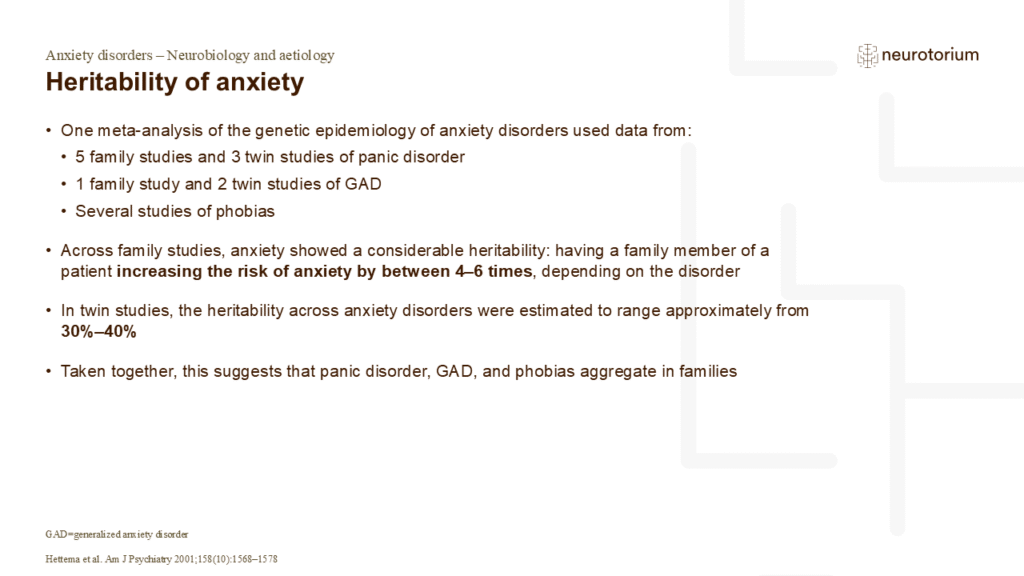
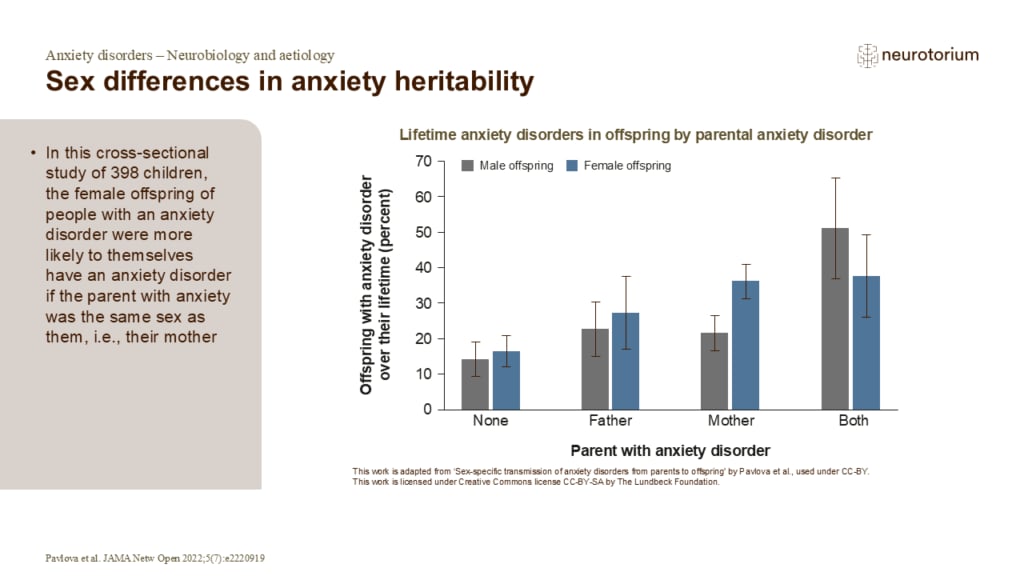
Decades of twin and family research have established that anxiety disorders run in families and are meaningfully influenced by genetic factors. Family and twin studies suggest an increased recurrence risk for first degree relatives of patients with anxiety to develop any anxiety disorders.
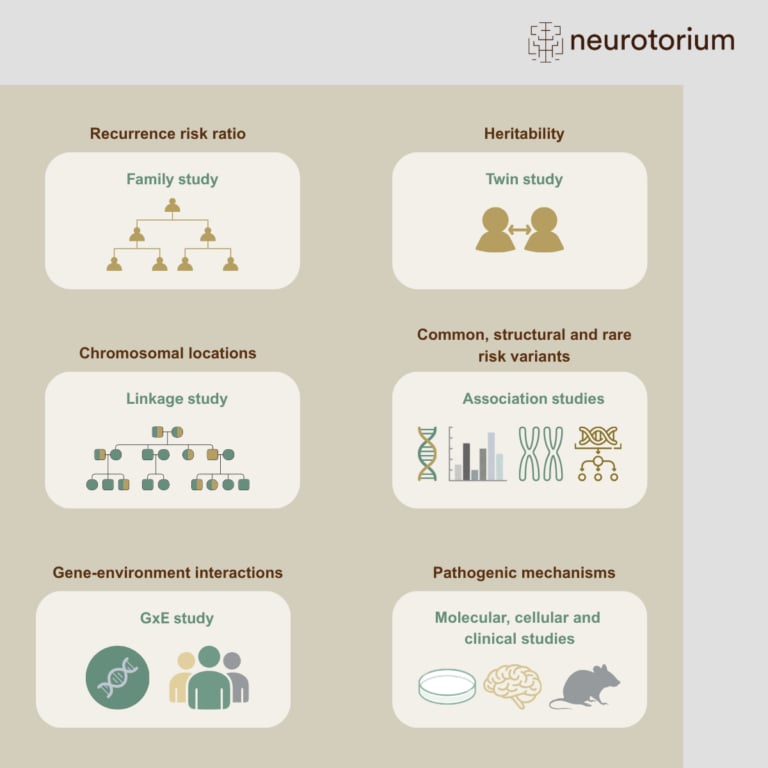
Family and twin studies estimate recurrence risk and heritability, showing that anxiety disorders aggregate in families and have a moderate genetic component.
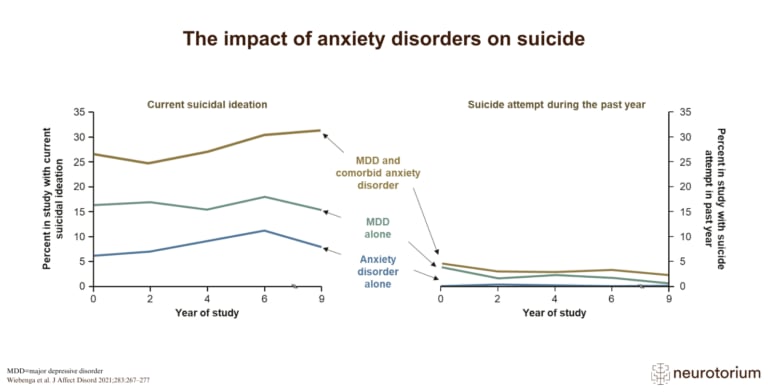
Suicidal ideation is far more common than attempts in people with anxiety or depression, especially with comorbid disorders and severe depression.