

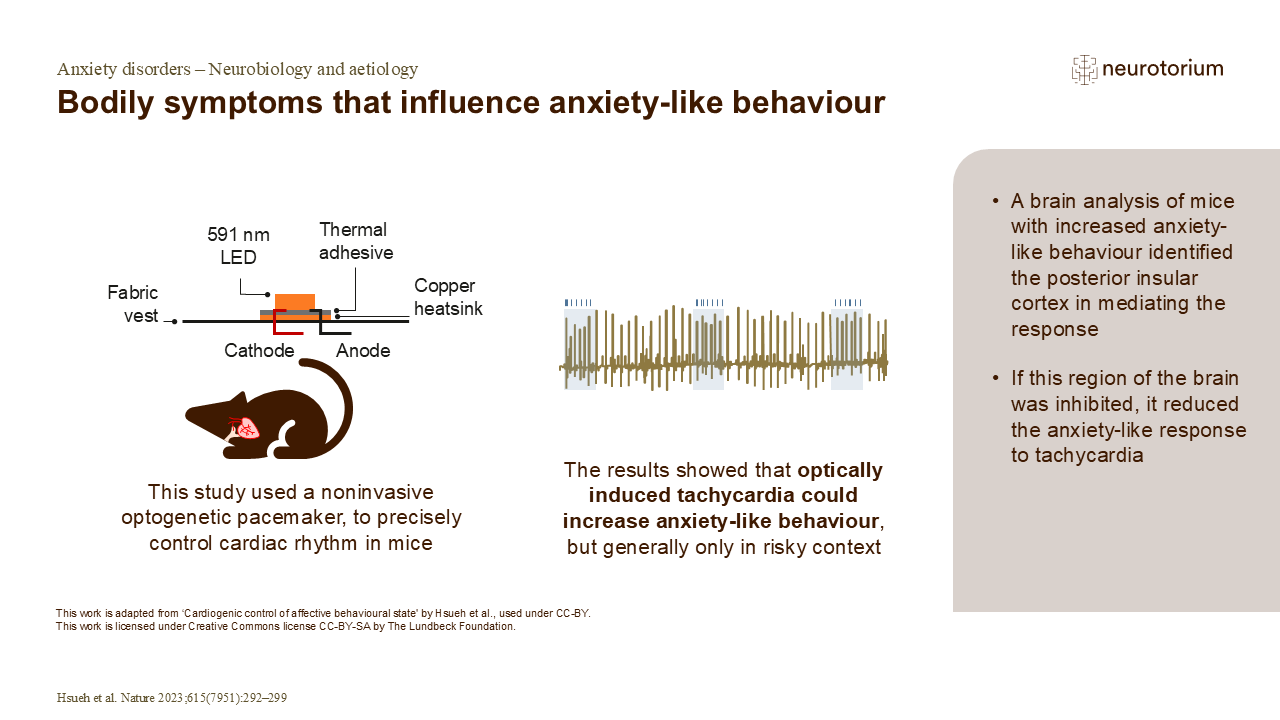
This study assessed the hypothesis that physiological processes and information flowing from the body to the brain (e.g., heart rate) can affect emotional states (e.g., anxiety).1 After creating a mouse model whereby a fast heart rate could be induced, the effect of this tachycardia on anxiety-like behaviour was studied.1 The results showed that this induced tachycardia was able to provoke anxiety-like behaviour in some contexts in the mice.1
Reference: