

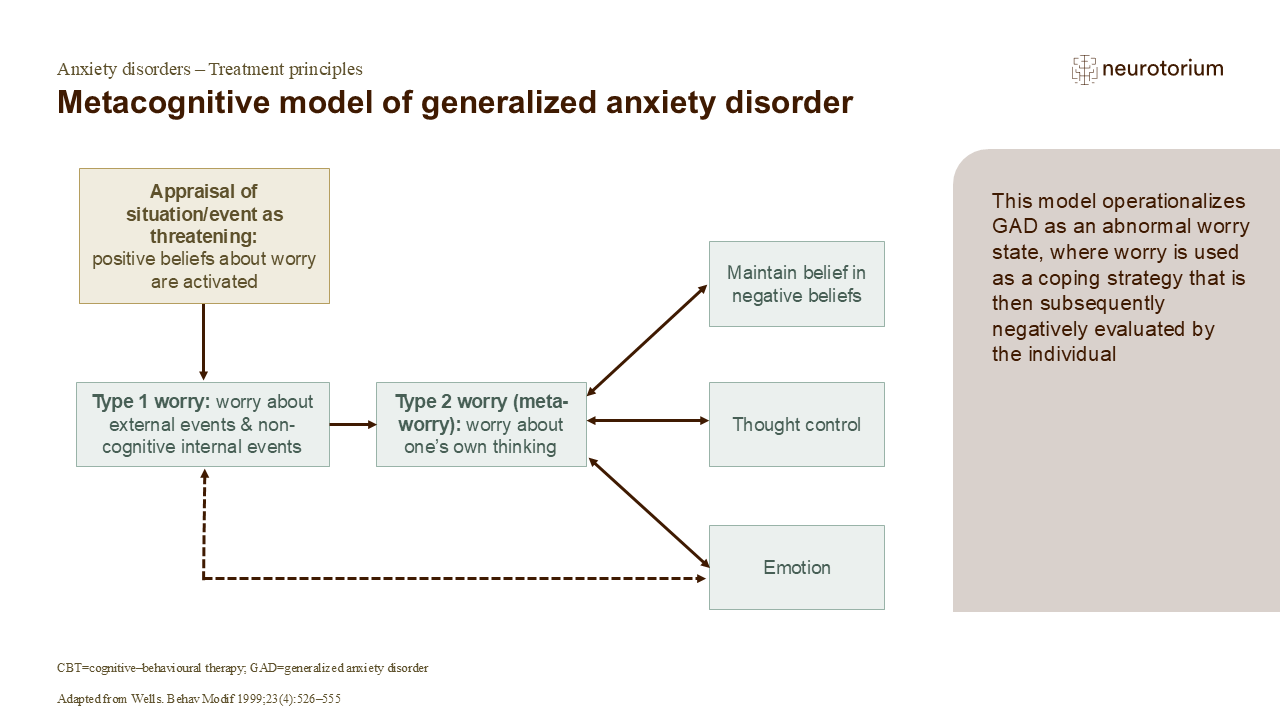
In the metacognitive model of GAD worrying can be perceived positively (it serves a protective function or coping mechanism) or perceived negatively (beliefs about the uncontrollable nature of worrying and the dangerous consequences of worrying).1 Following the initial appraisal that a situation or event is threatening, positive beliefs are activated, and worry-based processing is selected as a means of continued appraisal and coping (Type 1 worry).1 This worry contributes to Type 2 worry (meta-worry), which increases the individual’s anxiety responses.1 Attempts to control or suppress worrying thoughts produce further intrusions, and in the absence of a catastrophe occurring, the individual attributes this to their thought control and avoidance behaviours.1
Reference:
1. Wells A. A cognitive model of generalized anxiety disorder. Behav Modif 1999; 23 (4): 526–555.