

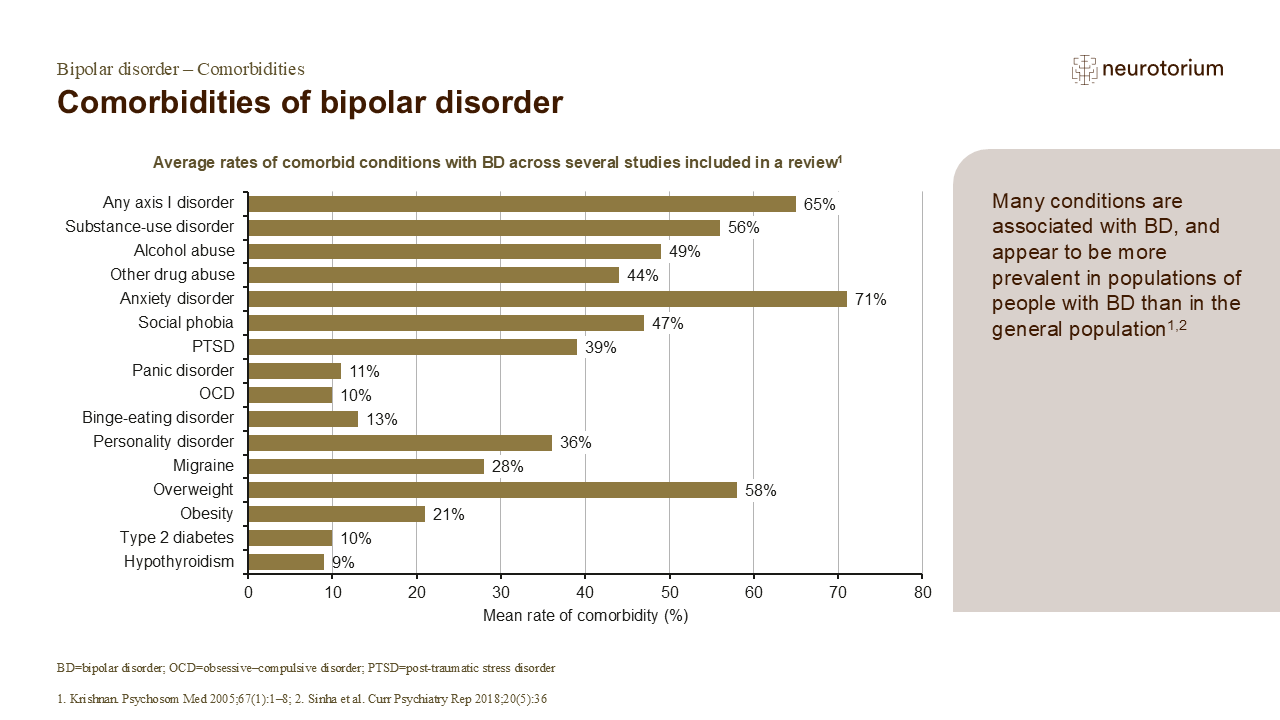
There are many different conditions, both psychiatric and medical, that appear to be associated with bipolar disorder, inasmuch as these conditions are more prevalent in populations of people with bipolar disorder than they are in the general population.1,2 However, because the reported prevalences can vary quite greatly, depending on the study designs and the populations studied, interpretation of these observations is challenging.1,2 One naturalistic study followed 284 people with bipolar disorder who were consecutively admitted to a hospital over a period of 4 years.3 More than a fifth of the patients also had a metabolic disease, and more than half had nicotine dependence.3 The study showed that the presence of comorbid hypothyroidism had a negative impact on bipolar disorder, increasing the risk of manic relapse.3 This underscores the importance of considering comorbidity when helping a patient manage bipolar disorder.1-3
References:
1. Krishnan KRR. Psychiatric and medical comorbidities of bipolar disorder. Psychosom Med 2005; 67 (1): 1–8.
2. Sinha A, Shariq A, Said K, et al. Medical comorbidities in bipolar disorder. Curr Psychiatry Rep 2018; 20 (5): 36.
3. Amann BL, Radua J, Wunsch C, et al. Psychiatric and physical comorbidities and their impact on the course of bipolar disorder: a prospective, naturalistic 4-year follow-up study. Bipolar Disord 2017; 19 (3): 225–234.