

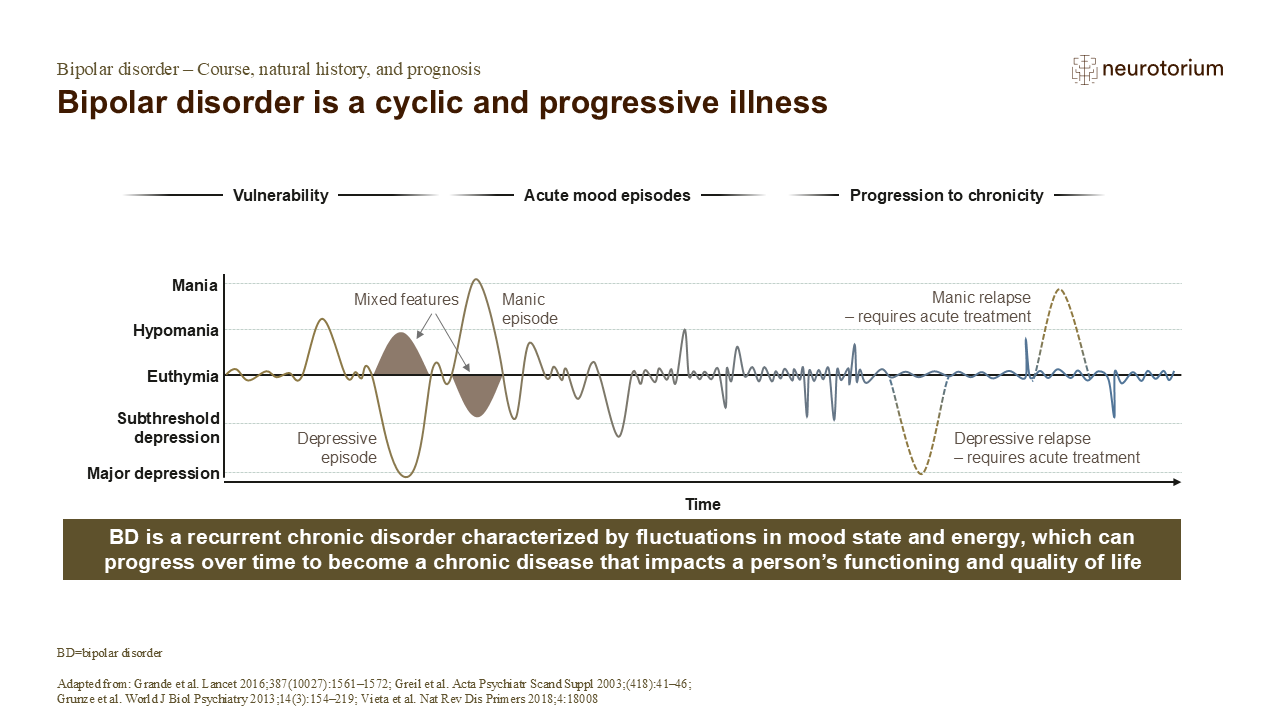
As shown on the slide, as well as being a cyclic disorder, bipolar disorder can progress over time.1 The progressive nature of the disease, as well as the impact of the disorder on functioning and quality of life, reinforces the importance of early identification of patients and good clinical management.5
References:
1. Grande I, Berk M, Birmaher B, Vieta E. Bipolar disorder. Lancet 2016; 387 (10027): 1561–1572.
2. Greil W, Kleindienst N. Concepts in the treatment of bipolar disorder. Acta Psychiatr Scand Suppl 2003; (418): 41–46.
3. Grunze H, Vieta E, Goodwin GM, et al; WFSBP Task Force on Treatment Guidelines for Bipolar Disorders. The World Federation of Societies of Biological Psychiatry (WFSBP) guidelines for the biological treatment of bipolar disorders: update 2012 on the long-term treatment of bipolar disorder. World J Biol Psychiatry 2013; 14 (3): 154–219.
4. Vieta E, Berk M, Schulze TG, et al. Bipolar disorders. Nat Rev Dis Primers 2018; 4: 18008.
5. McIntyre RS, Calabrese JR. Bipolar depression: the clinical characteristics and unmet needs of a complex disorder. Curr Med Res Opin 2019; 35 (11): 1993–2005.