

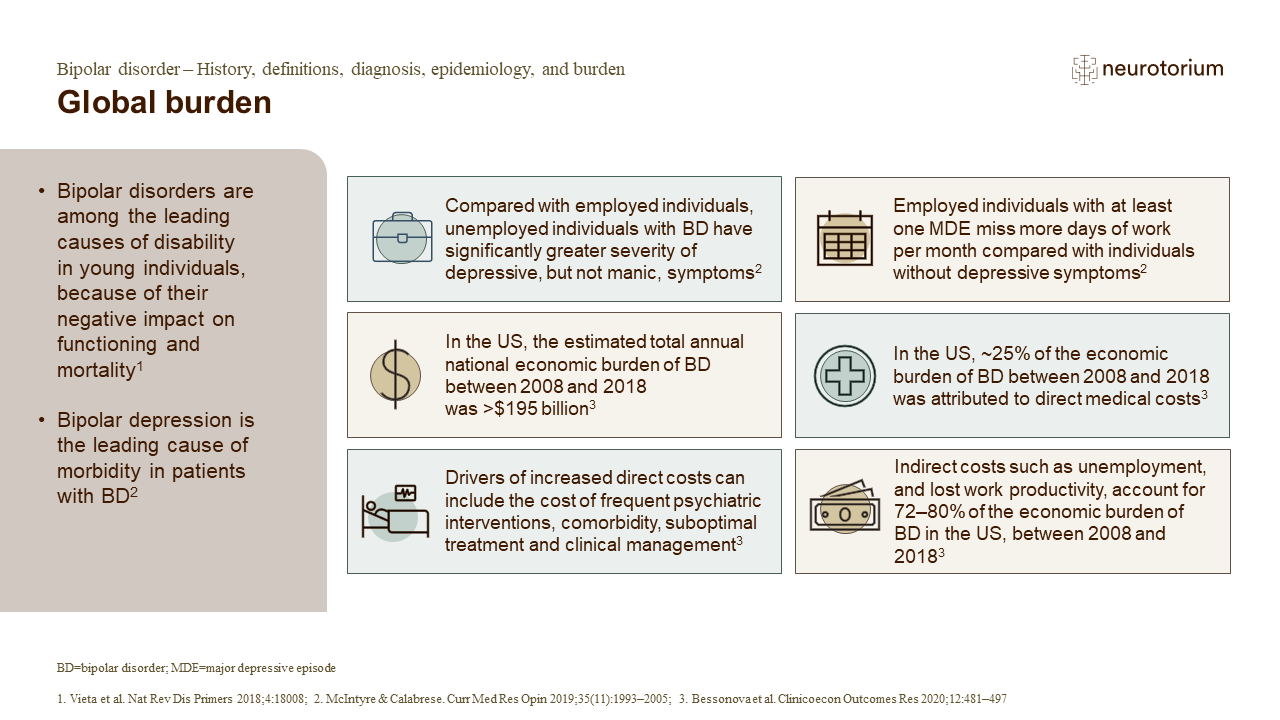
Bipolar disorder is associated with a high mortality rate, driven by the risk of cardiovascular disease and suicide.2 As 50% of patients initially present with a depressive episode, bipolar depression accounts for the majority of time spent unwell with the disorder, even with treatment.2 However, the significant burden of BD for individual patients, caregivers, and society tends to result from socioeconomic factors and factors related to the individuals’ thoughts and behaviours.2
References:
1. Vieta E, Berk M, Schulze TG, et al. Bipolar disorders. Nat Rev Dis Primers 2018; 4: 18008.
2. McIntyre RS, Calabrese JR. Bipolar depression: the clinical characteristics and unmet needs of a complex disorder. Curr Med Res Opin 2019; 35 (11): 1993–2005.
3. Bessonova L, Ogden K, Doane MJ, et al. The economic burden of bipolar disorder in the United States: a systematic literature review. Clinicoecon Outcomes Res 2020; 12: 481–497.