

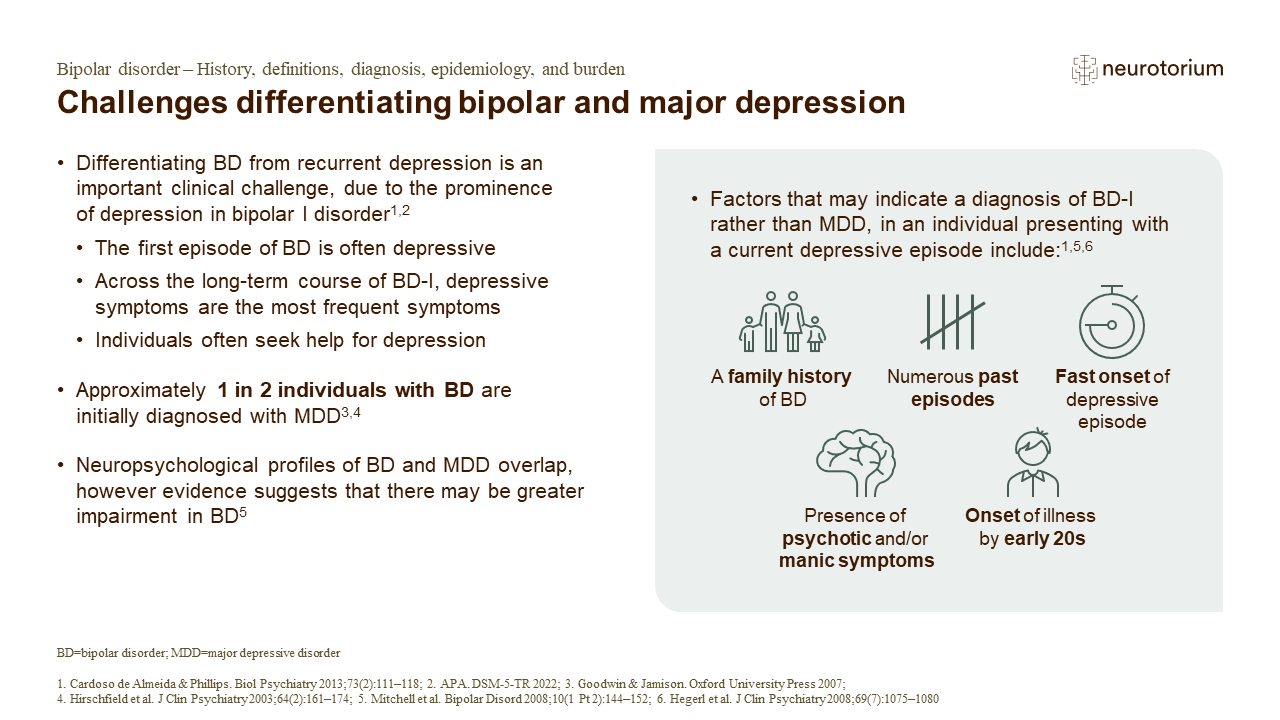
Misdiagnosis of bipolar disorder as major depressive disorder can have detrimental consequences for patients.4,7 Misdiagnosed patients may be prescribed inappropriate treatments, which can lead to poor prognosis, mood switching, and increased healthcare costs.7 There is also a possibility that patients with MDD later ‘convert’ to bipolar disorder,5 all of which reinforces the importance of accurate diagnosis.
References:
1. Cardoso de Almeida JR, Phillips ML. Distinguishing between unipolar depression and bipolar depression: current and future clinical and neuroimaging perspectives. Biol Psychiatry 2013; 73 (2): 111–118.
2. American Psychiatric Association (APA). Diagnostic and Statistical Manual of Mental Disorders. Fifth edition, text revision. Washington DC: APA; 2022.
3. Goodwin FK, Jamison KR. Manic-depressive illness: bipolar disorders and recurrent depression. Oxford University Press 2007.
4. Hirschfeld RM, Lewis L, Vornik LA. Perceptions and impact of bipolar disorder: how far have we really come? Results of the national depressive and manic-depressive association 2000 survey of individuals with bipolar disorder. J Clin Psychiatry 2003; 64: 161–174.