

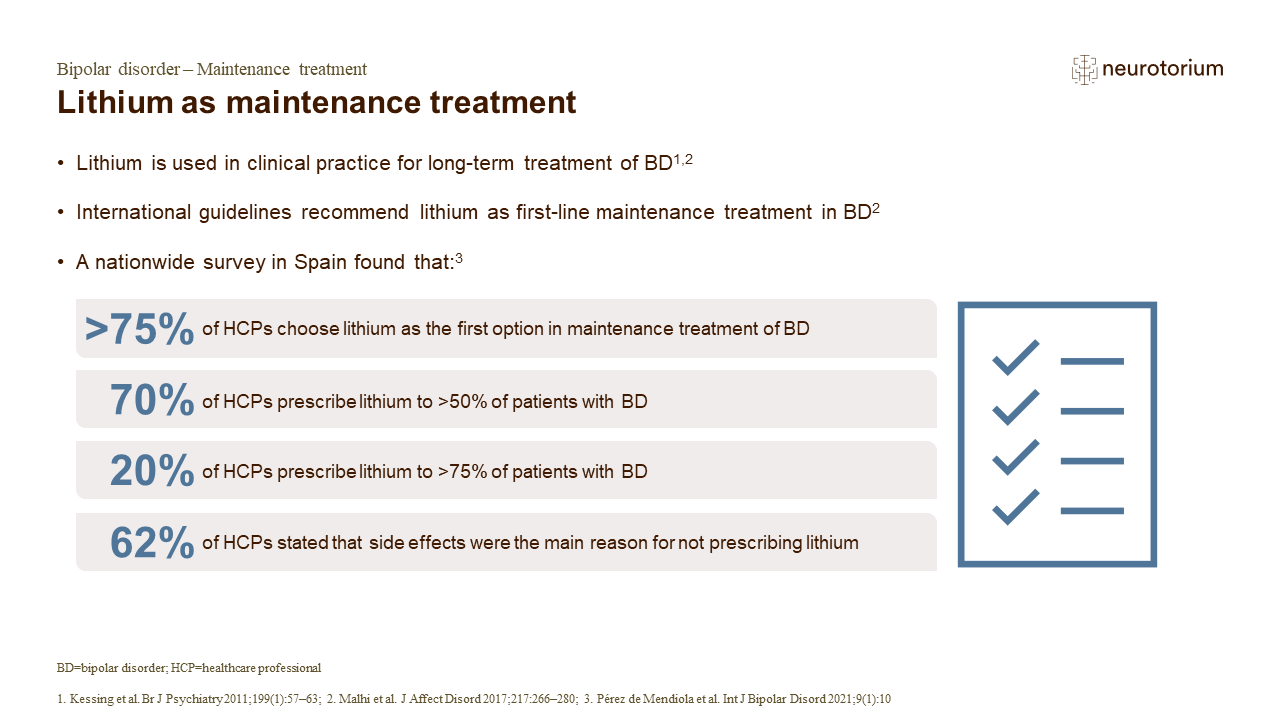
As lithium has a low therapeutic index, the dose should be adjusted to a target level in order to optimize treatment.<sup>4,5</sup> This target level will often be near the threshold required to produce harmful effects, and so serum levels should be frequently monitored during the initial months of treatment.<sup>4,5</sup> Once the appropriate dose is achieved, or after a year of treatment, this monitoring may be done every few months.<sup>4,5</sup> It is important for the clinician to inform the patients and their caregivers about the benefits and risks of lithium, and any potential alternatives that are available.<sup>4</sup> Indeed, there has been a downward trend in the prescription of lithium, whereas antipsychotics have been increasingly used instead.<sup>6</sup>
References:
1. Kessing LV, Hellmund G, Geddes JR, et al. Valproate v. lithium in the treatment of bipolar disorder in clinical practice: observational nationwide register-based cohort study. Br J Psychiatry 2011; 199 (1): 57–63.
2. Malhi GS, Gessler D, Outhred T. The use of lithium for the treatment of bipolar disorder: recommendations from clinical practice guidelines. J Affect Disord 2017; 217: 266–280.
3. Pérez de Mendiola X, Hidalgo-Mazzei D, Vieta E, et al. Overview of lithium’s use: a nationwide survey. Int J Bipolar Disord 2021; 9 (1): 10.
4. Koek RJ. Psychiatric Times. Tips, cautions, and successes in treating bipolar patients with lithium. 20 April 2015. Available at: https://www.psychiatrictimes.com/view/tips-cautions-and-successes-treating-bipolar-patients-lithium. Accessed 27 February 2024.
5. National Institute for Health and Care Excellence. Bipolar disorder: assessment and management. Clinical guideline. 21 December 2023. Available at: www.nice.org.uk/guidance/cg185. Accessed 5 March 2024.
6. Rhee TG, Olfson M, Nierenberg AA, Wilkinson ST. 20-Year trends in the pharmacologic treatment of bipolar disorder by psychiatrists in outpatient care settings. Am J Psychiatry 2020; 177 (8): 706–715.