

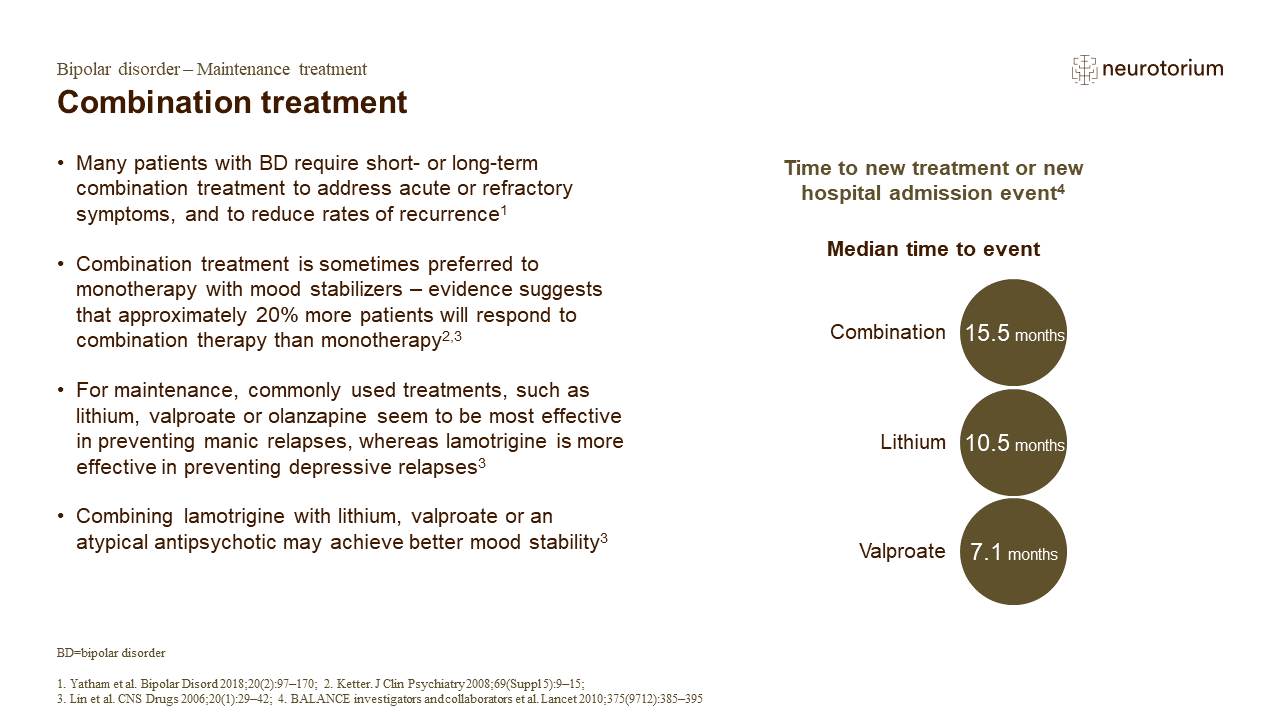
Results of the BALANCE study showed that for patients with bipolar I disorder on long-term therapy, both combination therapy with lithium plus valproate combination therapy was more likely to prevent relapse than valproate monotherapy.4 This benefit was irrespective of baseline severity of illness and was maintained for up to two years.4 In a meta-analysis, atypical antipsychotics in combination with a mood stabilizer were found to be superior than mood stabilizer monotherapy, for the prevention of recurrence in bipolar disorder.5
The decision to prescribe one or a combination of the available first-line treatments should be informed by the patient’s current and prior medication use, with preference given to treatments that have previously shown success in managing symptoms.1
References:
1. Yatham LN, Kennedy SH, Parikh SV, et al. Canadian Network for Mood and Anxiety Treatments (CANMAT) and International Society for Bipolar Disorders (ISBD) 2018 guidelines for the management of patients with bipolar disorder. Bipolar Disord 2018; 20 (2): 97–170.
2. Ketter TA. Monotherapy versus combined treatment with second- generation antipsychotics in bipolar disorder. J Clin Psychiatry 2008; 69 (Suppl.5): 9–15.
3. Lin D, Mok H, Yatham LN. Polytherapy in bipolar disorder. CNS Drugs 2006; 20 (1): 29–42.
4. BALANCE investigators and collaborators; Geddes JR, Goodwin GM, Rendell Jet al. Lithium plus valproate combination therapy versus monotherapy for relapse prevention in bipolar I disorder (BALANCE): a randomised open-label trial. Lancet 2010; 375 (9712): 385–395.
5. Kishi T, Ikuta T, Matsuda Y, et al. Mood stabilizers and/or antipsychotics for bipolar disorder in the maintenance phase: a systematic review and network meta-analysis of randomized controlled trials. Mol Psychiatry 2021; 26 (8): 4146–4157.