

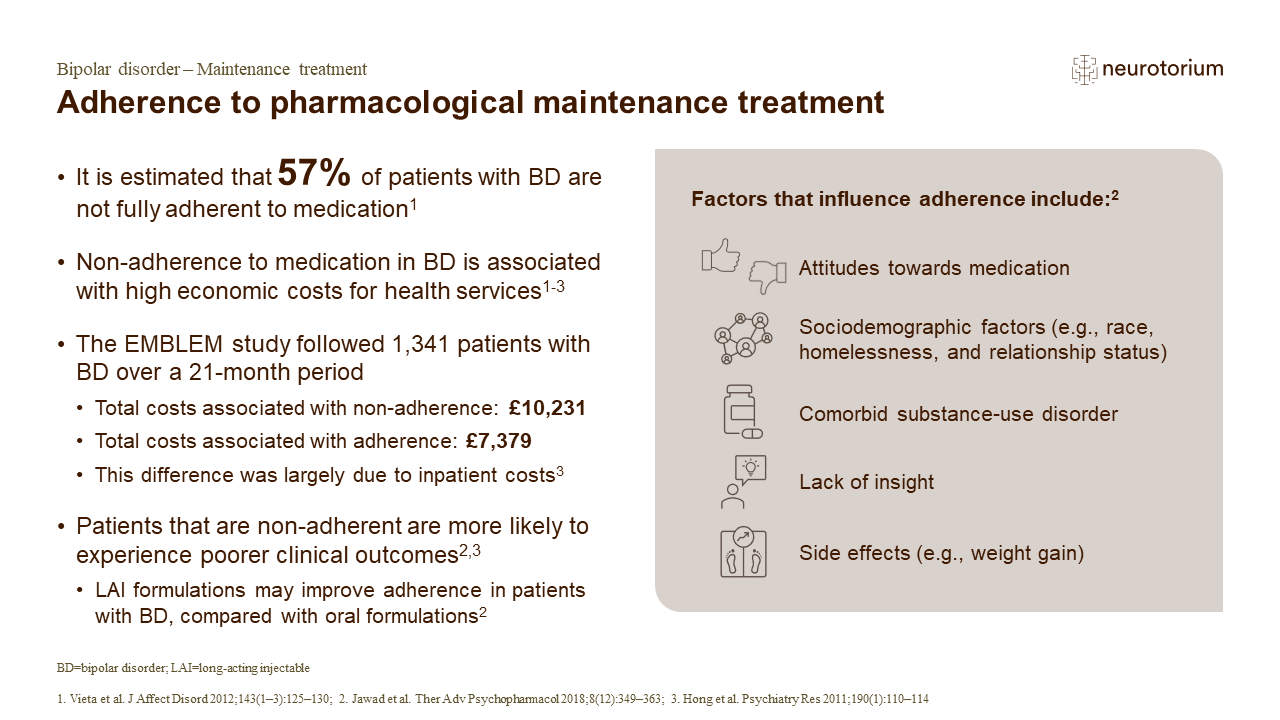
Because the reasons for non-adherence vary between patients, medication adherence should be addressed on an individual patient basis.2 However, clinicians can adopt behaviours that may improve adherence in patients, such as ensuring the patient is educated about their illness and its management, addressing misconceptions about medication, and creating a positive therapeutic alliance with the patient.2 It is also recommended that medication is prescribed through a shared decision-making process, and the treatment regimen is kept as simple as possible.2
References:
1. Vieta E, Azorin JM, Bauer M, et al. Psychiatrists’ perceptions of potential reasons for non- and partial adherence to medication: results of a survey in bipolar disorder from eight European countries. J Affect Disord 2012; 143 (1–3): 125–130.
2. Jawad I, Watson S, Haddad PM, et al. Medication nonadherence in bipolar disorder: a narrative review. Ther Adv Psychopharmacol 2018; 8 (12): 349–363.
3. Hong J, Reed C, Novick D, et al. Clinical and economic consequences of medication non-adherence in the treatment of patients with a manic/mixed episode of bipolar disorder: results from the European Mania in Bipolar Longitudinal Evaluation of Medication (EMBLEM) study. Psychiatry Res 2011; 190 (1): 110–114.